Home / Guides / Workwear jeans: durability-first programs
Workwear jeans: durability-first programs
Workwear denim programs built durability first: fabric and construction choices, fit for movement, washes that age well and replacement-cycle buying.
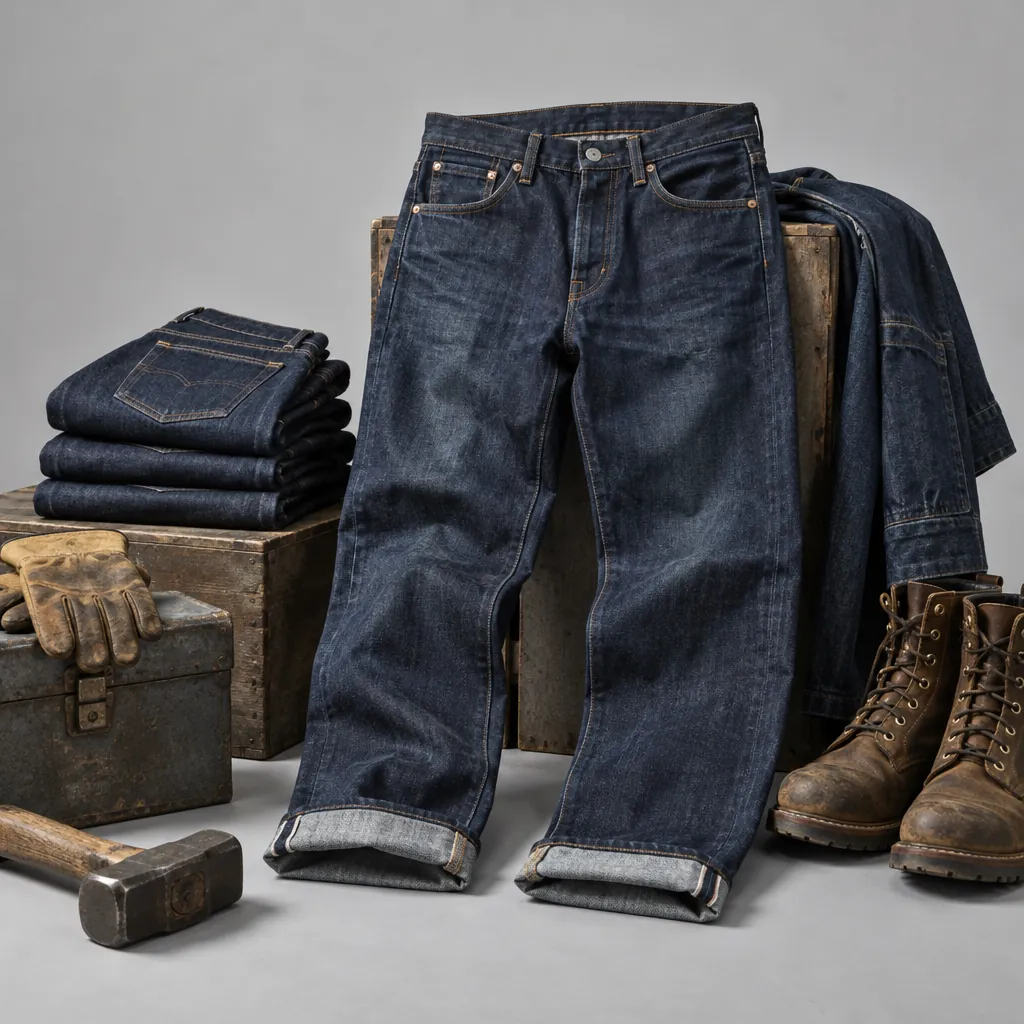
Workwear denim is bought against a different test than fashion denim. The garment has to survive kneeling, tool carry, repeated hot washing and long wear days, and the customer judges it by how it is holding up months later, not by how it photographed on delivery. Buyers who build a workwear program therefore start from durability and fit for movement, and treat style as the outer layer of the decision rather than the core of it. This article sets out the sourcing choices that matter most in a durability-first program, from fabric and construction through to the shape of the ongoing order.
Start from the work, not the trend
A program spec begins with a description of the job the jeans will do. Kneeling puts abrasion on the knees and stress on the seat seams. Tool carry loads the front pockets and the pocket bags far beyond what dress wear asks of them. Laundry routines in work settings are harsher and more frequent than home laundry, which raises the importance of dimensional stability and color retention across many cycles. None of these demands requires inventing anything new; they require being written down, asking the supplier to build the specification around them, and verifying the result on samples rather than taking it on trust.
Fabric and construction: what durability is made of
Durability programs usually orient toward heavier fabric weights and low or no elastic content, because heavier cloth abrades more slowly and rigid constructions hold their shape under load. The comfort trade-off is real, and it is handled in the fit and in break-in expectations rather than by thinning the specification. Construction carries the other half of the outcome: reinforcement at stress points, seam types chosen for how they spread load, and hardware that survives the laundering routine the program actually uses. The points a buyer should pin down, and how each is confirmed, are summarized below.
| Specification point | Why it matters in workwear | How buyers confirm it |
|---|---|---|
| Fabric weight orientation | Heavier cloth abrades more slowly and holds shape under load | Approved fabric sample, with the declared weight confirmed in writing |
| Elastic content position | Low or none keeps shape under load; the trade-off is comfort | Fiber content named on the specification and on the label |
| Stress-point reinforcement | Knees, seat and pocket corners fail first in hard use | Sample inspection against a written reinforcement plan |
| Seam and stitch choices | Seam type decides how loads spread along the seam | Construction recorded in the spec and checked on the sample |
| Hardware and rivets | Must survive repeated laundering and heavy use | Wash-tested hardware reviewed on the pre-production sample |
Fit for movement and layering
Work fits are judged standing, crouching and climbing, not in a mirror. That usually means a rise with enough depth to stay put under bending, a seat with room for movement, and leg shapes that clear a boot shaft without binding. The size curve also shifts: work programs typically weight the larger part of the run more heavily than a fashion wall does, and many extend the run at both ends to cover the crews they actually serve. Waistbands are supported by construction rather than by fashion detailing, because the waist is where a loaded garment pulls hardest. Fit approval for a work program should include movement checks, not only standing measurements on a table.
Size coverage and replacement planning
Work programs fail on size coverage more often than on fabric. A crew is not a size curve; it is whoever was hired, and the program has to cover every waist and inseam the crew wears, including the sizes a fashion wall would skip. Inseam coverage matters as much as waist coverage, because a hem improvised by rolling does not survive a work season. Replacement planning then runs on wear-out rather than on fashion seasons: trousers in heavy trades wear out far faster than office wear, and the reorder cycle should be set by that reality, with wear-out reviewed by role after the first cycle.
Washes that age well
Color choice in a work program is functional. Darker indigo hides stains and oil between washes, which matters where the jeans are worn in dirty environments. Lighter washes read cleaner and suit customer-facing roles, at the cost of showing wear sooner. Where the program supplies staff uniforms, the wash also has to be repeatable across the year, because a mid-season replenishment that arrives visibly lighter than the first delivery creates the kind of complaints that end programs. Wash repeatability is a supplier capability question, and it belongs in the order terms rather than in conversation.
What belongs in the program brief
- The work environment and the laundering routine the garment must survive.
- Fabric orientation: weight direction and elastic content position.
- Reinforcement points and the seam types required at each.
- The full size run the crew or channel actually wears, including edge sizes.
- Wash choice by role, and the repeatability expected across reorders.
Where work denim is sold
Work jeans reach customers through farm and ranch stores, trade-oriented retailers, uniform dealers and the work sections of general retailers. Farm and ranch channels often run work and western denim side by side, and the wall logic there follows the regional western approach rather than a fashion wall, as described in the article on western wear retail. The channel shapes the size curve and the wash plan more than any trend report does, which is why the channel should be named in the program brief from the first conversation.
Buy a program, not a pallet
Workwear succeeds on repetition. The buyer is not looking for one large delivery but for a dependable cycle: a specification that does not drift, a wash that matches across lots, and a reorder path short enough to cover wear-out. This is the same logic that governs uniform supply generally, which is why work programs and staff uniform programs share so much structure, as covered in the article on corporate denim programs. Specifying for identical reorders, with tolerances and approved references named in writing, is what turns a one-time bulk sale into an ongoing program.
Working with jeans
FULVERA coordinates durability-first denim sourcing for workwear and trade retail programs. Fabric options, construction details, minimums and lead times for a program are confirmed in writing before production begins. The channel context is summarized on the workwear program applications page; when your spec outline is ready, request a quote and we will respond with the terms that apply.