Home / Guides / Opening a denim line: a first order checklist
Opening a denim line: a first order checklist
A first order checklist for opening a denim line: range shape, factory minimums, the sampling ladder, budgeting and the selling calendar.
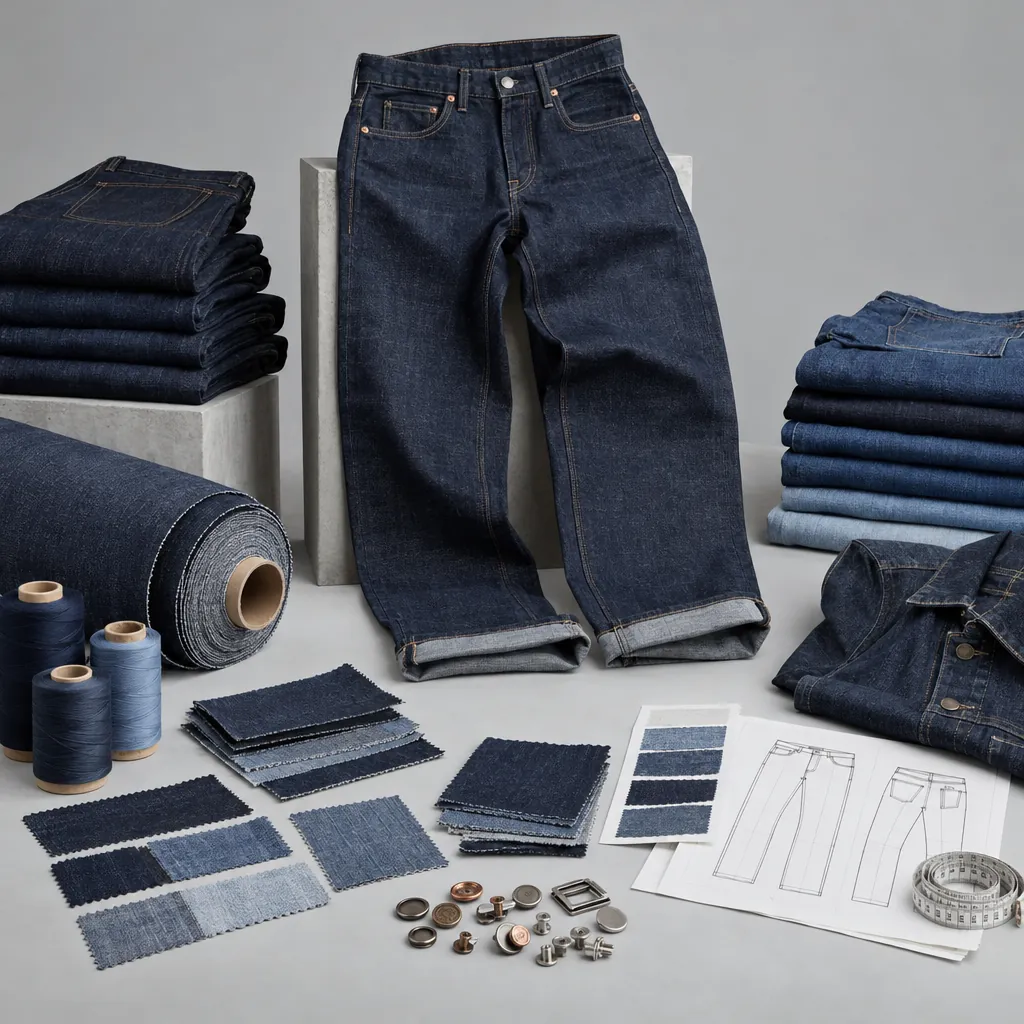
Most denim lines do not fail at the design stage. They fail between the design and the first bulk order, where minimums, sampling rounds and lead times interact in ways a first-time founder does not expect. A first order is a sequence of decisions, and the sequence matters: the customer definition shapes the fits, the fits shape the sampling plan, the sampling plan shapes the calendar, and the calendar decides whether the line arrives while the season can still sell it. This article sets out that sequence as a practical checklist, with emphasis on the points that are most often left too late.
Decide what kind of line you are starting
Three shapes cover most first denim lines. A capsule for a single store or a small chain, built around two or three fits carried deeply. A drop model for an online audience, built around limited runs released on a schedule. A size-inclusive core range for a broad customer, built around one or two fits across a long size run. Each shape implies a different minimum order, a different sampling plan and a different amount of capital tied up in stock. Founders who have not chosen the shape tend to design a broad range and then discover that no factory will produce it at the quantity on offer. The narrow-deep logic behind the first shape is examined in the guide to boutique jeans buying, and it applies well beyond boutiques.
Write the brief before the sketches
A first order benefits from a one-page brief that states the target customer, the channels, the price position, the number of fits and the washes. The brief is not a creative document; it is a scope document. It should say what the line will not include, because scope creep between the first sample and the first order is the normal condition of a new line, not the exception. A founder who writes down that the first season is two fits in three washes has a reference to measure every new idea against. Sketches come after the brief, and any sketch that does not serve the brief is deferred to a later season. The same discipline applies to details that feel small at the start, such as hardware finish and pocket style, both of which multiply suppliers and lead times once they are custom rather than standard.
Choose fits you can support across full sizes
Two fits carried in full size depth almost always outsell six fits carried thinly, because the customer who finds her size comes back and the customer who does not buys elsewhere. Depth means the full intended size run in every wash, not a token run in the hero size. The fits should share a pattern block where possible, since a shared block reduces the number of fit approvals and makes the second season cheaper to develop. Rise and wash multiply a range quickly: two fits, two rises and three washes are twelve products before sizes are counted. Most first lines are stronger with fewer variables and more depth in each.
Understand what a factory minimum covers
Minimum order quantities exist because fabric mills, cutting rooms and wash houses each work in batches. A style that uses an unusual fabric or a complex wash inherits the largest of those minimums. This is why the practical route to a smaller first order is usually a simpler product: shared fabrics across fits, standard hardware and washes the factory already runs. A founder who needs a lower entry point should ask what drives the minimum on each style, not only ask for a lower number. The steps from inquiry to shipment are set out on the wholesale process page, and reading them before requesting quotes helps a founder ask for the right things in the right order.
Plan the sampling ladder
A first line needs at least three sampling stages. A fit sample per fit, to answer whether the pattern works on a body. A size run check, to answer whether the grading holds at both ends of the range, which is where new lines most often fail. And a pre-production sample cut from bulk fabric in the bulk wash, to answer whether the lot matches what was approved, including labels and hardware. Skipping a stage does not remove the risk; it moves the risk into the bulk order, where correcting it costs the most. Each stage should be approved in writing, with measurements recorded, before the next stage is funded.
Budget the whole chain, not the unit price
New lines tend to budget the unit cost and forget the ring around it: sample charges, freight, duties, labels and packaging, photography, and the working capital that sits in stock until it sells. A realistic first-season budget lists all of these as separate lines. The most common overspends are wash variety and fully custom hardware, both of which raise minimums and neither of which the customer notices as much as the founder expects. Money saved by narrowing the first range is usually the money that funds the reorder, and the reorder is where a line becomes a business. A founder should also hold back a reserve rather than committing every dollar to the first buy, because the first season always teaches something the second order can use.
Set labels and compliance in motion early
Labels look like a detail and behave like a schedule. Artwork for the size label, the fiber content, the care instructions and the country of origin must be final before labels are produced, and label production sits on the critical path to shipment. A first-time founder should confirm what the destination market requires, with an adviser where the requirements are unfamiliar, and freeze the text before the first proof. Late artwork changes are a common cause of missed delivery windows, and they are entirely avoidable at the brief stage.
Work backwards from the selling window
A first order should be scheduled from the date the stock must be on the floor, not from the date the founder is ready to begin. Fabric development, sampling, bulk production and freight each take time, and the total is longer than most first-time founders expect. Lead times should be confirmed in writing stage by stage, because an unconfirmed estimate is not a plan. The seasonal rhythm of denim retail, and how to place a first delivery inside it, is set out in the guide to the seasonal drop calendar.
A first-order checklist
- A written brief naming the customer, channels, price position, fits and washes.
- A fit sample approved on the body, with measurements recorded against the specification.
- A size run check at both ends of the range, not only the middle sizes.
- A pre-production sample cut from bulk fabric in the bulk wash.
- Minimums, tier prices, sample charges and payment terms confirmed in writing.
- Label artwork frozen, and label lead time included in the calendar.
- A delivery date confirmed in writing, worked backwards from the selling window.
Working with jeans
FULVERA coordinates denim sourcing for new and established retail programs. Every figure that matters to a first order, including minimum quantities, unit prices, sample charges and lead times, is confirmed in writing before any commitment. When the brief is ready, request a quote with your range outline and we will respond with the terms that apply to it.