Home / Guides / Boutique jeans buying: depth over width
Boutique jeans buying: depth over width
Why narrow and deep wins a boutique denim wall: fit choice, size depth, staggered deliveries, price structure and reorder discipline.
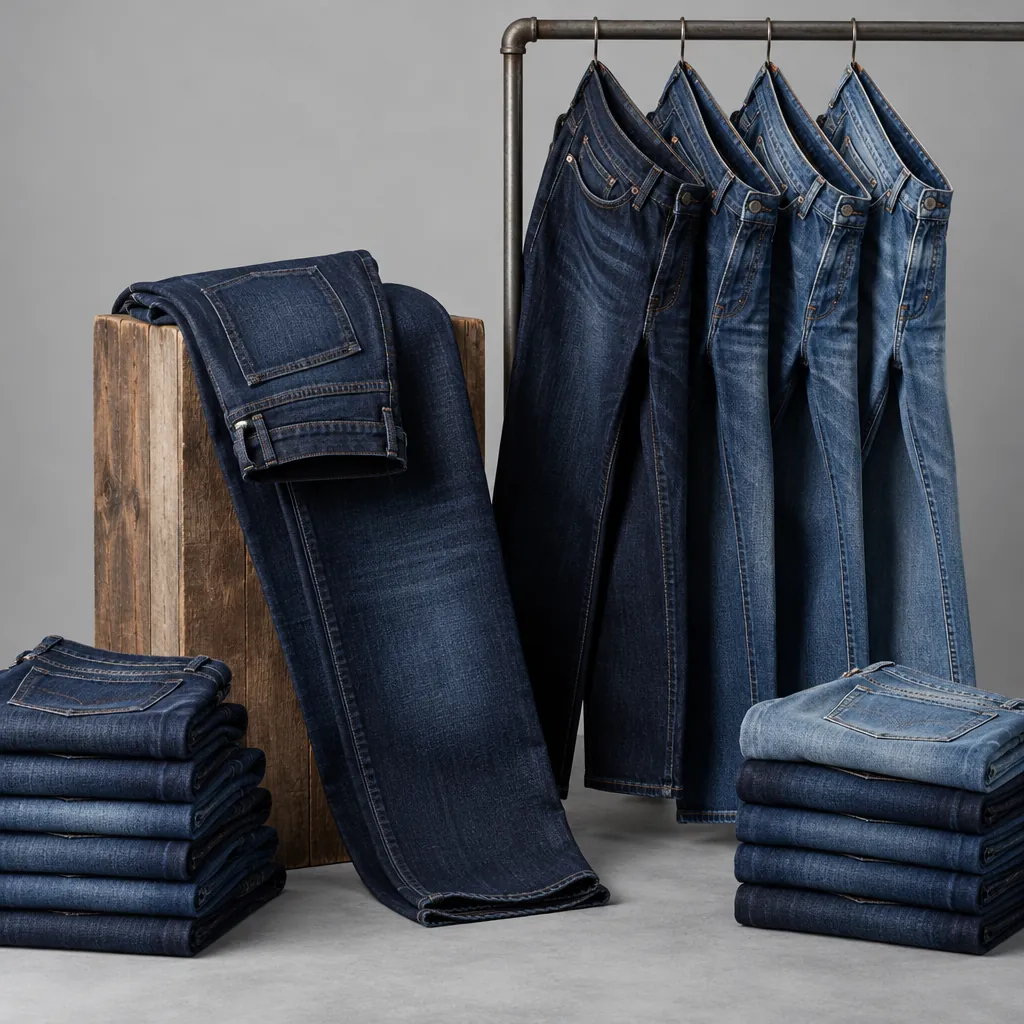
A boutique does not compete with a department store on breadth, and it should not try. The independent store's advantage is that its denim wall can be complete: every fit on the wall available in the sizes its customer actually wears, in washes the staff can talk about with confidence. Getting there requires buying narrow and deep, which contradicts most first instincts about assortment. Where the plan includes an in-house label, the checklist for opening a denim line covers the sourcing steps that follow the buying decision. This article describes how a boutique buyer decides what to carry, where to put the depth, and how to keep the wall full through the season without tying up capital in slow stock.
Why width is the boutique trap
A wide assortment looks like choice and behaves like fragmentation. Every additional fit divides the open-to-buy, shallow size runs sell out in the middle sizes first, and a wall of single-size gaps reads as picked-over rather than curated. The fitting room compounds the problem: a customer who finds her fit has a reason to return, and a customer who does not find it rarely tells the staff why. Most boutiques that struggle with denim are not carrying the wrong jeans; they are carrying too many versions of the right jeans, each too thin to serve a full week of traffic. The pattern repeats online, where thin size runs show up as out-of-stock notices on the sizes that matter most.
Define the customer in body terms
Lifestyle descriptions do not size a wall; bodies do. The useful record is what the fitting room already shows: which rises customers ask for, which sizes are tried on most, which inseams come back described as too long or too short. A buyer who reviews a season of fitting room notes can usually name the core fit, the core rise and the three sizes that must never be out of stock. That list, rather than the season's trend report, is the foundation of the buy. Where the data is thin, a shorter first buy with a planned reorder is safer than a deep commitment, because the reorder decision can use real sales instead of estimates.
Build the wall around two or three fits
A workable boutique range is one hero fit, one support fit and, where the customer asks for it, one statement fit. The hero fit carries the deepest size run and at least two washes. The support fit covers the customer the hero does not, often through a different rise or a different leg shape. The statement fit brings newness and is bought shallow with a reorder decision date attached. Fits that share a pattern block are easier to grade consistently across sizes, and that consistency shows up directly in fewer size-driven returns and exchanges, and in staff who can move a customer from one fit to another without guessing.
Where the depth goes: sizes first, washes second
Depth in sizes protects sales that are already walking in. Depth in washes multiplies stock without multiplying customers. The practical priority order is:
- Full size run in the hero wash on the hero fit.
- The second wash on the hero fit, again in full size run.
- Size depth on the support fit in its best wash.
- Additional washes last, bought shallow, with a clear exit plan.
A boutique that holds every size of one dependable dark wash converts better than one holding partial runs of five washes, because staff can say yes on the spot instead of checking the back and losing the sale to a phone.
Train the staff on the range
Narrow depth only pays when the staff can work it. Each fit on the wall should come with a short internal note: the rise, the leg shape, the fabric weight, the sizes that run true and the ones that do not, and the fit it pairs with for a second opinion. A team briefed this way can turn a fitting room miss into a second try instead of a lost customer. The note should come from the specification sheet, so that what staff say matches what the garment actually is, season after season.
Stagger the deliveries
A single seasonal delivery forces the whole wall to be merchandised at once and leaves the later season to markdowns. Two waves work better for a narrow range: the core fits and hero wash first, followed by a lighter wave carrying a seasonal wash or the statement fit. The second wave is also the natural point to repeat what sold through and to drop what did not. Delivery windows for each wave should be confirmed in writing when the order is placed, since they drive the store's floor-set schedule and the marketing calendar around it.
Keep a simple price architecture
A narrow range supports a clear structure: a core price point for the hero fits and a higher one for statement pieces or premium fabric. Customers read the difference through fabric weight, wash quality and finishing detail, so the staff should be briefed on what separates the tiers before the stock arrives. A boutique does not need a deep discount ladder; it needs margins that survive a planned end-of-season markdown on the styles that did not clear. That calculation is easier to model when the range fits on one page, which is another argument for buying narrow.
Reorder discipline beats reselection
The boutique advantage compounds when a sold-through fit is reordered rather than replaced. A reorder decision needs a trigger, typically a sell-through level by a set date, agreed before the season starts so it is not argued about mid-season. Suppliers need the forecast as well, because repeat production on the same fabric and wash is only simple while the fabric is still available. Regional themes reward the same discipline: a western-led wall succeeds by holding its core fits steady across the year rather than rotating them, as described in the article on western wear retail.
Working with jeans
FULVERA coordinates denim sourcing for boutiques and small chains, including capsule programs built on shared fabrics and narrow size curves. Minimum quantities, unit prices and delivery windows are confirmed in writing before an order is placed. The way a narrow-deep range becomes a capsule program is summarized on the boutique capsule applications page; when your wall plan and size priorities are ready, request a quote.