Home / Denim Comparisons for Wholesale Buyers
Denim Comparisons for Wholesale Buyers
Structured comparisons for denim buying decisions: straight vs slim, lightweight vs heavyweight, stretch vs rigid, raw vs washed, and private label vs open stock.
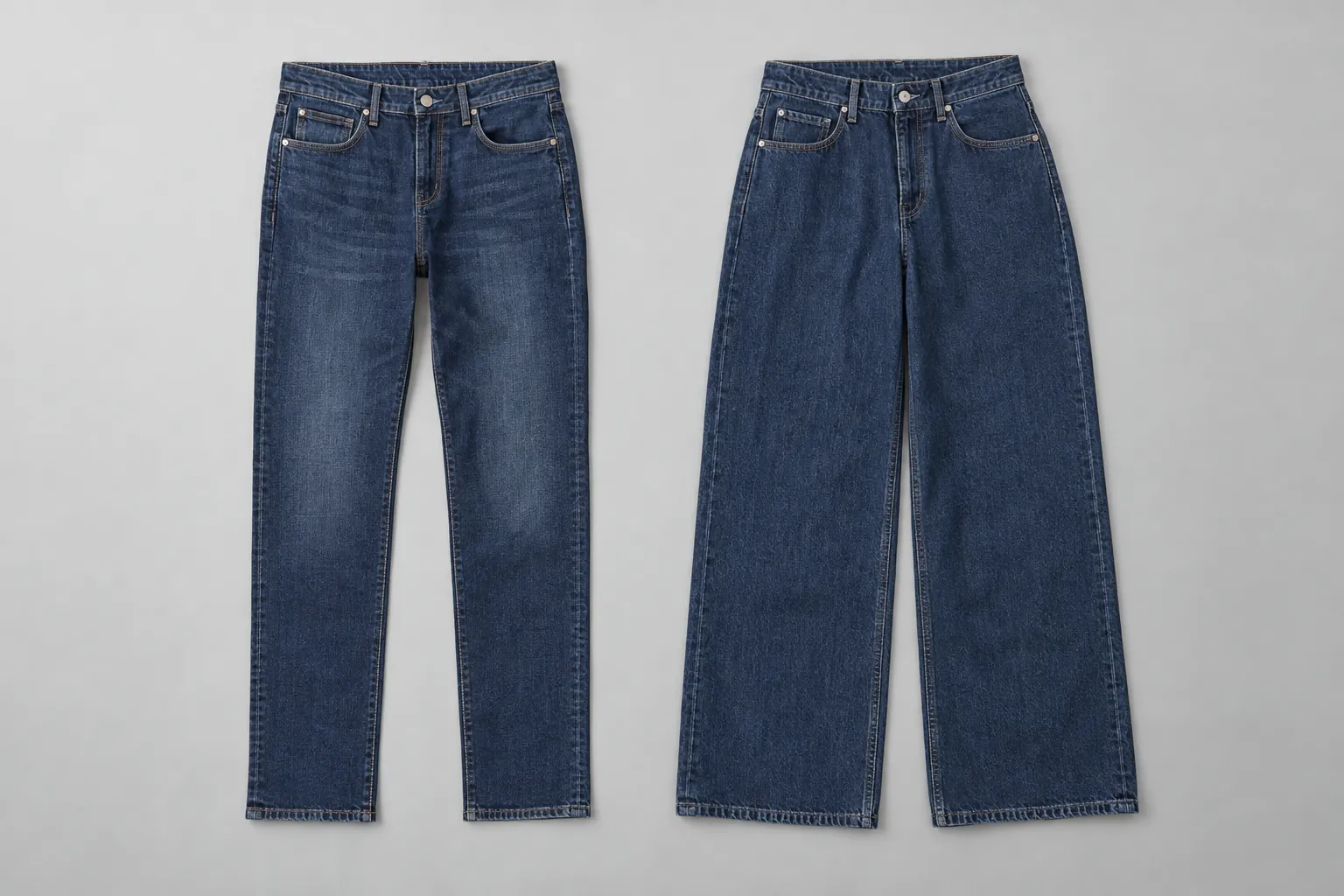
What this section answers
Most denim buying mistakes do not come from picking a bad jean. They come from picking a good jean for the wrong slot: a slim cut where the customer base wants straight, a heavy fabric where the season calls for light, a raw finish where nobody will explain it at the counter. This section puts the recurring either-or decisions on one page each, with the trade-offs written out so the choice can be defended to a partner or a buyer group, not just felt.
The five comparisons at a glance
- Straight vs slim covers the first fork in most programs: which leg line leads the table, and what stocking both actually costs in depth.
- Lightweight vs heavyweight compares season, drape and processing consequences, including how the fabric choice reaches into washing and stitching cost.
- Stretch vs rigid sets comfort and size tolerance against the fit discipline and shrinkage control that an unfixed fabric demands.
- Raw vs washed separates a finish that develops on the customer from a finish that is fixed in the factory, and what each asks of your staff and your returns process.
- Private label vs open stock is not about the garment at all: it is about which business model, brand building or fast turnover, your stage of growth needs.
How to use these pages when you buy
The comparisons are ordered the way the decisions usually arrive. Leg line comes first, because it decides which of the catalog styles your table is built around. Fabric weight and stretch come next, because they constrain the washing program and the size curve you can support. The raw-versus-washed choice follows, since it changes what the customer experiences in the first weeks of wear. The private label question sits last and largest, because it is a commitment about your brand rather than about a jean, and the earlier comparisons feed it: the configuration you have proven in open stock is the one worth committing.
Each comparison page carries a decision table with the same three columns, so the pages can be read in one sitting or handed to a colleague who missed the discussion. Where a number would pretend to be universal, the table says Pending, because weight, price, minimums and lead times are set per program and confirmed in writing.
Where the decisions land
A comparison is only useful once it reaches the order. The winner of each fork belongs in your specification: the leg line and rise on the measurement sheet, the fabric direction in the fabric brief, the finish on the wash standard, and the business model in the program plan. The pages in this section name the document each decision belongs in, and the ordering steps that carry those documents are laid out on the wholesale process page. When the comparisons have settled into choices, the quotation and sample process is where they turn into approved references.
Questions buyers ask
Which comparison should a new buyer read first?
Straight versus slim, if you are building a table for a store, or private label versus open stock, if you are deciding how to buy at all. The first shapes the product mix; the second shapes the commitment behind it.
Are these comparisons about quality?
No. The pairs in this section are directional choices, not good-versus-bad rankings. Each page explains what the option buys and what it costs in control, commitment or season, so the choice matches your channel rather than a generic ranking.
Can I mix both sides of a comparison in one program?
Usually yes, and the pages describe what carrying both requires: wider size curves for two leg lines, separate wash standards for different finishes, and a staged path from open stock into private label rather than a single leap.
Do the comparisons include prices and minimums?
They name where price and minimums enter the decision, but the figures are Pending on this site and confirmed in writing per program, because they depend on style, fabric and order mix rather than on the category.
What do I do after reading a comparison?
Write the choice into the specification it belongs in, then move to the sample stage. The wholesale process page shows the sequence, and the comparison pages link to the section of the site that carries each next step.