Home / Denim Materials for Wholesale Buyers
Denim Materials for Wholesale Buyers
How denim weight, stretch, weave and composition affect retail performance and cost. Six fabric guides for US retail buyers. Quotes in writing.
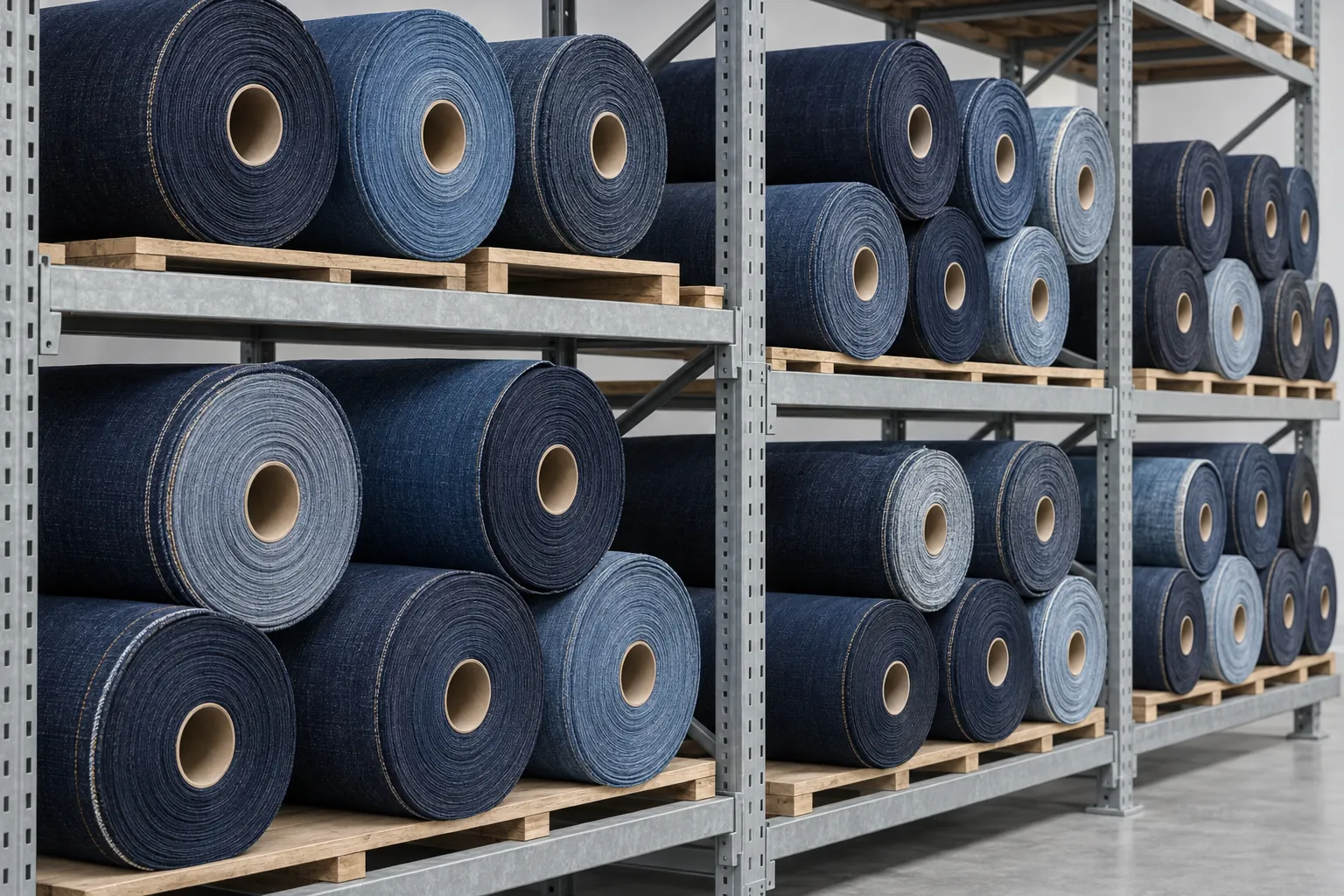
What this section covers
Every denim order starts with a fabric decision. Weight, stretch content, weave and fiber composition decide how a jean drapes, how it wears in, how it survives the wash process and what it costs to make. Those choices then show up on your floor as drape, opacity, fade behavior, size tolerance and return rates. This section breaks the decision into the six fabric types retail buyers most often ask about, and explains what each one does to a program in merchandising terms rather than mill terms.
The procurement questions this section answers
Buyers usually arrive with one of four questions. Which weight sells in my channel and my season. How much stretch my customer expects, and where stretch helps or hurts a range. When a heavier or specialty fabric justifies a higher retail tier and a longer planning cycle. And where each choice adds cost or risk in sewing, washing, grading or compliance. Each page below answers those questions for one fabric family, with control points you can carry straight into a specification sheet.
The six fabric pages
- Lightweight denim — lighter than midweight fabrics; drapes close to the body and suits warm-season programs, shorts and shirts, with opacity and seam strength as the points to control.
- Midweight denim — the four-season workhorse of most retail ranges, the easiest weight to wash and to grade, and the default base for straight, bootcut and wide leg programs.
- Heavyweight denim — stiff at first wear and valued for structure and fade development; sewing and wash processing cost more, so it fits workwear and premium raw programs.
- Stretch denim — comfort and power stretch levels behave differently on the body and in the wash; recovery and shape retention decide whether the fit survives the season.
- Rigid denim — no elastic fiber, so the pattern must carry the fit; shrinkage control and fade character make it a positioning choice rather than a default.
- Selvedge denim — woven on shuttle looms with a finished self-edge; it prices above standard fabric (pricing Pending) and is aimed at enthusiasts and premium doors.
Choosing fabric by store positioning
Start from what your store is, not from the fabric. A general apparel retailer running core five-pocket programs will usually anchor on midweight, set stretch levels per silhouette, and add a lightweight option for warm months. A boutique building capsules around one or two washes can use rigid or heavyweight fabric as a point of difference, because its customer shops for character rather than for price. An online seller who lives by fit reviews and return rates should treat recovery and shrinkage as first-order questions, since both show up in reviews long before they show up in the ledger. A workwear or uniform-adjacent buyer starts from heavy fabric, because abrasion and seam performance outrank drape. Specialty positioning has its own economics: a selvedge denim program is a credibility purchase for a specific customer, while comfort-led ranges lean on stretch denim quietly doing fit work across the size run.
How fabric choices cascade into cost
Fabric is usually the largest single cost line in a jean, and it drives the lines around it. Heavier fabric takes longer to sew and longer to wash. Stretch limits some wash and dye routes. Specialty weaves narrow the pool of mills that can supply them, which surfaces in minimum order quantities and lead times rather than in the unit price alone. The structure behind a quotation is laid out on the denim cost factors page, and the wash-side consequences are covered section by section in the washing guides. None of these effects are priced on this site: all pricing, MOQ and lead time figures are Pending and confirmed in writing per program.
| Fabric choice | What it changes on the floor | Where it shows up in the order | Indicative cost impact |
|---|---|---|---|
| Lightweight base | Drape, warm-season sell-through, opacity in pale washes | Wash time, opacity checks | Pending |
| Midweight base | Four-season core volume, stable grading | Wash menu, substitute availability | Pending |
| Heavyweight base | Structure, break-in story, workwear credibility | Sewing time, wash capacity | Pending |
| Stretch content | Fit tolerance, return rate on borderline sizes | Process limits, recovery testing | Pending |
| Selvedge weave | Premium tier customer, edge detail | Fabric yield per garment, loom schedule | Pending |
How to use this section
Read the page that matches the fabric you already plan to buy, then the adjacent pages, since most ranges mix two or three weights. When you shortlist a fabric, request a swatch and a washed sample together, because drape and shade change after finishing. The trade-offs between fabric and wash choices are set out in more detail in the denim fabric and wash buying points guide. Once the fabric direction is set, quotes and sample runs start on the samples page.