Home / Guides / Stretch denim: content tiers and recovery
Stretch denim: content tiers and recovery
What elastane content tiers mean for recovery, knee bagging and wash care in stretch denim, and how a buyer can specify each level in writing.
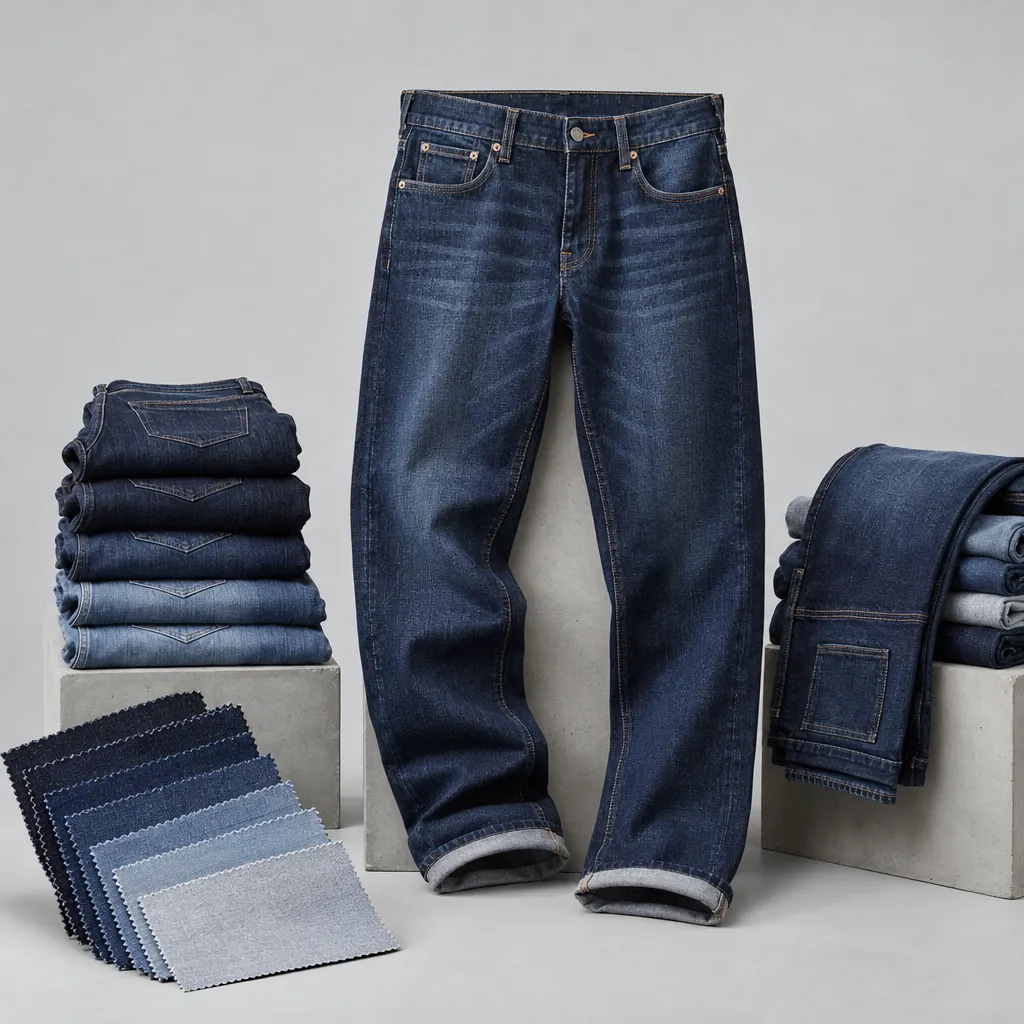
What stretch denim is
Stretch denim is a woven fabric that carries an elastic yarn in one direction, usually the weft, alongside the cotton. The elastic content lets the fabric give as the body moves and return when the body relaxes, which changes comfort, fit and the way the garment ages. Stretch denim exists on a range, from fabrics with a slight give that still read as traditional denim to fabrics that behave closer to a knit. Where a fabric sits on that range decides the fit a buyer can promise, the grading the pattern needs and the way the garment behaves after washing. The elastic content of any specific fabric, stated as a fiber share on the supplier's specification, is to be confirmed in writing before an order is placed, because two fabrics that feel alike on a swatch can sit in different tiers.
The tiers buyers actually order
In daily trade the market works with informal tiers rather than one continuous scale. Comfort stretch gives a little room across the seat and thigh and otherwise behaves like rigid denim. Standard stretch is the broad middle: it moves with the body through a working day and recovers overnight. High stretch pulls close to the body and holds a second-skin fit through long wear. At the far end sit the knit-like fabrics that jegging-style products use, which carry their own care and fit expectations. Each tier needs its own pattern, its own size curve and its own care instructions, so the tier is a fit decision as much as a fabric one. Buyers moving a style between tiers should expect to re-cut the fit sample rather than adjust the old one, because the fabric is doing a different share of the fit work.
Recovery: the property that matters more than give
Recovery is the fabric's ability to return to its original dimensions after being stretched. It is the property that decides whether the knee bags out on the second wear and whether the waistband relaxes before the end of a shift. A fabric can stretch generously and still recover poorly, and that combination produces the most common stretch denim complaint: a jean that fits in the morning and looks worn out by the afternoon. Recovery depends on the elastic yarn itself, on how the fabric was finished, and on how the garment is washed and dried afterwards. Because it degrades with heat and abrasion, recovery has to be judged after repeated wash cycles, not on a fresh swatch. Recovery performance across a defined number of wear and wash cycles is to be confirmed by test report, in writing, before the bulk order.
How the tier changes fit and grading
A stretch fabric changes the fit conversation because the garment and the body share the work of holding the shape. In a rigid jean the pattern carries the fit; in a high stretch jean the fabric does much of it. That shift reaches into grading: the same size steps that work for rigid denim can overshoot in high stretch, because the elastic bridges gaps that a rigid pattern cannot hide. It also concentrates risk at the edges of the size curve, where a poorly graded stretch style fits neither the small end nor the large end well. Buyers adding a stretch tier to an existing rigid program should plan a separate fit approval for it, with measurements taken while the garment is relaxed and again after a defined wear period. The fit story told on the product page has to match the tier, or the returns report will say so instead.
Wash and care cautions
Elastic yarns age with heat, chlorine and aggressive abrasion, and a wash program that ignores that ages the fabric before it reaches the customer. High-temperature drying, harsh bleach routes and heavy stone processes all shorten the working life of the stretch, and the damage is cumulative rather than visible in any single cycle. The laundry needs to know the elastic content and the intended care instructions before developing the recipe, and the care label has to match what the fabric can actually survive in ordinary customer hands. A care instruction that promises more than the fabric tolerates converts directly into returns and reviews. Where the wash includes enzyme or stone routes, ask the laundry to confirm in writing how the recipe protects recovery across the intended wash cycles of the garment's life.
What to test before bulk
- Stretch and recovery measured on the fabric, before and after a repeated wash cycle.
- Growth after extension, meaning how much length the fabric keeps once it has been stretched and relaxed.
- Seam performance at stress points, because elastic fabrics load seams differently from rigid ones.
- Color fastness, since some elastic yarns take dye and finish differently from the cotton around them.
- A worn fit check on the body, reviewed after a full day of wear rather than only at first fitting.
Test methods, pass criteria and the reports supplied against them are to be agreed in writing before bulk production starts, and the bulk fabric is checked against the same tests rather than against memory.
Where each tier earns its place
Comfort stretch suits classic five-pocket programs where the customer expects a traditional look and accepts a firmer hand. Standard stretch is the safe default for a mixed-age customer base and carries the widest size curve with the fewest surprises. High stretch concentrates in younger assortments and in curves programs, where the close fit is the point of the purchase rather than a compromise. The knit-like end of the range belongs to specific products rather than to a general jeans wall, and it usually needs its own merchandising language. A store that carries two tiers rather than five gets clearer fit stories on the floor, simpler staff explanations and fewer confused exchanges at the counter, which is worth more than the range breadth it gives up.
Specifying stretch in writing
A workable stretch specification names the tier in plain language, the fabric construction, the elastic fiber content as stated by the supplier, the recovery requirement and the care instructions the finished garment will carry. It also names the reference sample that the bulk lot must match, so that recovery disputes have a document to fall back on. Buyers should resist describing stretch only by feel, because feel is exactly what drifts between mills and between lots of the same mill. For the fiber side of that specification, the article on cotton denim blends explains what each fiber contributes, and the piece on denim shrinkage covers the post-wash measurements that stretch fabrics add to the same conversation. The fabric page on stretch denim lists the constructions typically available to wholesale programs.
Working with jeans
jeans coordinates stretch denim programs with partner mills and laundries and can supply fabric specifications and test reports for review before an order is placed. Elastic content, recovery requirements, minimum order quantities and lead times are confirmed in writing for each program. To discuss a stretch tier for your range, request a quote with your target fit and size run.