Home / Sizing and Fit for Wholesale Denim
Sizing and Fit for Wholesale Denim
Why sizing is the highest-risk decision in wholesale denim, and how rise choice and grading control keep returns and size complaints down.
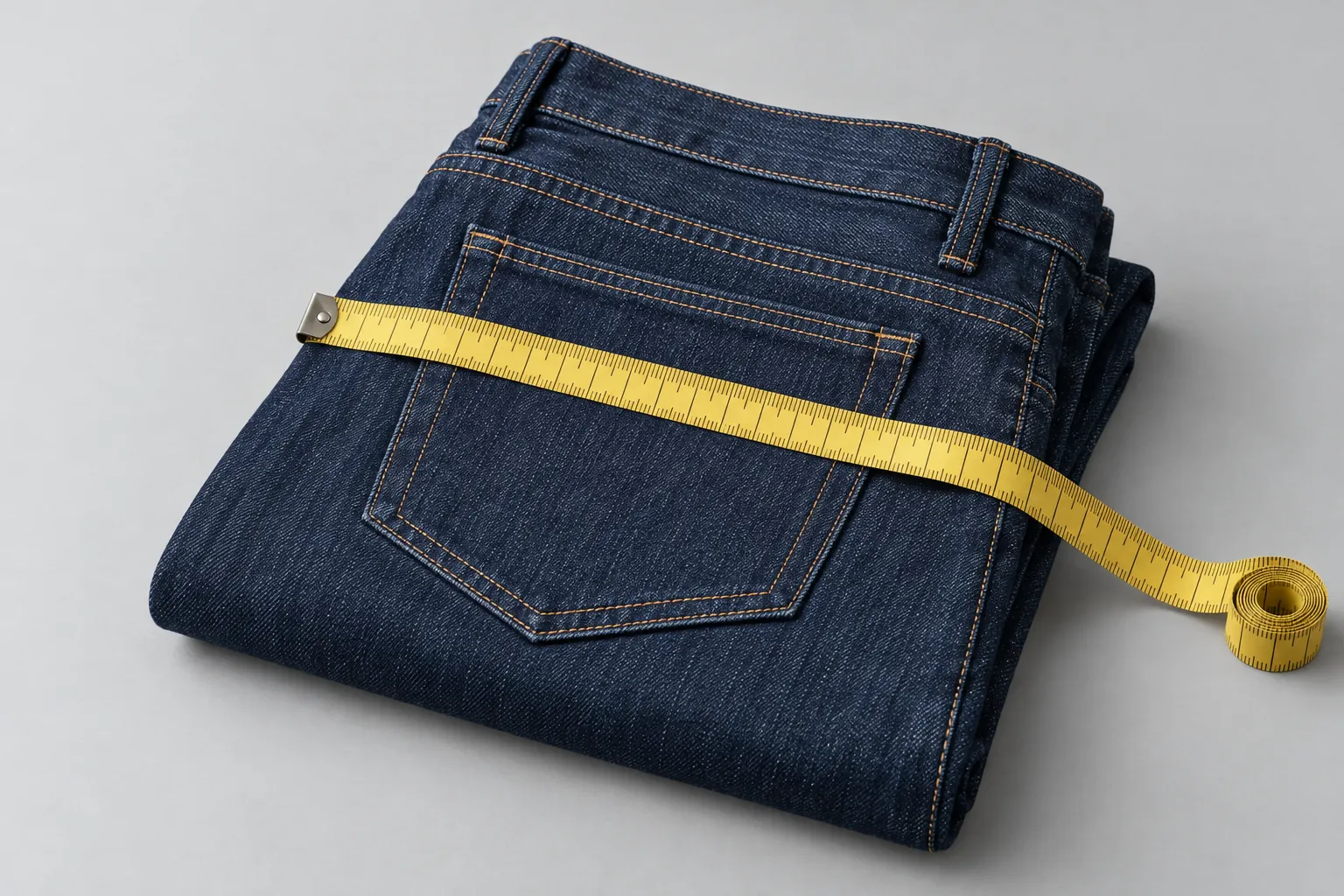
Why sizing carries the highest risk in wholesale denim
Most sourcing mistakes show up before an order ships; sizing mistakes show up after. In denim the sizing system carries more risk than in most apparel categories, for three reasons. First, denim is worn close to the body, so a small grading error reads as a different fit rather than as a looser version of the same jean. Second, customers arrive with a fit expectation built from the jeans they already own, and they judge a new program against that memory in the first wear, not after a season. Third, the category has a return behavior of its own: size-driven returns are the most common complaint an online denim seller handles, and once return freight, restocking and re-listing are counted, a size problem can erase the margin of an entire delivery. The mechanics of that pattern are described on the high return rates page.
The conclusion for a buyer is uncomfortable but useful: sizing has to be treated as a specification, not as a chart appended to an order. The rise you choose decides who the jean fits and how the range reads on the floor. The grading rule you approve decides whether the middle of the size run matches the sample you signed. Neither can be verified from a quotation. Both are verified on samples and on written documents.
What this section covers
Two pages break the decision into the parts a buyer can actually control.
- Rise and fit guide — how low, mid and high rises change the proportions, the comfort and the customer base of a jean; how to choose the rise that anchors a range; and the measurement points to collect before a fit is approved, with every value confirmed per program rather than published.
- Size grading — how a pattern grows from a base size into a full run; why plus size and kids ranges need their own grading logic; which size documents to request from a supplier; and the grading accidents that later surface as fit complaints.
How sizing problems actually begin
Nearly every sizing failure follows the same sequence. A buyer approves a fit on one sample, in one size. Production grades the pattern with a rule the buyer never saw. The smallest and largest sizes in the run then fit differently from the approved sample, and the difference reaches the market as reviews, size-specific complaints and returns concentrated at the ends of the range. The fix costs little and belongs in the order documents: approve the fit at the first and last size of the run, and write the grading table with its tolerances into the specification sheet both sides sign. The same discipline applies to washed measurements, because shrinkage moves values after finishing.
How to use this section
Read the rise guide before you fix the silhouette mix for a season, because the rise decision shapes which customers a range serves and which silhouettes it can carry. Read the grading page before approving any bulk order, and use its document checklist when you ask a supplier for size files. The buying logic behind both topics is discussed further in the guide on how fit and size affect denim retail. All prices, minimum order quantities, measurements and lead times on this site are Pending and confirmed in writing per program.
Questions buyers ask
Why do size charts differ between suppliers?
Each program is built on its own block, and each factory measures at its own points. A label size is a claim; the measurement chart, the measuring method and the tolerances are the working agreement. That is why the chart has to be requested, compared on samples and confirmed in writing rather than assumed.
Should I accept a supplier's standard size chart as it stands?
Treat it as a starting point, not an approval. Check the chart on samples across the run, especially at the smallest and largest sizes, and after washing. If your market expects a particular fit convention, say so in the specification sheet instead of hoping the standard chart matches it.
Which sizes fail first when grading is wrong?
The ends of the run. Middle sizes usually stay close to the approved sample because the base pattern is drawn there, while errors accumulate toward the smallest and largest sizes. That is why fit approval should cover the first and last size, not the base size alone.
How do I reduce size-driven returns for online sales?
Measure the finished garment flat and publish your own chart rather than reusing a supplier's image, publish washed measurements where shrinkage matters, and keep size guidance consistent across the silhouettes in your range. Charts aligned with real garment measurements produce fewer mismatch complaints.
Are measurements on this site published as numbers?
No. Every measurement on this site is Pending. Waist, rise, inseam and all other values are set per program and confirmed in writing, because the same silhouette can be cut to different measurements for different markets.