Home / Guides / Size charts: building one that cuts returns
Size charts: building one that cuts returns
How retail buyers structure a jeans size chart with garment measurements and fit notes that cut returns online and in-store.
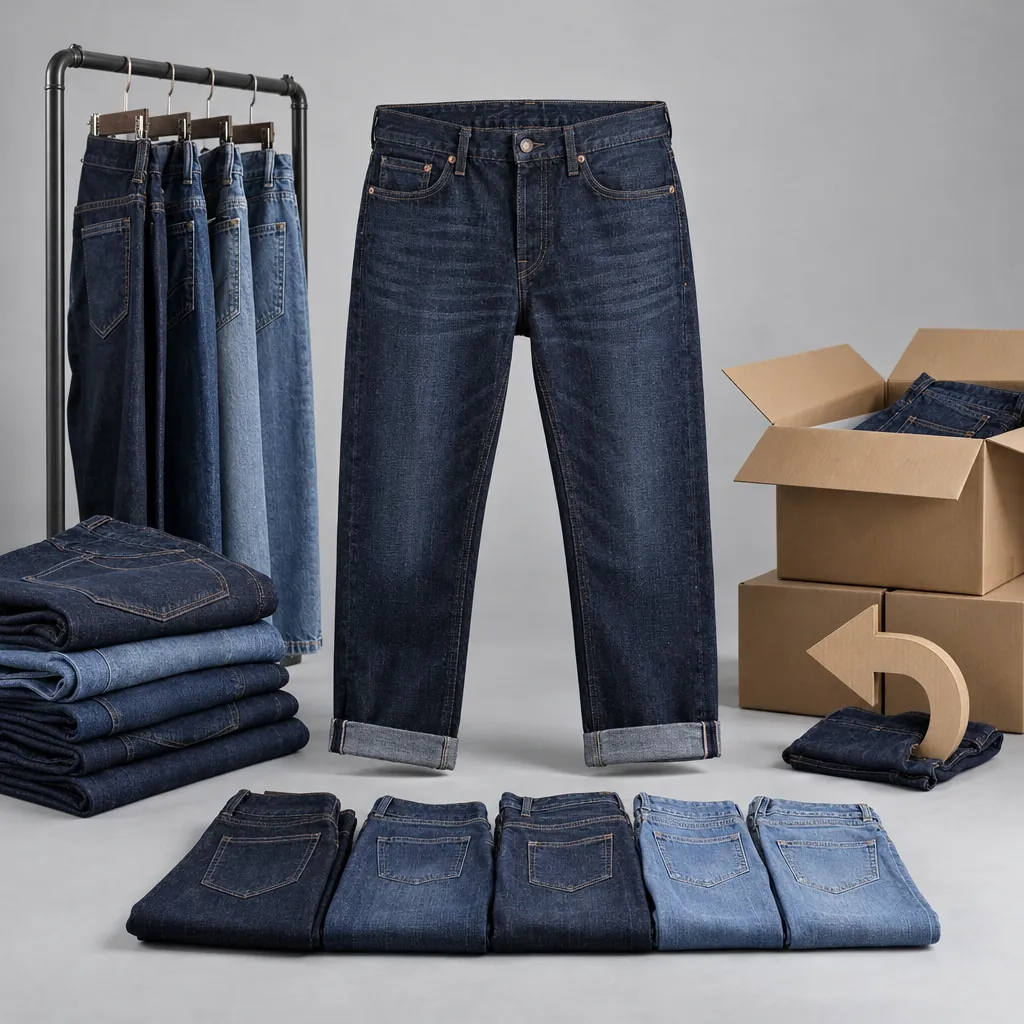
A size chart is the piece of page content that works hardest in a denim business. Fit is the reason most jeans come back, and the chart is the only tool that speaks to every customer at once, in the store, on the product page and in the parcel as a printed insert. A chart that is complete, methodical and consistent with the approved specification removes a large share of the questions that end as returns. A chart that lists only letter or number labels leaves the customer to guess, and guessing is what returns are made of. The stores that keep denim return rates under control usually started with the chart rather than with the pattern. This article describes how a retail buyer can structure a jeans size chart that actually reduces returns, which elements it must contain, how to read return data back into the page, and how to keep it tied to the specification as styles change.
Garment measurements first, body measurements second
A useful chart is built from garment measurements, taken flat on the finished pair, not from body measurements alone. Body-based charts ask the customer to measure herself and trust that the factory graded to the same body logic. Garment-based charts describe the object she will receive: the waist measured flat and doubled where the method requires it, the front and back rise, the thigh at a stated point below the crotch, the knee, the leg opening and the inseam along the seam. Publish the method with the numbers. A waist measurement without the words relaxed or stretched, or a thigh without the distance below the crotch where it was taken, invites the customer to measure differently and reach a different conclusion from the one the chart intended.
Body measurements still have a place. A short line under the chart that maps the garment measurements to the body they are designed for helps a customer who knows her own measurements but has never seen the style. The primary reference, however, should be the garment, because the garment is what the customer can lay on a table and compare with a pair she already owns and likes the fit of.
What a complete chart contains
- Waist, measured flat, with the relaxed or stretched state stated.
- Front rise and back rise, from the crotch seam to the top of the waistband, with the waistband included or excluded stated.
- Hip, taken at the point named in the specification sheet.
- Thigh and knee, each at a stated distance from the crotch point.
- Leg opening and inseam, the inseam measured along the seam rather than along a fold.
- A note on stretch, so rigid and comfort stretch styles are not read the same way.
- A post-wash note, since the first washes change length and width on some fabrics.
A structure that answers questions in order
Customers arrive at a chart with questions in a predictable order: which size am I, where will it sit, how will the leg end, what happens after washing. The chart should answer them in that order, with the measurement table first, the fit note second and the care or wash note last. A table that hides the inseam four paragraphs down costs the store length exchanges. The table below summarizes the elements of a working chart and the mistakes most often made with each of them.
| Chart element | Question it answers | Common mistake |
|---|---|---|
| Garment measurement table | Which size matches a pair that already fits | Numbers published without the measuring method |
| How-to-measure section | How to compare with a pair the customer owns | Assuming the customer measures the same way |
| Fit note per silhouette | Where the jean sits and how the leg is shaped | One shared note reused for every style |
| Stretch guidance | How the fabric behaves in wear | Reading stretch and rigid charts identically |
| Post-wash note | What changes after the first washes | Leaving it out entirely |
Use return reasons to repair the chart
The chart is never finished. Return reasons, recorded by style, size and wording, show where it fails. A cluster of comments about a tight thigh points to a thigh measurement that is absent or hard to find. A run of length exchanges points to an inseam that is buried or untrusted. A buyer who reviews return wording each month and maps it to the sections of the chart can fix the page before fixing the pattern, and sometimes the page is all that needed fixing. The same review shows when the problem is real and belongs on the body rather than on the page, which is the case for a structured fit session before bulk instead of another rewrite.
The same chart in the fitting room and in the parcel
A chart that lives only on the product page helps once. The same information, printed small on a fitting room card and again on the parcel insert, works three times. Fitting room cards reduce the questions staff answer and help a customer choose her size without undressing twice. Parcel inserts turn the first order into a reference for the second, because the customer keeps the card with the measurements that worked. The content must stay identical across the three placements, or the chart stops being a reference and becomes three opinions with the same name.
Keep the chart tied to the specification
A published chart is a promise that must match the approved specification sheet. When grading changes, when a waistband is widened or a length tier is added, the chart changes in the same release, and the old version is retired rather than left on a corner of the site. Version discipline is unglamorous and it prevents the specific complaint where the parcel and the page disagree. Styles with their own grading logic deserve their own chart rather than extra rows added to the standard table, which is the case for a plus range developed on its own block, treated separately in plus size denim fit chart discipline.
Working with jeans
Prices, minimum order quantities and lead times for any style discussed here are confirmed in writing before an order is placed. If you would like a size chart structure applied to your own range, request a quote and we will reply with the specification and sampling process.