Home / Guides / Rise and inseam specs for wholesale jeans
Rise and inseam specs for wholesale jeans
Rise and inseam are the specs buyers most often leave vague. How to define measurement points, tolerances and labels for wholesale jeans.
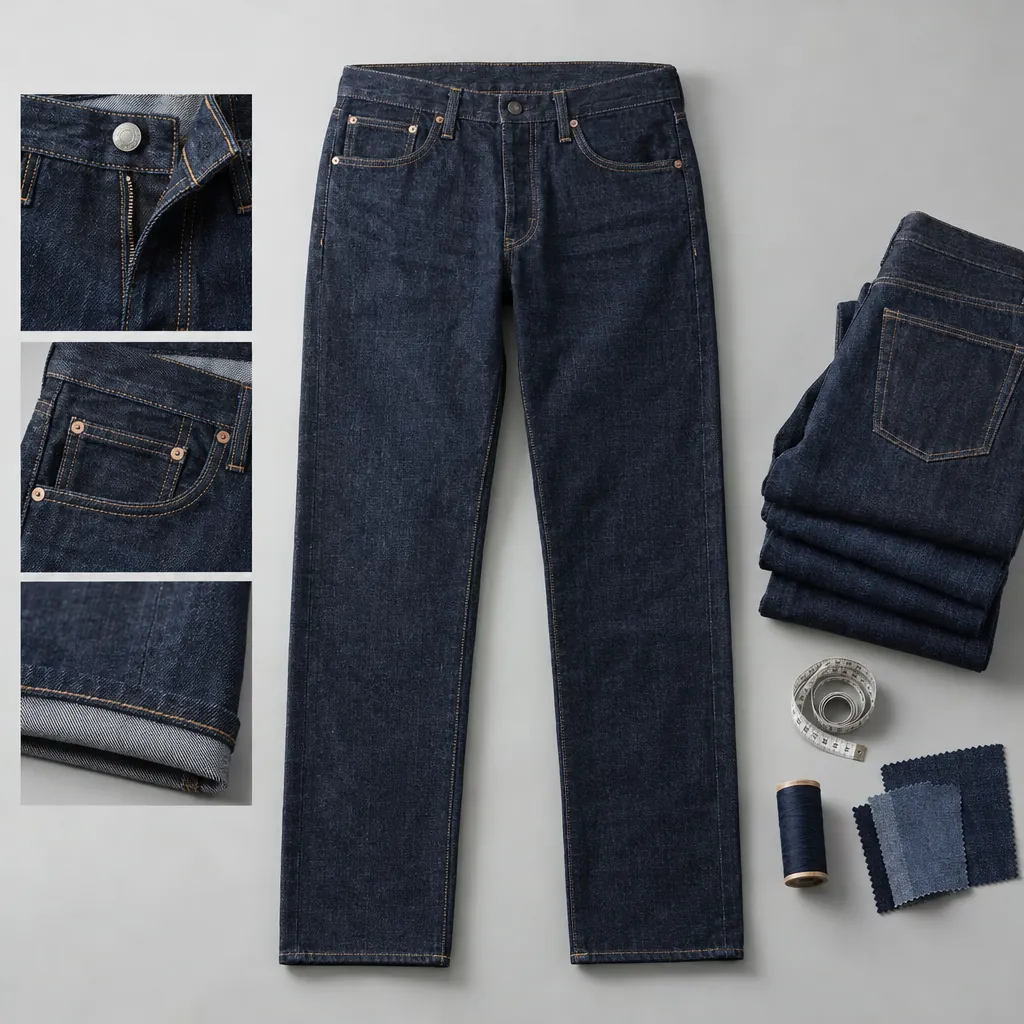
Rise and inseam are the two specifications that decide where a jean sits on the body and where the leg ends, and they are also the two most often left vague in a wholesale order. A style described only as a high rise in a regular length can be produced in several ways, and each way wears differently. The fix is not more meetings. It is a written block of measurement points, methods and tolerances that both sides reference from sample approval to shipment. This article sets out how a retail buyer can define that block for rise and inseam, how the labels used with customers relate to the measurements used with the factory, and where the two specifications interact with hemming, washing and grading.
Name the measurement points before the numbers
Every rise and inseam conversation goes wrong in the same place: two teams measuring different things and calling them by the same name. Before any value is discussed, the specification sheet should fix the points and the methods. The front rise runs from the crotch seam to the top of the waistband at center front, and the sheet should state whether the waistband is included. The back rise runs from the crotch seam along the center back seam to the top of the waistband, and it is usually the longer of the two. The waistband height is measured at center front, parallel to the top edge. The inseam runs along the inseam seam from the crotch point to the hem, not along a fold, and the outseam runs along the side seam from the top of the waistband to the hem. None of these methods is controversial. Leaving them unstated is what creates the dispute later.
An example specification block
The block below is a structure a buyer can copy into an order. The values are filled during sampling and confirmed in writing; they are shown as Pending here because they belong to the approved sample, not to an article.
| Specification point | How it is measured | Value and tolerance |
|---|---|---|
| Front rise | Center front, crotch seam to top of waistband | Pending |
| Back rise | Center back, along the seat seam to top of waistband | Pending |
| Waistband height | Center front, parallel to the top edge | Pending |
| Inseam | Along the inseam seam, crotch point to hem | Pending |
| Outseam | Along the side seam, waistband top to hem | Pending |
| Hem allowance | Length reserved for the approved hem type | Pending |
Each row should also carry the tolerance agreed for production and the tool used for measuring, since a steel tape on a flat table and a soft tape on a hanging garment will not produce the same reading.
Rise labels are a dialect, not a standard
High, mid and low are useful words for customers and unreliable words for factories. Across markets and suppliers, the same label sits at different depths, and a high rise in one catalog can measure like a mid rise in another. The working method is to carry both: the label the customer understands and the measurement the factory cuts to. Internally, the specification sheet leads with the measurement points. On the product page, the label appears next to a chart that shows the actual rise for each size, so a customer comparing two styles is comparing measurements whether she knows it or not. A buyer who keeps the customer-facing label and the internal measurement in one file avoids the slow drift where marketing language and production reality separate.
Inseam interacts with hem and wash
An inseam is not a single number from cutting to shelf. The hem type consumes length: a plain stitched hem, a turned cuff and a raw cut each take a different share, and the specification should reserve the allowance for the approved finish. Washing changes length as well, because most denim shortens after the first washes by an amount that depends on fabric and finish. The order should state whether the inseam is specified before or after wash, and if the pattern carries an allowance for shrinkage, the method for verifying it should be agreed in writing with the supplier. A buyer who skips this finds the style, two washes into the season, sitting shorter than the chart says, and the chart is the promise the customer reads.
Grade rise and inseam on purpose
Rise and inseam do not grade the way waist and hip do. A rise usually deepens less across a size run than the waist widens, and the back rise rarely moves in step with the front. Inseam is graded by length tier rather than by waist size, so the same waist can exist in several lengths. These decisions belong in the grading rules with the rest of the measurement points, and the first and last size of the run should be measured against them before bulk. The document that carries those rules, and how buyers keep it from drifting between sample and production, is treated in grading rules from sample to size run, and the stocking consequences of length tiers are treated in stocking short, regular and long inseams.
Rise and length on the product page
What the factory receives in a specification, the customer receives in a chart. The rise should appear per size, not as a single value for the style, because a rise that deepens across the run changes where the jean sits from one end of the range to the other. The inseam should be listed with the hem it is measured to, so a customer who hemmed her last pair knows what she is comparing. Where the style exists in several lengths, each length belongs on the chart rather than in a footnote. The background to rise depth, seat shape and proportion is covered in the rise and fit guide, which pairs well with the chart a store publishes.
Working with jeans
Rise and inseam values, tolerances and length tiers are confirmed in writing for each style before an order is committed. To receive a specification block built for your range, request a quote and we will confirm the details in writing.