Home / Guides / Inseam lengths: stocking short, regular, long
Inseam lengths: stocking short, regular, long
How to spread a jeans buy across short, regular and long inseams: depth by length, hemming options and the reorder signals each tier gives a store.
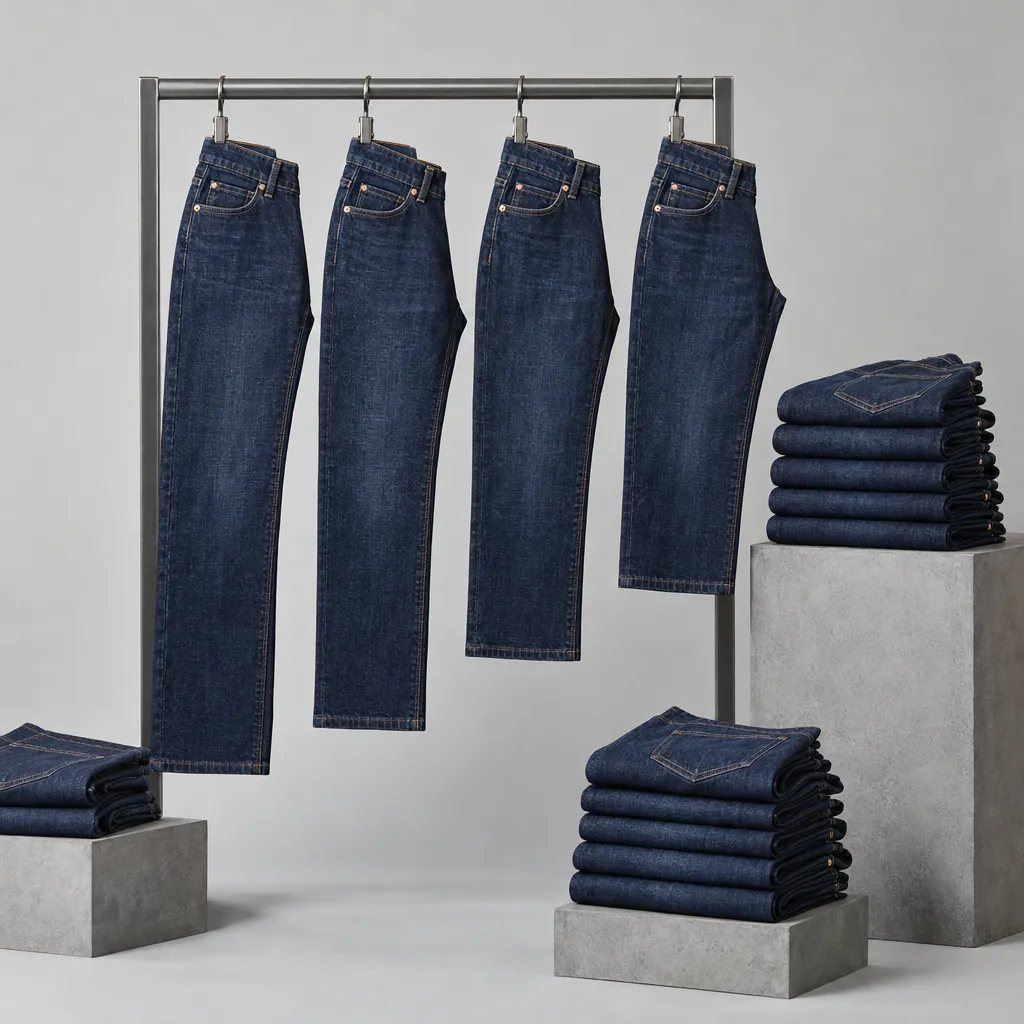
Length is the quietest inventory decision in a jeans range and one of the most expensive to get wrong. A style stocked in a single regular length sells to the middle of the demand and loses the rest to other stores, while a range spread thin across every length starves the core. The question is not whether to stock multiple inseams. It is how to allocate depth across short, regular and long so the tier structure pays for itself. This article works through the allocation, the role hemming plays, and the reorder signals each length tier gives a buyer who tracks them. The allocation logic below applies to a single-door boutique and to a multi-door program alike; what changes is the depth, not the structure.
Start from channel and customer
The right structure depends on where the demand sits. An online store can carry a wider length range at low incremental cost, because lengths occupy no floor space and the size chart does the selling. A single physical store often starts with two lengths and earns the third. Within a market, height patterns vary enough that the same structure does not fit two regions, so the honest input is the store's own fitting room and exchange data rather than a general rule. Where fitting rooms show regular lengths tried on and exchanged for length, the niche tiers are already being demanded. Where sales complete at regular without comment, adding depth at the edges is speculative and should start online. The size chart carries more of the selling in that channel, which is another reason the length tiers translate there before they translate to the floor.
Allocate depth by role, not evenly
Equal allocation across lengths looks fair and works badly. The regular length carries the range and deserves the deepest buy and the full size run. The short and long tiers exist to protect the customers the regular length loses, and they can run thinner, in the silhouettes that sell deepest at regular. Not every silhouette earns every length: a core straight that reorders steadily supports a long tier, while a trend style with an uncertain season usually does not justify depth at the edges. The tiers and their roles are summarized below.
| Length tier | Role in the range | Depth guidance |
|---|---|---|
| Regular | The default the range is built on | Deepest allocation, full size run |
| Short | Protects petite customers from hemming | Core silhouettes first, depth Pending |
| Long | Protects tall customers, often online-led | Start online, deepen on sell-through |
| Unhemmed with service | Lets the store finish to order | Requires a written hem allowance |
The niche ends of this structure behave differently enough from the center of the range that they deserve their own plan, covered in tall and petite denim depth.
Prepacks and the length mix
Suppliers often pack jeans in prepacks that combine sizes and lengths, and the pack structure quietly decides the store's length mix. A pack weighted to the regular length with a token short and long is common, and it can be the right answer for a first order. The mistake is carrying the pack ratio forward by habit. The mix should be renegotiated as the sell-through data accumulates, and where the supplier offers open-stock ordering by length and size, the transition is worth making as soon as the volumes justify it, because open stock lets the buyer match the length mix to the demand the store actually sees instead of the demand an average pack assumes. The terms for pack composition, and whether packs can be broken, belong in the written order terms with the rest of the commercial points.
Hemming as a pressure valve
An in-store hem service absorbs part of the length problem without inventory. It converts a long sale into a correct length and turns a potential exchange into a completed one. Two details decide whether it works. The first is the order terms: if any portion of the buy arrives unhemmed for finishing, the reserved hem allowance is a specification point, agreed in writing, and the approved hem type should be stated so the finishing matches the style. The second is communication, because a customer who does not know the service exists buys elsewhere. Staff should offer it at the point of sale wherever a length is imperfect, and the cost of the service belongs in the margin plan for the lengths it protects. A hem service also generates goodwill that compounds, because a customer whose length was finished to order remembers the store that did it.
Read the reorder signals by length
Each tier gives a different signal. A regular length that sells through steadily is the reorder engine of the style, planned like any core replenishment. Where the same style sells at several lengths, the reorder point should be set per length rather than per style, because a shared point hides the tier that is about to gap. A short or long length that always sells out first is under-allocated, and the lost sales are invisible unless the stockouts are recorded. A tier that comes back unworn is over-allocated or mismarketed. Review sell-through and stockouts by length and size each month, and let the pattern set the allocation for the next season. The cost of ignoring the signals shows up as churn: length-driven exchanges and the return pattern described under high return rates in denim.
Where the tiers themselves need cleaner definition, the measurement points behind each length are set out in rise and inseam specs for wholesale jeans, written per length so supplier and store mean the same garment. Definitions that live in the chart rather than in the heads of the staff are what make the length program transferable when the team changes.
Working with jeans
Length tiers, hem allowances and reorder terms are confirmed in writing for each style before an order is placed. To structure the lengths in your buy, request a quote with the size and length run you have in mind.