Home / Guides / Tall and petite denim: niche depth for stores
Tall and petite denim: niche depth for stores
Tall and petite denim is an inseam niche with loyal demand. How stores decide depth, label lengths clearly and cut length-driven returns.
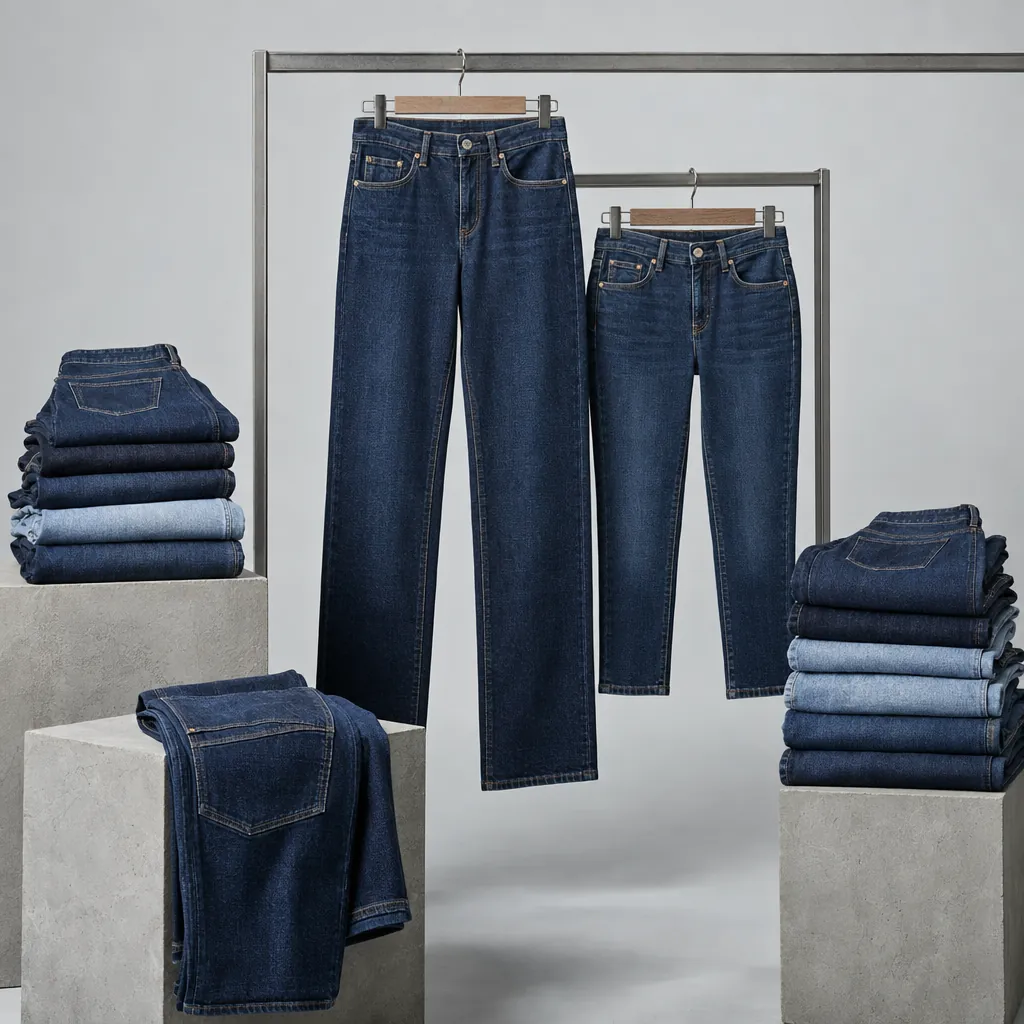
A standard inseam is a compromise that fits the middle of the demand curve and quietly fails everyone else. Tall and petite customers know it, and they reward the stores that stock for them: length is the one attribute a customer cannot alter herself, hemming can shorten but nothing can lengthen, and a store that carries the length converts a shopper who would otherwise leave. The niche is rarely large enough to carry a store on its own, but it is deep enough to build a loyal repeat base around a small number of core styles. This article covers what tall and petite sizes actually change in a garment, how to decide depth without straining the open-to-buy, and how to label and track the tier so it pays for itself.
What tall and petite actually change
The obvious difference is inseam, and it is not the whole difference. A proper tall block lengthens the rise as well as the leg and moves the knee placement down, so the jean keeps its proportions; simply adding length at the hem produces a jean with a normal rise and a long tube below it. A proper petite block shortens the inseam and often trims the rise and the knee placement, so the silhouette stays balanced on a shorter frame. The question to a supplier is therefore not only whether long and short lengths exist, but whether they are cut from adjusted blocks or only hemmed from the standard pattern. The two answers produce different garments, and the difference is visible on the body at the knee and at the rise, which is where fit complaints from these customers concentrate.
Decide depth by channel and silhouette
Online stores carry niche lengths more easily than small physical ones, because a length occupies shelf space only on the floor. A common structure is to launch the long tier online first, in the silhouettes with the deepest regular-length sales, and add it to the floor where it proves itself. The short tier follows the same logic in reverse: it earns floor space quickly in areas with demand for it. Not every silhouette needs every length. A straight leg in a long length is an easy proposition, while a trend style with an uncertain season rarely justifies depth at the edges of the run. Depth decisions belong in the inseam stock plan as a whole, treated fully in stocking short, regular and long inseams.
Label so nothing is guessed
Length tiers live or die on labeling. In the store, the length should be visible on the hang tag and legible in the stack, because a mixed bin is how the wrong length goes home and comes back as an exchange. Online, the length belongs in the product title and in the chart, not in a filter alone. The measurements behind each length tier should be published with their measuring method, so a customer who knows her own inseam can self-select without contacting support. Where the tier is cut from an adjusted block rather than hemmed from the standard pattern, saying so on the page is a selling point, because it tells tall and petite customers the style was made for them rather than merely trimmed for them. A printable length reference at the fitting room, carrying the same measurements as the site, closes the gap between the two channels.
Trend silhouettes and the niche tier
Trend silhouettes interact with length in ways the core range does not. A wide leg with a statement hem reads shortest of all, so petite customers need a genuine short length rather than a hemmed regular, and tall customers need the long tier to keep the proportion the style was designed for. A skinny or a slim hides length changes better, which is why the niche tier often proves itself there first. When a trend silhouette is tested in a limited run, carrying it in the regular length only is a legitimate first step, but the decision should be written into the test plan with a review date, so the tier is added deliberately if the demand appears instead of being remembered as a missed sale after the season closes. The niche customer who is ignored once rarely announces it. She simply buys where the length exists, and the store learns about the gap from the exchange log a season later, if it learns at all.
The tiers at a glance
| Length tier | Who it serves | Stocking note |
|---|---|---|
| Short | Petite customers and shorter inseams | Carry in core silhouettes first, depth Pending |
| Regular | The center of demand | Deepest allocation, full size run |
| Long | Tall customers, often online-led | Start online, add to the floor where it sells |
| Adjusted blocks | Tall and petite fit in proportion | Confirm the block, not only the hem, in writing |
Track exchanges, not only returns
Length problems express themselves as exchanges more often than returns: the customer wants the jean, just longer or shorter. That makes exchange data the clearest signal for this tier. A length that generates a steady exchange flow is under-allocated or mislabeled, and the fix is a stock decision rather than a fit decision. A length that comes back unworn signals the opposite, a tier the store cannot support and should thin out. Review both by length and by silhouette each season, alongside the rise and proportion guidance in the rise and fit guide, and let the numbers set the depth for the next buy.
Where the tiers need their own specification language, the same measurement points apply as in rise and inseam specs for wholesale jeans, written per length rather than per style, so supplier and store mean the same garment when they say long.
Working with jeans
Length tiers, block adjustments and depth allocations are confirmed in writing for each style before an order. To plan a tall and petite tier for your range, request a quote with the silhouettes you would start from.