Home / Guides / Plus size denim: fit chart discipline
Plus size denim: fit chart discipline
Plus size denim needs its own block, its own size chart and fit checks across the run, not a scaled-up version of the standard range.
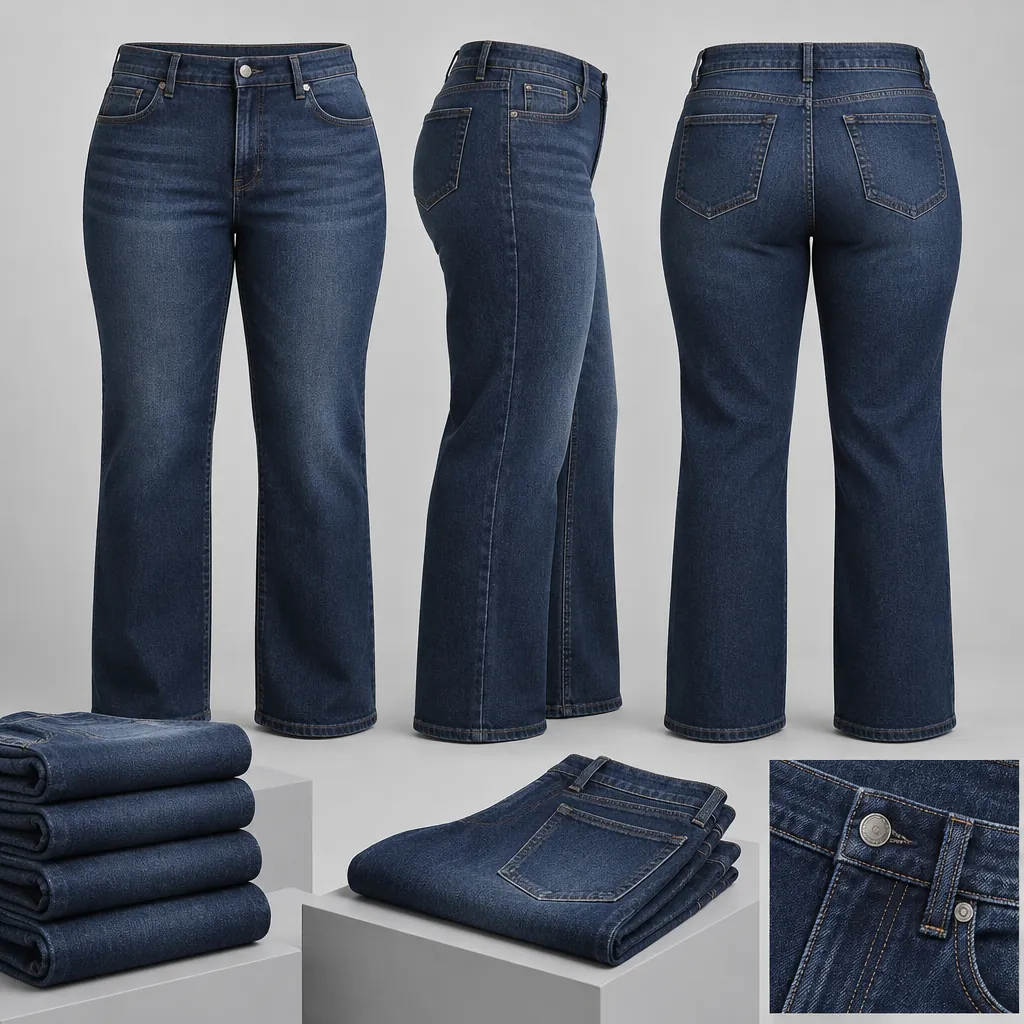
Plus size denim is the part of a jeans range where fit discipline pays the most and is applied the least. Customers in this segment have been underserved by the market for years, they notice immediately whether a style was designed for them or merely enlarged for them, and when a store gets the fit right they reorder with a loyalty the rest of the wall rarely sees. The discipline has three parts: a block of its own, a chart of its own, and fit checks spread across the size run. This article walks through each part from a buying perspective, with the checkpoints that matter before a plus program goes to bulk.
Start from a dedicated block, not a scaled standard
Bodies do not enlarge in a straight line, and patterns should not either. As sizes move beyond the middle of a standard run, the relationship between waist, hip and seat changes, the rise needs more depth than a proportional step provides, and the thigh and seat take more fabric than a scaled pattern allows. A factory that works from a true plus block, developed on plus fit forms, produces a cleaner fit than one that multiplies a standard pattern and calls the result a range. The first question to a supplier is therefore not a commercial question. It is whether the plus range is graded from its own block, and whether the buyer can see the grading rules that connect the block to each size on the run.
Build a separate chart with its own emphasis
A plus range deserves its own size chart, published separately from the standard table. The reasons are practical. The measurement points that decide satisfaction shift: rise depth, seat room, thigh and waistband comfort carry more weight, while the leg opening matters less. The grading steps differ, so a customer who infers plus measurements from the standard table will infer the wrong garment. And the fit language differs: a note about where the waistband sits and how the back rise behaves answers more questions in this segment than a note about the leg shape does. The chart structure itself, with garment measurements and stated methods, follows the same discipline as any size chart built to cut returns; the difference is emphasis, not format.
Fit across the run, not at one size
A fit check at a single size proves nothing about a plus range, because the distortions appear as sizes move. The review should cover the first size, a middle size and the last size of the run, on fit models of the corresponding measurements, and it should include the movements that expose problems: sitting, bending, walking. Watch the waistband for roll and pressure at the back, the back rise for coverage when bending, the thigh and seat for pull lines, and the fabric for how it has grown after a period of wear rather than only when new. The points are summarized below.
| Fit point | What changes across the plus range | What to check on the body |
|---|---|---|
| Waistband | Pressure and roll at the back increase | Sitting test, band stays level |
| Rise | Depth needs more than a proportional step | Back rise coverage when bending |
| Seat and thigh | Pull lines and strain marks appear earlier | Standing and walking, front and back |
| Knee and hem | Silhouette proportion shifts | Leg shape on the model at the end sizes |
| Stretch recovery | Bagging at knee and seat after wear | Fit after a period of wear, not only new |
Depth and information on the page
A plus program fails quietly through thin depth. A style that exists in the edge sizes only at the start of the season, or that sells out in the middle sizes by the second week, teaches customers that the range is decorative. The buy should plan depth from the segment's own sales history rather than as a share of the standard curve, and the online presentation should carry the same weight as the standard range: measurements on the product page, rise notes, and photography that shows the fit on bodies across the range rather than at one end of it. Stores building out this segment can use the silhouette options collected under plus size jeans as a starting structure for the buy.
What to confirm with the supplier
- Confirmation that the plus range is graded from its own block, with the rules supplied in writing.
- Measurements for the first, a middle and the last size of the run, against the specification sheet.
- The stretch content and recovery behavior of the approved fabric, checked after washing rather than new.
- Waistband construction, including any adjuster or comfort feature, and its behavior after repeated washing.
- Which fit models were used at which sizes during the factory's own fit review, and where the models are available to the buyer.
Each of these points is cheap to request during sampling and expensive to reconstruct after bulk. The grading rules behind the block, and the document that carries them, are the same discipline described in grading rules from sample to size run.
Returns as the feedback loop
Record return reasons for the plus range separately from the standard curve. The wording that comes back, tight in the thigh, short in the rise, rolls at the back, maps directly to the fit points in the table above, and it tells the buyer whether the next order needs a pattern change, a grading change or only a clearer page. A plus program that closes this loop each season compounds: the chart gets truer, the returns fall, and the segment becomes the steadiest part of the wall instead of the riskiest one.
Working with jeans
Prices, minimum quantities, lead times and grading rules for a plus program are confirmed in writing before bulk is ordered. To start the conversation, request a quote with the size run you have in mind.