Home / Guides / How Fit and Size Decisions Affect Denim Sales for Retailers
How Fit and Size Decisions Affect Denim Sales for Retailers
How rise, seat shape and size grading change denim sell-through, returns and markdowns, and what a retail buyer should approve before ordering.
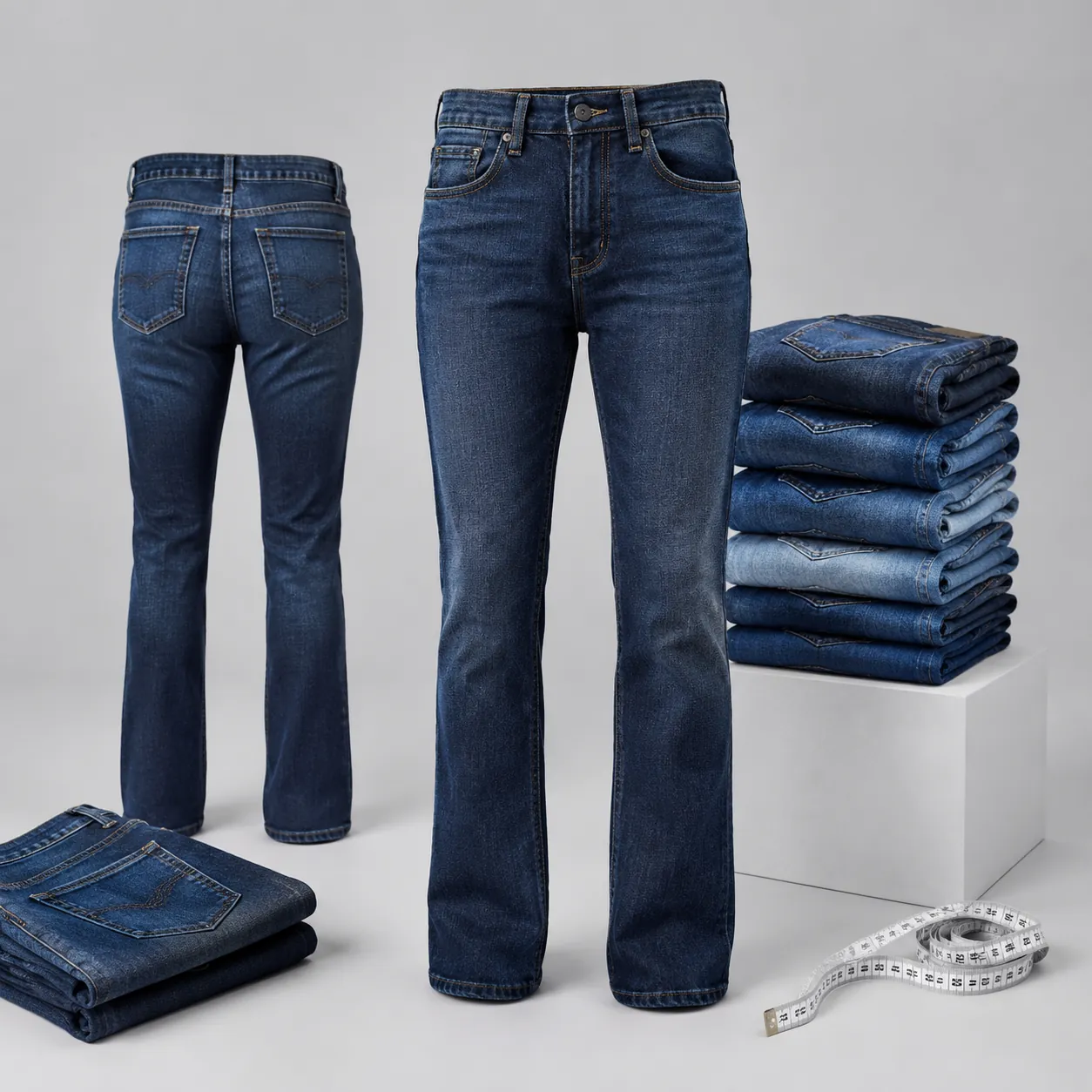
Fit is the reason most denim is returned, and returns are one of the largest hidden costs in a denim business. A jean that looks right on a hanger can fail on the body because the rise is too short, the seat is too flat or the size run leaves a gap between two sizes. For a retail buyer, the fit decisions made before the first order often matter more to the season's results than the choice of wash or the price point. This article looks at how rise, seat, and size grading affect sales on the floor and online, and what a buyer should approve before committing to a bulk order.
Rise is the first fit decision
The rise is the distance from the crotch seam to the top of the waistband. It decides where the jean sits on the body and how the top of the garment looks with a tucked or untucked shirt. High rise styles have grown in popularity in recent seasons, and the search interest for high rise jeans reflects shopper attention to this detail. However, a high rise is not a single measurement. Two high rise jeans from two factories can look and feel very different because of differences in the seat depth, the waistband height and the way the back rise is shaped.
For this reason, a buyer should describe the rise in a specification sheet using measurement points, not only the label. The front rise, the back rise, the waistband height and the total rise should all be listed, and each should be checked on the fit sample. A rise that is only described as high or mid will be interpreted differently by different teams and different suppliers.
Seat shape and the back pocket
The seat is where most fit complaints start. A seat that is too flat makes the jean look shapeless. A seat that is too shallow pulls across the back of the thigh and causes the fabric to crease in the wrong place. The back pocket placement changes the visual balance of the seat, and a pocket that sits too low or too wide can make the fit look larger or smaller than it is. Buyers should review the seat and back pocket together on a fit model, from the back, side and front, before approving the block.
Size grading and gaps in the run
A size run is only as good as its grading. Grading is the rule that moves the pattern from one size to the next, and it can be simple or complex. A standard grade may move the waist and hip by equal steps, while a more complex grade changes the rise, the seat and the thigh by different amounts. If the grading is poor, a customer who wears a size in one style may find that the same size in another style is too tight or too loose, and the store will see returns and exchanges.
Size gaps are a common problem in retail denim. A store may carry sizes that suit most customers but leave out the sizes at the ends of the range. The buyer should review the size curve against the store's own fitting room data, and check whether the range covers the sizes its customers actually try on. Where a store serves a wide range of body shapes, the size run should be planned from the start rather than extended later.
What to approve before the first order
- A fit sample on a fit model, approved in writing with the measurement sheet attached.
- Rise, seat, thigh, knee and hem measurements for the first and last size in the run.
- Grading rules for each measurement point, including the tolerance allowed in production.
- Stretch and recovery of the approved fabric, checked after washing rather than on a new garment.
- A labelled size chart for the store and for online product pages, consistent with the specification sheet.
How fit affects returns and markdowns
Fit problems show up in the returns report, but they start in the buying office. A jean that is returned because the rise is too short is a fit problem, not a customer problem. A buyer who tracks return reasons by style, size and rise can see which fits are underperforming and can correct the next order. Returns that are caused by fit usually carry the highest cost, because the item cannot be resold at full price after it has been tried on and returned.
Markdowns follow the same pattern. A style that sells well in the core sizes but leaves the edge sizes unsold will need deeper markdowns to clear. A buyer who plans the size run to match demand reduces the markdown exposure of the whole season.
Online and in-store differences
Online sales depend more on the size chart and product description than in-store sales, because the customer cannot try the jean on before buying. A retailer selling online should publish a size chart that matches the approved specification, and should describe the rise and seat in plain measurements. In-store, the fitting room gives the buyer direct feedback on how the size run performs. Both channels should share the same specification so that the fit a customer expects online is the fit they find in the store.
Summary for the buyer
Fit and size decisions should be made with the same care as price decisions. Describe the rise and seat with measurements, check the grading across the full size run, approve the fit on a model with the approved fabric, and track return reasons by style and size. The cost of a fit mistake is usually larger than the cost of a careful fit review. Measurements, tolerances and lead times for each style are to be confirmed in writing with the supplier before the order is committed.