Home / Guides / Denim fabric weight: how buyers choose
Denim fabric weight: how buyers choose
How denim fabric weight changes drape, structure, wash behavior and cost, and how a wholesale buyer picks the right tier for each silhouette.
What fabric weight describes
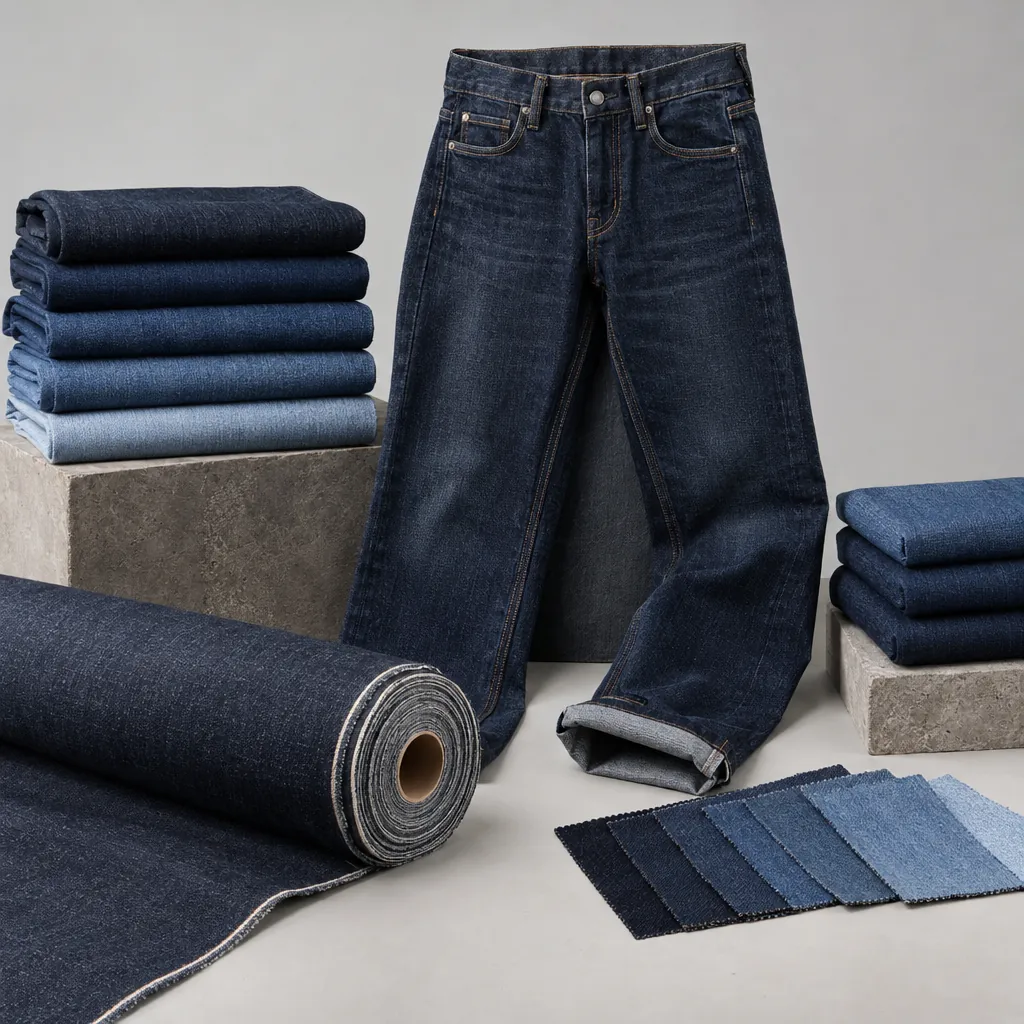
Fabric weight describes how much a fixed area of denim weighs, and it touches every other decision in a jeans program at once. The industry measures it in ounces per square yard, and suppliers quote it for the fabric as it comes off the finishing line. Two fabrics with the same color and the same fiber content can behave in opposite ways on the body when their weight differs, because weight drives drape, structure, wash behavior and unit cost together. A buyer who treats weight as a footnote in the specification usually finds the problem at the fit sample stage, when the silhouette will not hold the shape the design intended, and by then the calendar has already been spent. Exact weight values for any program are to be confirmed in writing with the supplier before a sample is cut.
The three working tiers
Buyers and suppliers usually discuss denim in three working tiers rather than in precise figures. Lightweight denim drapes close to the body and suits soft, fluid silhouettes. Midweight denim balances drape against structure, which is why so many core programs land there. Heavyweight denim stands away from the body, holds a pressed crease and reads as workwear or heritage territory. The tiers are relative rather than absolute, and the boundaries move with the market and with finishing, so the tier should be confirmed on a physical sample rather than argued from a number in an email. Where a program sits between tiers is a written decision, made against the approved sample and recorded in the specification sheet, not an assumption carried over from the last order.
How weight changes drape and structure
Drape is how the fabric falls from the body, and structure is how well the garment keeps the shape it was cut with. Heavier denim resists folding over itself, so a straight leg stands on its own and a wide leg holds its volume through a full day of wear. Lighter denim follows the leg and the movement of the wearer, which is exactly what soft flares and relaxed silhouettes depend on. The same pattern drawn for a heavy fabric reads entirely differently in a light one. Cargoes lose pocket shape, bootcuts lose the flick at the hem, and pressed creases fall out early. For that reason the weight should be chosen together with the silhouette, on a fit sample, rather than after the pattern has been locked. Weight tolerances between the approved sample and the bulk lot are to be confirmed in writing.
How weight changes wash behavior
Weight also decides how a fabric reacts in the laundry. Heavier denim takes more abrasion and longer cycles to reach a given shade, and it keeps its character through a stone wash. Lighter denim reaches a faded shade quickly, which saves laundry time but leaves less room to steer the look, because one extra pass can push a light fabric past the intended shade. Weight also shapes how a wash ages on the customer: a heavy fabric develops wear patterns slowly and locally at the points the body loads, while a light one softens and fades more evenly across the whole garment. Wash recipes therefore have to be developed per weight, and a recipe approved on a midweight fabric will not transfer unchanged to a lightweight version of the same style.
How weight shows up in cost
Cost moves with weight for plain physical reasons. A heavier fabric consumes more yarn per garment, holds more dye and takes longer in finishing, and all of that arrives in the quoted unit price. Heavier fabric also adds weight to every shipping carton, which matters on a full container program and shows up again in inland freight. The counterargument is service life: a heavier fabric can support a longer useful life and a stronger construction story, which some channels monetize and others do not. The correct comparison is cost per garment sold through at full price, not cost per pair at quote stage, and that comparison needs the actual tiered quotations in hand. Fabric prices, minimum quantities and lead times are to be confirmed in writing for each program rather than assumed from a general list.
The tiers side by side
| Dimension | Lightweight tier | Midweight tier | Heavyweight tier |
|---|---|---|---|
| Drape and structure | Fluid, follows the body | Balanced | Standing, holds shape |
| Wash behavior | Fades fast, narrow control | Predictable, widest latitude | Slow to develop, holds character |
| Typical silhouettes | Soft flare, relaxed, summer | Straight, bootcut, most cores | Workwear, heritage, rigid |
| Fabric weight value | Pending | Pending | Pending |
| Cost direction | Lower fabric cost per length | Middle of the range | Highest fabric and freight cost |
Constructions quoted within each tier vary by mill and by finishing route, so the tier is a starting point rather than a purchase. The denim fabric section lists the options commonly available to wholesale programs, and the exact weight of the construction behind any quotation is confirmed in writing before a sample is cut.
Matching weight to silhouette
The working rule is to let the silhouette pick the tier, then let the wash plan confirm it. Structured styles such as straight and bootcut legs hold their line in the middle tiers and turn shapeless in the lightest fabrics. Soft silhouettes such as flares, wide legs and relaxed fits gain from a lighter fabric that moves with the customer instead of standing apart from her. Workwear-inspired programs justify the heavy tier because the weight itself is part of the promise the customer is buying, and hiding it would defeat the purpose. A store building a full wall usually anchors the core in midweight and uses the edges of the wall for lighter summer capsules and heavier statement pieces. For the anchor role in detail, see the article on midweight denim as the core of a jeans wall, and for the seasonal edge see the piece on lightweight denim programs for warm months.
What to put in the specification
Write the weight requirement into the specification sheet as a tier plus a tolerance, confirm that tolerance on the approved sample, and require the bulk fabric to be supplied within it. Ask the supplier to state the weight on the fabric quotation and on the fabric test report, so the value can be checked when the fabric arrives rather than discovered on the cutting table. Where a style will be washed heavily, ask for the weight after wash as well, because some finishing routes remove more of it than buyers expect. Any change of fabric weight during development should be treated as a specification change and re-approved in writing, because it quietly moves drape, wash behavior and cost at the same time. A one-line weight note in an email is not a specification; it is the beginning of a dispute.
Working with jeans
jeans helps buyers compare denim weights and build the fabric line for a program, working with partner mills and laundries. Fabric weights, minimum order quantities and lead times are indicative in early discussions and are confirmed in writing for each order. To review fabric options for your own range, request a quote and we will reply with written terms and current fabric availability.