Home / Guides / Selvedge denim for small brands
Selvedge denim for small brands
Selvedge denim for small brands: what the fabric signals, what it demands on minimums and lead time, and when the story earns its place in a line.
What selvedge denim actually is
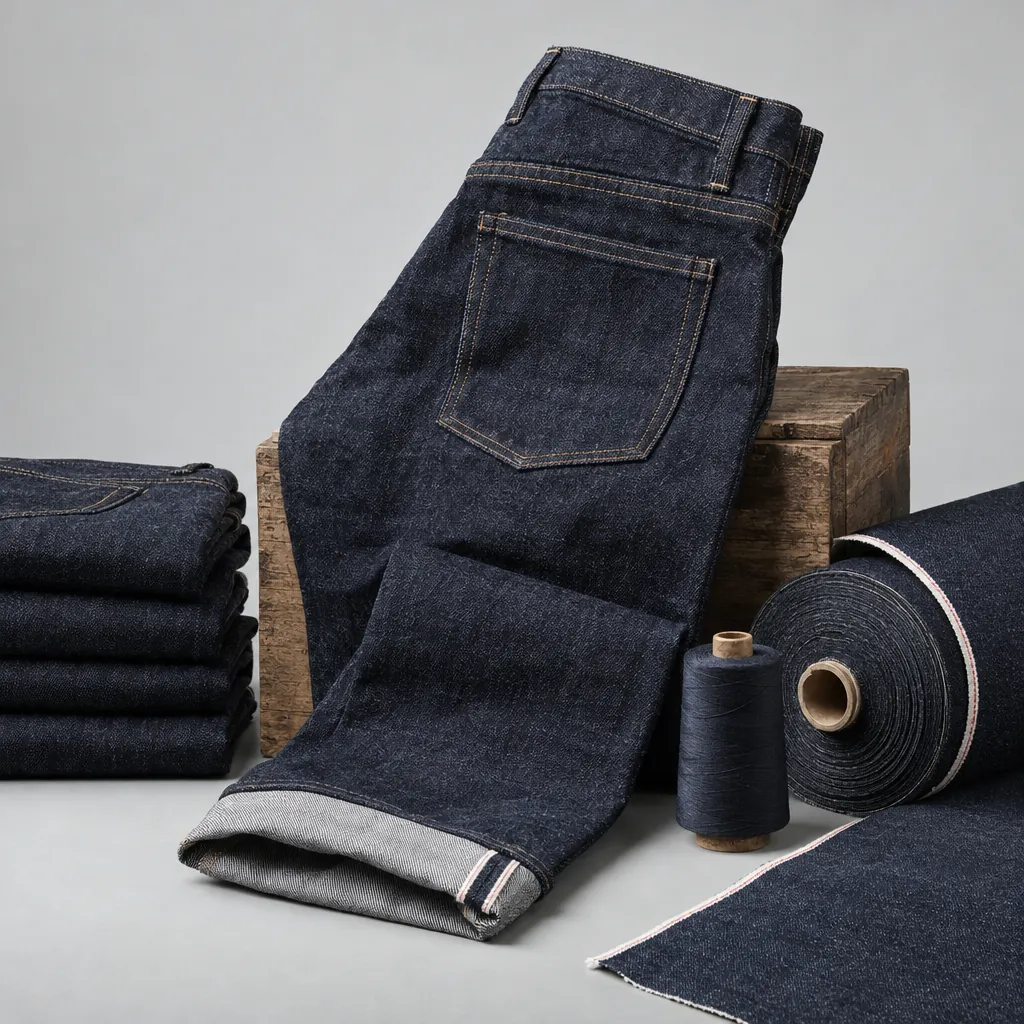
Selvedge denim is woven on shuttle looms, which finish the edge of the fabric with a clean, self-finished band instead of the overlocked edge that faster modern looms leave behind. The word itself comes from self-edge. The fabric is narrower, the looms run slower, and the output per loom is a fraction of modern weaving capacity, which is where most of the cost and most of the story come from. The selvedge band is usually visible at the outseam when a jean is cuffed, often marked with a colored weft thread in the band. Nothing about the weave automatically makes the fabric more durable; its value lies in construction heritage and in a detail that a knowledgeable customer can see and check for himself. Exact fabric construction details for any program are confirmed in writing with the supplier.
What the edge signals to a customer
For the customer who notices, the selvedge band signals that the garment was made with slower, older machinery and a fabric tradition that predates volume production. That customer is a minority, but a valuable one for a small brand, because this buyer reads details, compares construction and justifies a higher price to himself on craft grounds rather than on logo grounds. For the majority of customers the band means nothing on its own, which is why a selvedge program only works when the brand is willing to explain it, on the product page, on the hang tag and through staff training in store. An unexplained selvedge detail is a cost the brand absorbs without collecting any of its value. The explanation, not the fabric, is what converts the detail into a price argument.
What the fabric changes in the product itself
Selvedge width changes how the pattern is cut. The fabric is narrower than conventional denim, so a factory lays the pattern differently, yields fewer parts per lay and reserves the selvedge edge for details such as the outseam, the coin pocket or the fly guard. The weave itself is usually denser and slightly irregular, which gives the fabric a drier hand when new and a slower, more personal fade pattern over years of wear. Most selvedge programs run the fabric rigid or with a light rinse, which puts the shrinkage conversation in front of the customer rather than behind it. All of this is manageable, but it belongs in the plan from the start, because retrofitting a selvedge fabric onto a pattern and a fit process designed for conventional denim usually disappoints on both cost and fit.
The minimum order reality
Selvedge fabric carries structural minimums that a small brand has to plan around. Shuttle loom production is slower, the fabric is narrower, and mills run it in longer batches to make each setup worthwhile, so the minimum length per fabric runs higher than for a comparable open-width denim. Minimum quantities, per-fabric minimums and the lead times that go with them vary by mill and are confirmed in writing for each program. The practical consequence for a small brand is that a selvedge program ties up capital in fabric for longer, tolerates fewer color options per order, and punishes a style that misses. The realistic entry is one fabric, one or two fits, and a depth plan built on reorder rather than on a wide first range. For how mills and lots shape those commitments, see the article on sourcing denim fabric.
When the story earns its keep
The narrative pays when three conditions hold at once. First, the brand's customer already buys on construction and provenance, or the brand is deliberately building that audience and has the patience to do it. Second, the line has a communication channel, whether a strong product page, a newsletter or trained staff on a floor, that can actually explain the fabric where the customer decides. Third, the price position leaves room for the fabric premium without breaking the brand's own price architecture. A capsule that meets all three can carry the cost comfortably, and the fabric becomes the anchor of the brand's identity rather than a line item. It helps that selvedge usually sits at the firm end of the hand scale, a tradeoff covered in the piece on handfeel versus durability in denim selection. Where any of the three conditions is missing, the same capital usually earns more in a conventional program with better fits.
When a small brand should skip it
Skipping selvedge is often the stronger decision. Brands in early growth need fit data and reorder speed more than they need heritage details, and a wide first range of selvedge fabric works against both at once. Channels dominated by e-commerce returns reward fabrics that fit predictably after washing, and a rigid selvedge fabric adds shrinkage behavior to an already delicate fit conversation. Where the brand's story is built on color, wash innovation or fit, a heritage weave is the wrong anchor for the range. The honest test is whether the brand would still choose the fabric if it could not mention the word selvedge anywhere in its marketing. If the answer is no, the purchase is buying a sentence rather than a product, and the sentence will not survive contact with a returns report.
Entry points that avoid the full commitment
Some brands test the territory without committing a full program to it. A selvedge coin pocket or belt-loop detail inside a conventional fabric lets the brand learn whether its customer notices or cares at all. A single selvedge style in a limited seasonal run gives real sales data before any deeper commitment is made. Pairing one selvedge fabric with a rigid-denim fit strategy lets the brand reuse the same cloth across two fits and spread the minimum over more units. Each of these keeps the option open while keeping the capital exposure contained. The constructions commonly quoted for selvedge programs are described on the selvedge denim page, and fabric minimums for any of these structures are to be confirmed in writing before the range plan is fixed.
Questions to put to the supplier
- Which mill weaves the fabric, and is the loom source stable enough to support reorders across seasons.
- What the minimum order is per fabric and per colorway, and what minimum applies again at reorder.
- Whether the fabric is supplied loom state or finished, and how that affects shrinkage planning.
- What documentation accompanies the fabric, including weight and construction details on the test report.
- How lot-to-lot shade variation is controlled across a reorder, and against which approved standard.
Written answers to these questions, with every value confirmed in writing, separate a workable selvedge program from an expensive lesson learned in fabric.
Working with jeans
jeans works with buyers to assess whether selvedge denim fits a brand's price position and order structure, and to compare it against conventional alternatives on equal terms. Fabric minimums, quotations and lead times are indicative at first contact and are confirmed in writing for each program. To review selvedge and non-selvedge options side by side, request a quote with your target price position and fits.