Home / Guides / Handfeel vs durability in denim selection
Handfeel vs durability in denim selection
Softness sells on first touch while durability protects reorders and returns. How to weigh handfeel against durability when choosing denim.
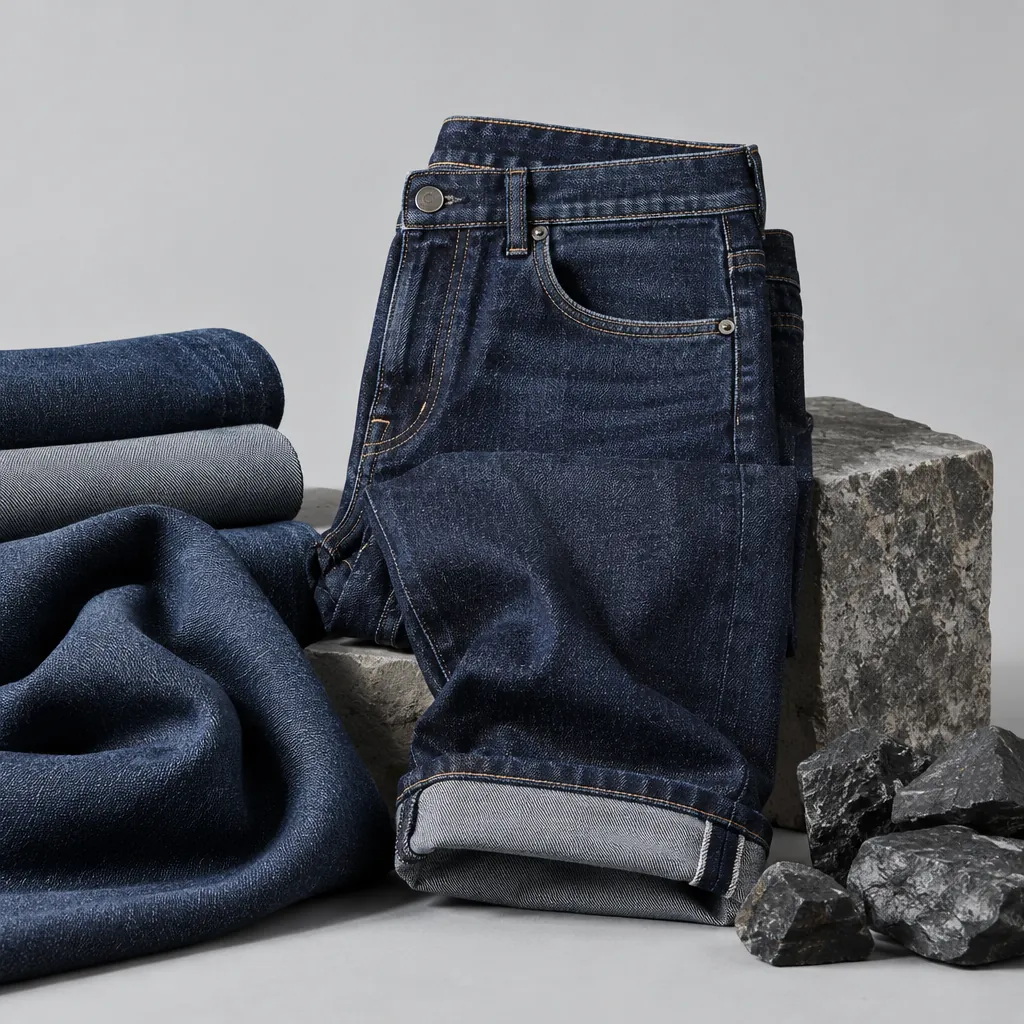
Two properties buyers conflate
Handfeel is how the fabric feels in the hand and against the skin in the first moments of wear. Durability is how the garment survives months of wear and washing. Buyers conflate the two because both are judged through touch, but they are driven by different parts of the fabric and they frequently trade against each other. The softest fabric on the table is often the one that bags at the knee and thins at the thigh first, and the fabric that outlasts everything else in the range can sit untouched because it feels stiff on first contact. A buyer who knows which levers move which property can stop choosing between them blindly and start choosing deliberately, per style, against the job that style has to do. Softness values and durability grades for a specific fabric are established by test and confirmed in writing.
What drives handfeel
Handfeel is built from four places. Fiber content comes first: softer cellulosic blends and elastic yarns read softer immediately, while dense all-cotton constructions read drier and firmer. Fabric weight comes second, since lighter fabrics fold and flow more readily in the hand. Third is finishing: softeners applied in the mill and wash routes in the laundry both open the fabric and soften it, and the laundry can move handfeel further than most buyers expect. Fourth is the wash program itself, where enzyme routes and stone processes physically break down the surface and produce the broken-in feel customers associate with a favorite pair. The stone wash process is the classic example, and its tradeoffs for both hand and strength are covered on the stone wash page. Handfeel is therefore a decision, not a property the fabric arrives with.
What drives durability
Durability is built from the same list in reverse order. Construction matters most: yarn quality, weave density and seam strength decide how a garment resists the abrasion and load of real wear, before any fiber choice is considered. Fiber content matters next, where polyester shares and cotton-dominant builds hold up differently at the points garments actually fail. Weight contributes, though less than folklore suggests; a heavy fabric poorly woven will not outlast a denser lighter one. Finishing subtracts: every aggressive softening treatment spends some of the fabric's service life, because the same processes that soften the surface also weaken it slightly. Durability is invisible at the point of sale and shows up only in what customers say months later, which is exactly why it needs a specification and a test behind it rather than a feeling on the day.
The tradeoff in the laundry
The clearest collision between the two properties happens in the laundry. Stone and enzyme routes produce the softness and character customers ask for, and they work by removing material from the fabric surface, which is another way of saying they consume part of the garment's life. A light rinse spends almost nothing and leaves the fabric at its firmest. Between those poles, the laundry can steer handfeel against strength almost continuously, which means the buyer's real decision is not whether the garment is soft but how much service life the program is willing to spend to make it so. That decision belongs in the specification, with the wash route named and its effect on strength accepted in writing, because the same style washed two ways can sit at opposite ends of both properties.
The tradeoff, dimension by dimension
| Dimension | Handfeel-leaning choice | Durability-leaning choice |
|---|---|---|
| Fabric weight | Lighter tier, softer drape | Heavier tier, more body |
| Fiber blend | Soft cellulosic or stretch content | Cotton-dominant, denser weave |
| Mill finishing | Softener-heavy routes | Minimal finishing |
| Wash program | Enzyme and stone routes | Light rinse, gentle cycles |
| Silhouette fit | Soft flare, relaxed styles | Straight, workwear builds |
| Weight values | Pending | Pending |
Read as a whole, the table says something simple: the two properties are chosen together, per style, and the choice is expressed in construction and finishing rather than in one magic fabric.
Handfeel signals that mislead
The hand a buyer feels on a new sample is partly an artifact of the sample itself. Unwashed fabric feels at its firmest and will soften in wear; heavily softened samples feel at their best on day one and have already spent part of their life. Handfeel also reads differently by temperature and humidity, which is why a fabric that felt soft at the supplier can feel stiff in a cold store. The reliable comparison is between washed samples, treated the same way, reviewed under the same conditions, and compared against each other rather than against memory of a previous program. Buyers who short-cut this comparison tend to buy the same disappointment twice, first from the supplier's sample and then from the bulk lot that matches it faithfully.
Choosing by channel
The right balance depends on where and how the garment is sold. E-commerce ranges live and die on returns and reviews, and the fit-and-feel complaints that follow a fabric that bags or thins early are expensive, so a moderate durability floor protects the business even in fashion styles. Workwear and core programs invert the priority: the customer is buying endurance, and softness is delivered through wash development within a durable build. Boutiques and capsule programs can weight handfeel heavily, because the garment is judged in the first wears and the sale is made at first touch. The article on lightweight denim programs shows the same logic from the seasonal side, where opacity and drape join the decision. Stretch tiers add their own recovery dimension to this choice, covered in the piece on stretch denim content tiers.
Testing both before committing
Both properties can be asked for in documents. For durability, buyers request abrasion resistance, seam strength and dimensional stability results against named test methods; for handfeel, they run comparative wear trials on washed samples, because handfeel resists a single number and rewards structured comparison. The two together answer the question that matters: how the fabric will feel after a month, not how it feels on arrival. Reports and methods are agreed in writing before bulk, and the bulk fabric is checked against the same reports rather than against the memory of the sample.
A working decision rule
A practical rule for a mixed range: set a durability floor for every style in the program, then spend handfeel freely above that floor. The floor is defined by the channel, the price position and the returns history the program can carry, and it is expressed in tests rather than in adjectives. Below the floor, no softness justifies the purchase, because the garment will generate complaints no matter how good it feels on the rail. Above the floor, handfeel becomes a legitimate competitive weapon, and the laundry and finishing choices that deliver it become part of the product's design rather than a hidden cost against its life. Programs that adopt this rule stop arguing about softness in the abstract and start recording, per style, what the garment is being built to do.
Working with jeans
jeans helps buyers balance handfeel against durability per style, with wash development and test reports agreed before any order is placed. Fabric options, test scope, minimum order quantities and lead times are confirmed in writing for each program. To compare fabrics for your own range, request a quote with your target channel and price position.