Home / Guides / Denim Fabric and Wash: Buying Points for Retail Buyers
Denim Fabric and Wash: Buying Points for Retail Buyers
What a retail buyer should specify for denim fabric and wash: weight, stretch, dye fastness, finish, and how to approve a wash before bulk production.
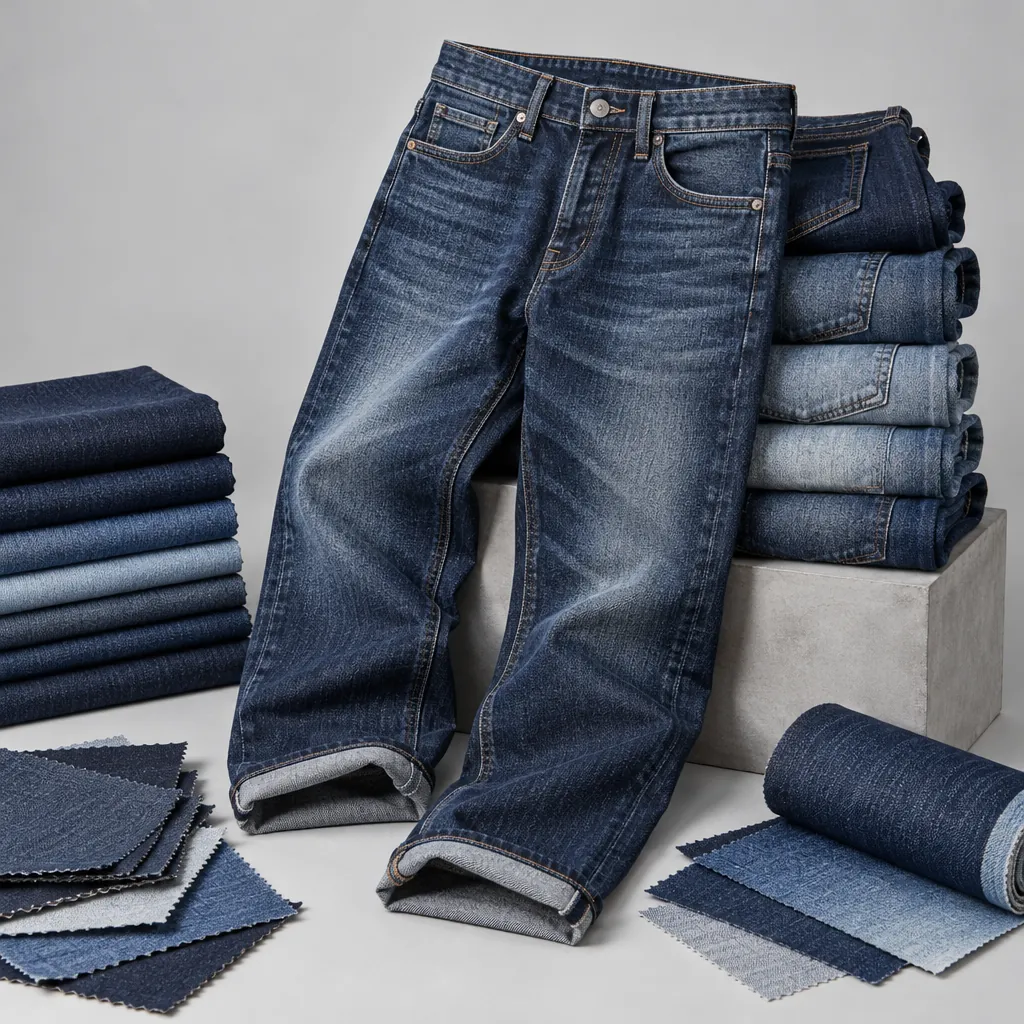
Fabric and wash decide how a pair of jeans looks on the shelf, how it feels on the body and how it changes after the first few washes. For a retail buyer, these two choices shape the customer's first impression and the garment's life after purchase. A buyer who approves a wash on a small swatch without checking it in production often finds that the bulk lot looks different, feels different or fades faster than expected. This article sets out the main points a buyer should specify for fabric and wash, and the checks that protect the order before it reaches the store.
Fabric weight and hand feel
Fabric weight describes how heavy the denim is per unit of area. Heavier fabrics hold their shape and suit structured silhouettes, such as straight or cargo styles. Lighter fabrics drape more easily and suit relaxed or flared silhouettes. Hand feel, which is how the fabric feels when touched, is harder to specify than weight, and it changes with the finish and the wash. A buyer should describe the intended hand feel in a short written note, then ask the supplier to provide a fabric sample for approval before the first wash trial.
Weight and hand feel should be checked against the silhouette. A heavy fabric in a flared style can look stiff at the hem, while a light fabric in a cargo style can lose the pocket shape. These are fit and fabric decisions that should be made together.
Stretch and recovery
Stretch denim contains elastic fibers that allow the fabric to move with the body. Stretch improves comfort, but it changes the way a garment recovers after wear. Recovery is the fabric's ability to return to its original shape. Low recovery can leave the knee and seat bagging after a day of wear, which becomes a return reason. A buyer should ask for stretch and recovery figures for each fabric, and should request a wash test before approval. Stretch specifications, test methods and results are to be confirmed in writing for each fabric.
Dye fastness and color retention
Dark indigo is the most common wash for a core denim range, and it is also the wash most likely to transfer color. Dye fastness describes how well the color resists rubbing and washing. A buyer selling dark denim should ask for color fastness results for both wet and dry rubbing, and for washing. Colour transfer is a common complaint in stores that carry white or light tops, and it can damage a retailer's relationship with customers. Test reports and standards to be used should be agreed in writing before production.
Wash families and how to choose them
Wash is the surface treatment that gives denim its color and character. Most retail ranges are built from a few wash families. Dark washes are flexible and suit a core range. Mid washes work across seasons and are easy to style. Light washes carry a seasonal message and often need more careful color control. Each wash family has its own development cycle, so a buyer should decide the wash plan early and plan development time into the order calendar.
- Dark wash. Core range, broadest styling options, highest color transfer risk.
- Mid wash. Year-round range, balanced color and styling flexibility.
- Light wash. Seasonal capsule, stronger fashion message, needs careful finish control.
- Black or grey wash. Specialist range, depends on the store's customer base and dye approach.
Shrinkage and dimensional stability
Denim shrinks during the first washes, and the amount depends on the fiber content, the fabric construction and the finish. A pair that is cut to the approved measurements before washing may come out shorter or narrower after the first wash, which changes the fit the customer receives. A buyer should ask for a shrinkage test on the approved fabric, measured in the length and width directions, and should decide whether the pattern is adjusted to allow for shrinkage. The test method and the allowance are to be confirmed in writing, and the post-wash measurements should be checked against the specification before bulk approval.
Stretch fabrics need the same check. Elastic content can relax after repeated washing, and the seat and knee may grow over time. A garment that is approved on a new sample may not look the same after a month of wear, so the wash test should include repeated cycles where the budget allows.
Finishes and effects
Finishes such as a rinse, a raw hem or a distressed effect add visual interest, but they also add steps to production and inspection. A distressed effect is often hand-finished, and the look can vary from piece to piece. A buyer should approve the effect on a sample, then agree a tolerance range for variation in writing. Finishes add cost and lead time, so they should be quoted separately from the base wash.
How to approve a wash before bulk
- Request a fabric sample and a wash sample in the intended silhouette, not only a swatch.
- Check the sample under daylight and under store lighting, since the color can look different under each.
- Test the sample through repeated washing and drying, then compare it with the approved standard.
- Record the approved wash in the specification sheet, including the wash recipe reference and the approved tolerance.
- Ask for a pre-production sample from the bulk lot, and compare it with the approved sample before shipment.
Care labelling and customer expectations
Care instructions must match the fabric and the finish. A buyer should confirm the care labelling for the target market, and should check that the instructions are consistent with the wash test results. Customers who receive a pair that fades or shrinks more than the label suggests will contact the store, so the care guidance is part of the product, not an afterthought.
Summary for the buyer
Specify fabric weight, hand feel, stretch and recovery, and color fastness in writing. Approve the wash on a full sample in the intended silhouette, and confirm the bulk lot against that sample before shipment. Each finish adds cost and lead time. Fabric options, wash development times and test reports are to be confirmed in writing with the supplier for each order.