Home / Guides / Online jeans stores: sourcing for conversion
Online jeans stores: sourcing for conversion
How online jeans stores source for conversion: product pages backed by real specs, return-aware fit choices, small test runs and data-driven reorders.
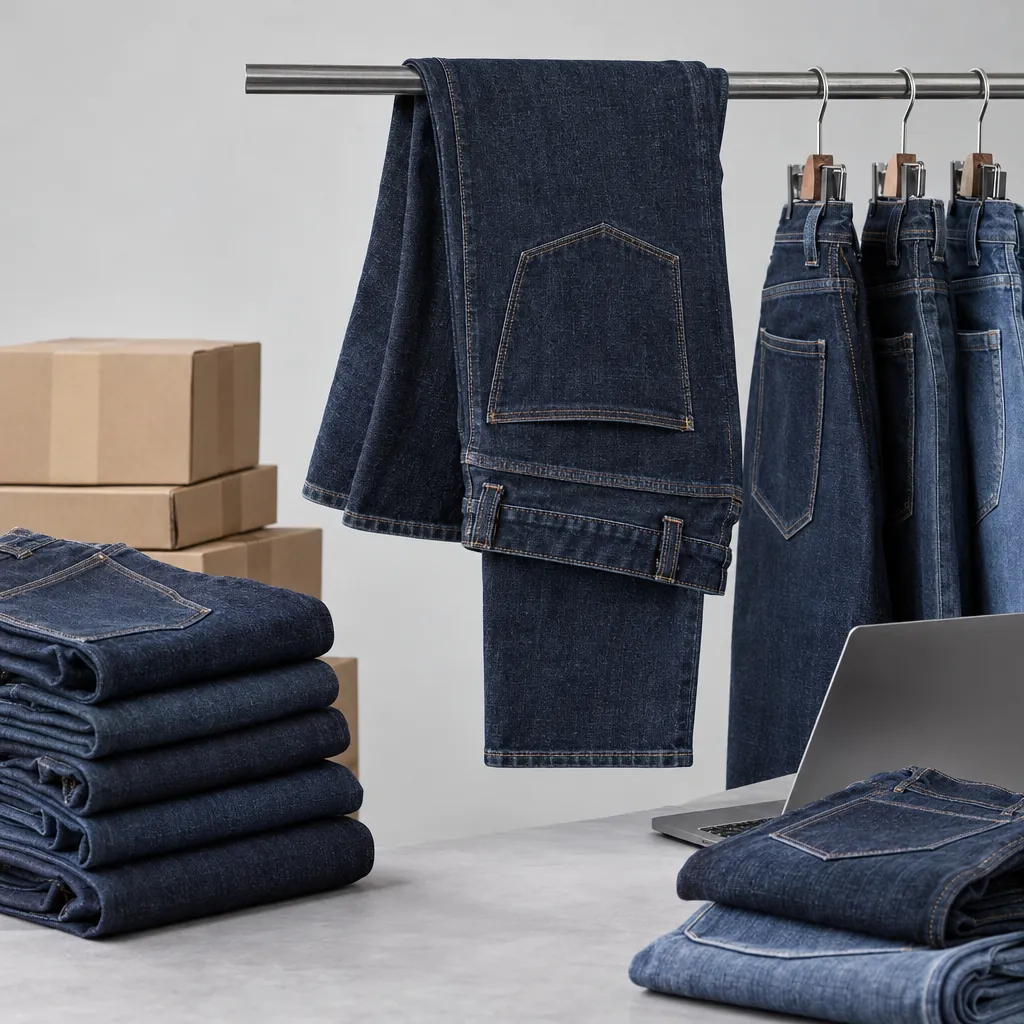
Selling jeans online changes what sourcing has to deliver. The customer cannot try the garment on, so the product page has to carry information a fitting room would have supplied, and the cost of a wrong fit comes back as a return rather than a question to staff. A buyer sourcing for an online store is therefore sourcing for two things at once: a product that fits predictably across sizes, and a specification complete enough to describe honestly on the page. This article covers both, from fit selection through structured test runs to the reorder signals worth reading every month.
The page can only say what the spec supports
An honest product page needs measurements, not adjectives. Rise, leg opening, inseam and fabric weight can all be described in words a customer understands, but only if the specification sheet contains them and the bulk matches the sheet. Descriptions drift when they are written after production instead of before it, and drift is what customers notice when the garment arrives. The practical habit is to write the page copy from the approved spec sheet, style by style, so that what the customer reads is what the factory agreed to make. Stores that work this way tend to see fewer size questions before purchase and fewer returns after it, because expectation and product were built from the same document.
Choose fits that behave predictably
Online, a fit that needs to be tried on to be understood is a fit that generates returns. Buyers sourcing for e-commerce tend to favor rises and leg shapes customers already know, fabrics with stable stretch and recovery, and washes that look the same in photography as they do in daylight. A rigid fabric can still work online, but the page then has to prepare the customer for the break-in period and the first wash, or the surprise becomes the first return. Novelty silhouettes can still be sold, but they belong in shallow test runs with a decision date, not in the core catalog where return rates compound quietly.
Keep the size chart and the grading aligned
The size chart is the most read page on an online denim store, and it is usually the least verified. The chart should be derived from the approved specification for each style, not copied between styles, because two fits that share a size label can differ meaningfully at the rise or the leg opening. Where two styles genuinely differ, the page should say so in one plain sentence. The chart should also be re-checked against the pre-production sample, since grading changes made late in development are the ones that never reach the published table. A store that audits its charts once per season catches the drift before customers do.
Treat returns as a sourcing metric
Return reasons are purchasing information, and each reason points to a different fix in the next order:
- Returned for sizing either way: a grading or size chart problem.
- Returned as looking different from the photos: a sampling and photography problem.
- Returned for comfort at the waist or seat: usually a rise or fabric problem.
- Returned unworn with tags on: a page description problem, not a product one.
A buyer who reviews return reasons by style and size each month can brief the supplier with specifics instead of impressions, and the next production run becomes measurably easier to sell. None of the fixes above is achieved through better packaging or faster shipping; they are achieved in the specification.
Test styles with structure, not hope
A test run should change one variable at a time: one new silhouette in a proven wash, or one new wash on a proven fit, bought shallow with a decision date. Testing three new things at once tells the buyer only that something happened, not what caused it. Sell-through expectations should be written down before the test ships, including the reorder threshold and the date it is reviewed, so the follow-up decision is made against a standard rather than a mood. Drop-style releases follow the same logic at a faster tempo, and the mechanics of running limited denim releases are covered in the article on streetwear denim.
Order samples for the page, not only for approval
Online stores need more from the sample round than a fit approval. Photography requires the garment in the sizes customers actually wear, ideally more than one size per style, so that product images do not silently promise a fit the bulk does not deliver. Washes should be photographed under the same lighting conditions the return desk will argue about later, and the images should be kept consistent across a fit family so customers compare fits rather than compare photos. Where a style will be shot on models, the model's size should be stated on the page, because it is the reference customers use to interpret every image.
Read the reorder signals
Online sales data is finer than store data, and it should feed the next buy directly. Size-level sell-through shows where the run should deepen. The distribution of returns by size shows whether the chart or the grading is off. Time-to-sellout after a restock shows how much demand the first run left unserved. These signals decay quickly, so the reorder decision belongs close to the sales peak, not after it. How those decisions sit inside the wider year, alongside the physical retail seasons, is set out in the guide to the seasonal drop calendar.
Working with jeans
FULVERA coordinates denim sourcing for online brands and e-commerce sellers, including small structured test runs and specification sheets written for product pages. Quantities, prices and lead times are confirmed in writing before production. The category-level buying logic is summarized on the online denim brand applications page; when your test plan is ready, request a quote with your fits, washes and size runs.