Home / Guides / Western wear retail: bootcut-led denim walls
Western wear retail: bootcut-led denim walls
How western wear stores build a bootcut-led denim wall: rise and inseam pairings for boots, wash choices, themed categories and seasonal event timing.
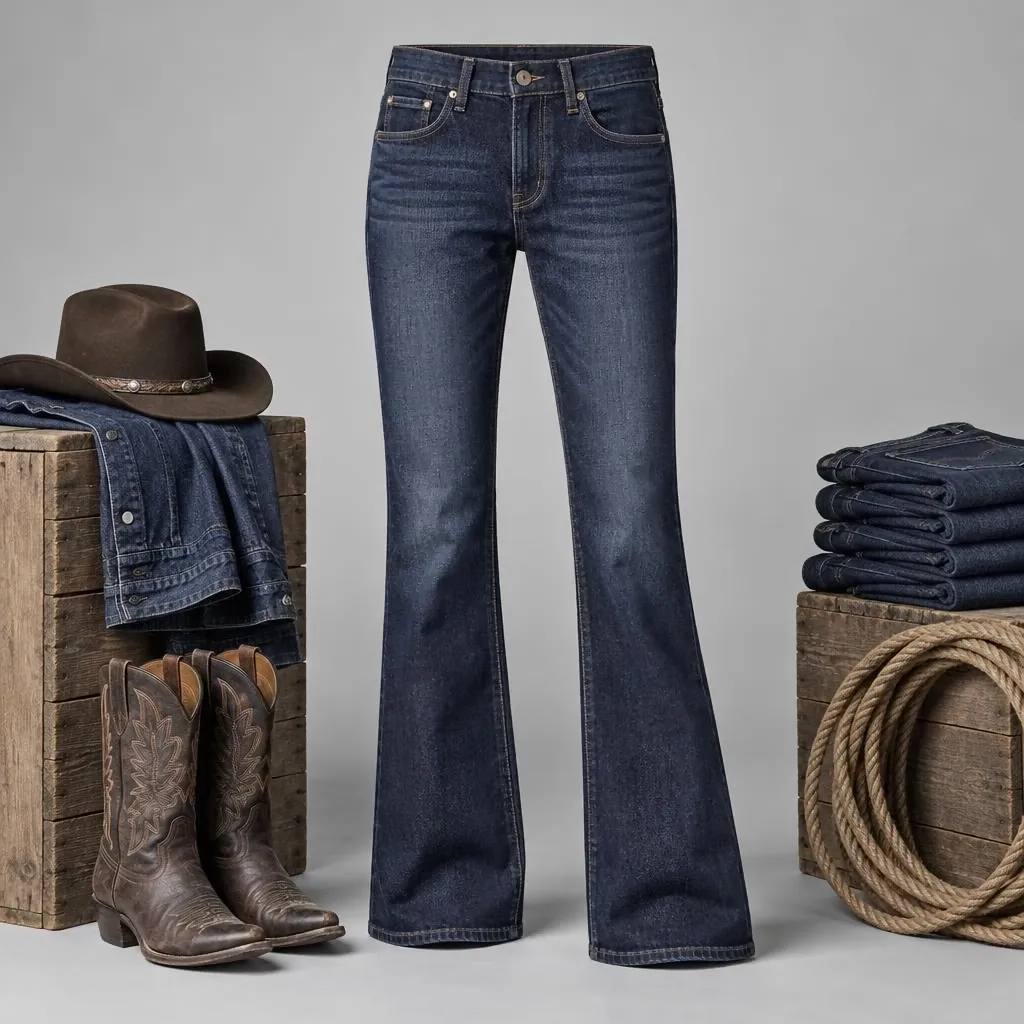
In regions where western dress is everyday clothing rather than costume, the denim wall follows the region, not the national trend report. Bootcut leads, rises and inseams are chosen to work with boots, and the wash palette runs darker and cleaner than a fashion floor. Retailers who serve this customer well tend to run a themed wall with unusual discipline: fewer silhouettes, deeper core fits, and a buying calendar built around local events rather than national promotions. This article describes how a western-led denim wall is planned, stocked and kept full through the year.
Why bootcut still leads the western wall
Bootcut is not a retro choice in western wear; it is functional. The leg clears a boot shaft, the balance works with a tucked shirt and a belt, and the silhouette reads correct across ages in a way few fashion cuts manage. For the buyer, this means bootcut anchors the range in both depth and visibility: it takes the best wall position, the deepest size run and the first reorder priority. Other fits earn their space by serving the customers bootcut does not, such as a straight leg for work-adjacent wearers or a slimmer fashion cut for younger shoppers who still want the western vocabulary in their wardrobe. Fit vocabulary matters in this channel as well. Customers often arrive with a bootcut expectation that covers a range of actual shapes, from a gently flared version to a tighter, straighter one, and the store benefits from carrying the variation it can explain rather than the variation it cannot. Two bootcut blocks, described accurately by knee break and hem opening, serve the wall better than four overlapping versions of the same idea.
Rise and inseam: the boot pairing
The defining stocking decision in western denim is inseam. A bootcut meant to sit over a boot needs length, and stores serving this trade typically stock longer inseams than a general-market wall would, letting the fabric stack correctly over the shaft. A practical stocking pattern looks like this:
- The hero bootcut in the longer boot-wearing inseam, in full size run.
- A shorter inseam option on the same fit, for customers wearing it without boots.
- Rise held slightly higher than a fashion wall, so the waist stays covered in a seated or in-the-saddle posture.
- Length gaps treated as lost sales, because hemming after purchase adds cost the customer did not plan for.
Rise matters as much as length here. A slightly higher rise keeps the waistline covered when sitting or riding, and it photographs correctly with a tucked shirt, which is how much of this audience wears the garment.
Washes and finishes for the western customer
The western wash palette leans darker and cleaner than a fashion floor. Deep indigo and mid washes dominate, distressing stays minimal, and embroidery or contrast stitching does the differentiating work that whiskering and destruction do elsewhere. There is a practical reason as well as a stylistic one: much of the audience wears these jeans in working settings, where heavy distressing is a liability and darker cloth ages more gracefully between washes. Stocking one lighter fashion wash as a secondary statement, bought shallow, covers the customer who moves between town wear and the arena without changing wardrobe logic entirely.
Serving both work and dress customers
The western customer spans a range from ranch work to town dressing, and one wall serves both if the choices are deliberate. Heavier, low-stretch fabrics in darker washes serve the working end of the customer base, while cleaner finishes and softer fabrics serve dress occasions. The mistake to avoid is splitting the wall so finely that neither side has depth. Most stores serve the range with the same two or three fits, varying weight and wash rather than silhouette, which keeps the size runs deep and the reorders simple. Stitching and hardware follow the same split. Work-facing pairs take heavier thread and plainer finishes; dress-facing pairs take contrast stitching and more considered detailing. Naming which is which on the wall, even with a simple card, keeps staff from selling a dress pair into a work context and fielding the wear complaints afterward.
The wall around the jeans
Western retail is a themed category, and the denim sells as part of an outfit. Snap-front shirts, belts and buckles, and boots are not adjacent categories; they belong to the same purchase logic, and the wall should let a customer assemble the look without leaving the department. For the buyer, that argues for planning denim alongside these categories in the same open-to-buy conversation, and for choosing washes and stitching details that complement what is already stocked. The general wall-building method for retail denim programs, of which the western wall is a regional case, is set out on the retail store program page.
Build the calendar around local events
Western demand peaks where the community gathers. Rodeo season, county and state fairs, hunting seasons and the holiday gifting period all move more denim in a themed region than any national promotion does. A buyer who maps these dates and works backwards from them, allowing production and freight durations confirmed in writing, can time deliveries to land ahead of each peak instead of after it. The same backwards-planning method applies to any region or channel and is described step by step in the guide to the seasonal drop calendar.
Depth discipline in a themed wall
A themed wall fails the same way a fashion wall fails: through thin size runs. The narrow-deep approach that serves boutiques serves western retail even more strongly, because the core fits here are stable from year to year and the customer returns to replace rather than to rediscover. Holding the hero bootcut in full size depth, across two or three core washes, through every season, is worth more than adding a fourth silhouette. The discipline is described from the boutique angle in the guide to boutique jeans buying, and it transfers directly to a regional wall.
Working with jeans
FULVERA coordinates denim sourcing for regional and western-focused retail programs, including bootcut-led walls with extended inseam coverage. Minimums, wash standards and lead times for each delivery are confirmed in writing before the order is placed. When your wall plan is ready, request a quote with your fits, inseam structure and wash priorities.