Home / Guides / Corporate denim: uniforms and merch programs
Corporate denim: uniforms and merch programs
Corporate denim programs for staff uniforms and merch capsules: identical reorders, full roster size coverage, branding methods and contract shape.
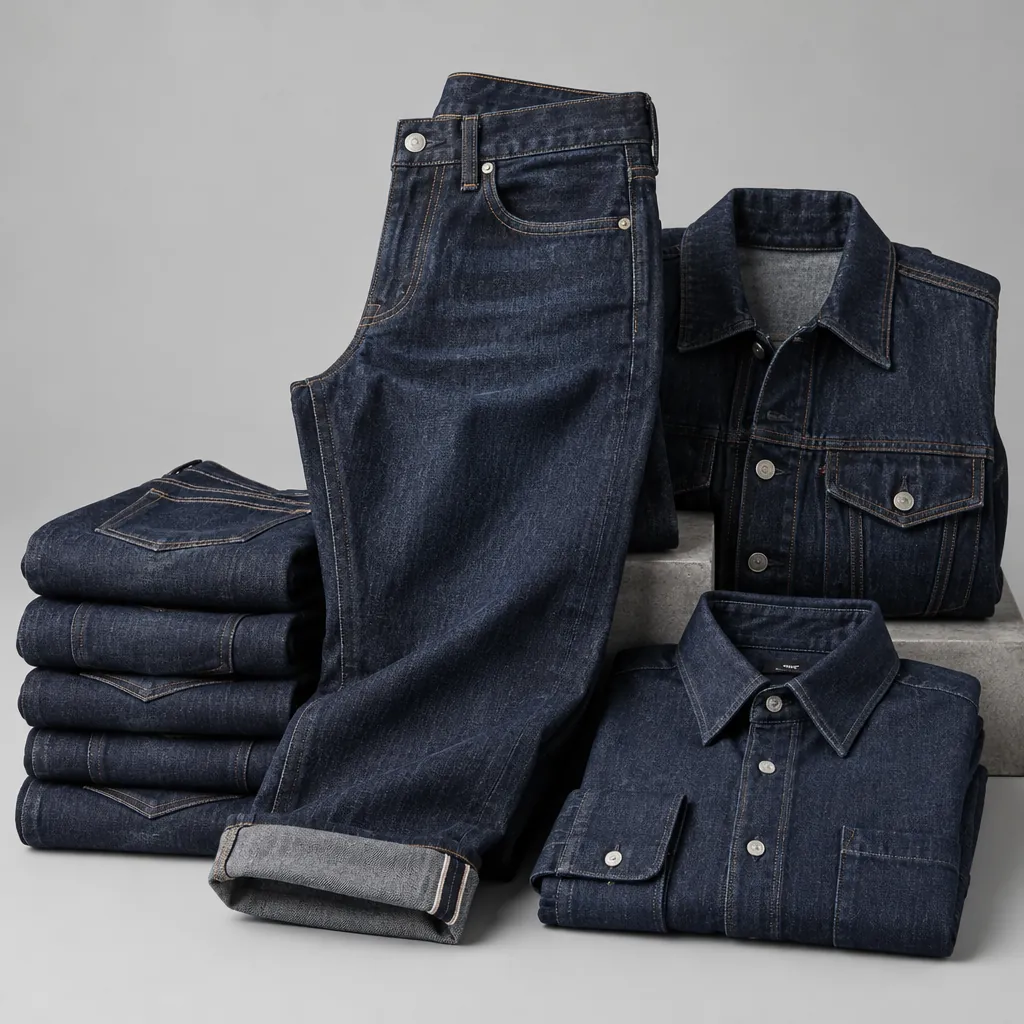
A quiet corner of the denim business dresses people at work. Restaurants, breweries, farm supply stores, car dealerships, hotels and wineries put staff in jeans, and a growing number sell branded denim as merchandise alongside their core product. Corporate denim programs are bought differently from retail walls: the buyer is purchasing coverage and consistency rather than fashion, the reorder is expected to match the first delivery, and the specification has to survive annual renewal without drifting. This article describes the two program shapes and the sourcing decisions each one depends on.
Two program shapes: staff supply and merch capsules
Staff supply buys garments for people who must be covered every shift: every size in the roster, spares for new hires, and a look that stays identical across the year. Merch capsules buy branded denim to sell, where sell-through matters and size depth is chosen like any retail buy. The two share a specification discipline and differ in almost every other habit, including how quantities are forecast and how success is judged. A supplier conversation that opens by distinguishing the two gets useful answers faster, because factories staff these programs differently, price them differently and schedule them differently. The distinction also shows up in failure modes. A staff program fails when someone is not covered, and the failure is visible as a uniform policy exception on the floor. A merch program fails when stock sits, and the failure is visible in the inventory report. Buyers should decide, before quoting, which failure the program is being designed to avoid.
Specify for identical reorders
The product in a uniform program is consistency. A restaurant that hires two servers in spring needs jeans that match what the winter staff is already wearing, which means the fabric, the wash and the trims must be reproducible on demand. That is achieved by locking an approved standard for each element, retaining reference samples on both sides, and comparing every reorder lot against the standard before it ships. Where staff roles are physical, durability orientation matters as much as appearance, and the fabric logic follows the same durability-first reasoning set out in the article on workwear jeans. A program that treats the second order as casually as the first is the program that gets a different garment in the second delivery.
Size coverage across a whole roster
A retail buyer sizes to demand; a uniform buyer sizes to the roster. The program has to cover every waist and inseam the current team wears, plus the sizes future hires may need, which usually extends the run beyond what a store would stock. Inseam coverage deserves particular attention, because hemming on site adds cost and inconsistency that compounds across locations. Most programs hold a small onboarding stock in the common sizes and order the edge sizes as needed, which only works when the supplier can produce those smaller quantities without disturbing the main specification or the approved wash. Roster data should be refreshed at each renewal rather than assumed stable. Staff turnover changes the size mix more than most program managers expect, and a census taken at program launch is usually out of date within a year. A short annual survey of sizes worn, run alongside the pricing review, keeps the onboarding stock aligned with the people it exists to cover.
Branding methods and where they sit
Branding on denim is usually applied at the patch, the waistband or the pocket bag rather than printed on visible fabric. Embroidered patches, engraved or printed patch materials, and woven labels each carry different costs, different durability through laundering and different minimum quantities, and the choice should be made with the program's washing routine in mind. Placement is part of the specification and part of the approval: a patch position that looks right on a fresh sample can sit badly once the garment has been worn and washed. Branding artwork should be finalized before quotations are requested, because it changes what the factory is asked to produce and what the program will cost. Sampling the branding deserves its own approval step. A patch approved as artwork is not the same as a patch approved after washing, and laundering changes both color and edge finish in ways that matter to a program renewed annually. One washed sample in the approval file settles questions that would otherwise return every season.
What belongs in a program quote request
- A roster census of sizes worn, including edge sizes, or a capsule forecast by size.
- The laundering routine the garment will go through, and its frequency.
- Branding artwork and preferred application method, before pricing is requested.
- The delivery schedule, including the annual peak and any mid-year replenishment.
- Renewal terms: how pricing and the specification are reviewed each cycle.
The contract shape of a repeat program
Uniform programs are contractual by nature. The useful terms cover annual or seasonal price review, reorder windows with confirmed lead times, the approved specification held by version, and who is authorized to request a change. Schools buying denim for uniforms run on the same structure, and the parallels, including wash standards and mid-year replenishment, are described in the article on school uniform denim programs. A program that documents these terms renews smoothly; one that relies on the relationship tends to rediscover its specification every year through argument.
Common failure points
The recurring failures in corporate denim are predictable. Wash drift between the first delivery and the reorder is the most common, and it is a specification discipline problem rather than a factory mystery. Patch and branding wear-out is second, usually traced to an application method chosen without the laundering routine in mind. Edge-size gaps come third, when the onboarding stock covers the common sizes and the roster changes faster than the reorder plan. Each failure has the same prevention: a written specification, retained references and reorder comparisons against both.
Working with jeans
FULVERA coordinates corporate and uniform denim sourcing, including branded patch programs and roster-based size planning, with specifications held by version across reorders. Quantities, branding costs and lead times are confirmed in writing before each cycle. The private label pathway behind branded programs is outlined on the custom private label page; when your roster or capsule plan is ready, request a quote.