Home / Guides / Reading a denim test report
Reading a denim test report
How to read a denim test report: what each line tells you, which details tie a report to your order, and which gaps should send you back to the supplier.
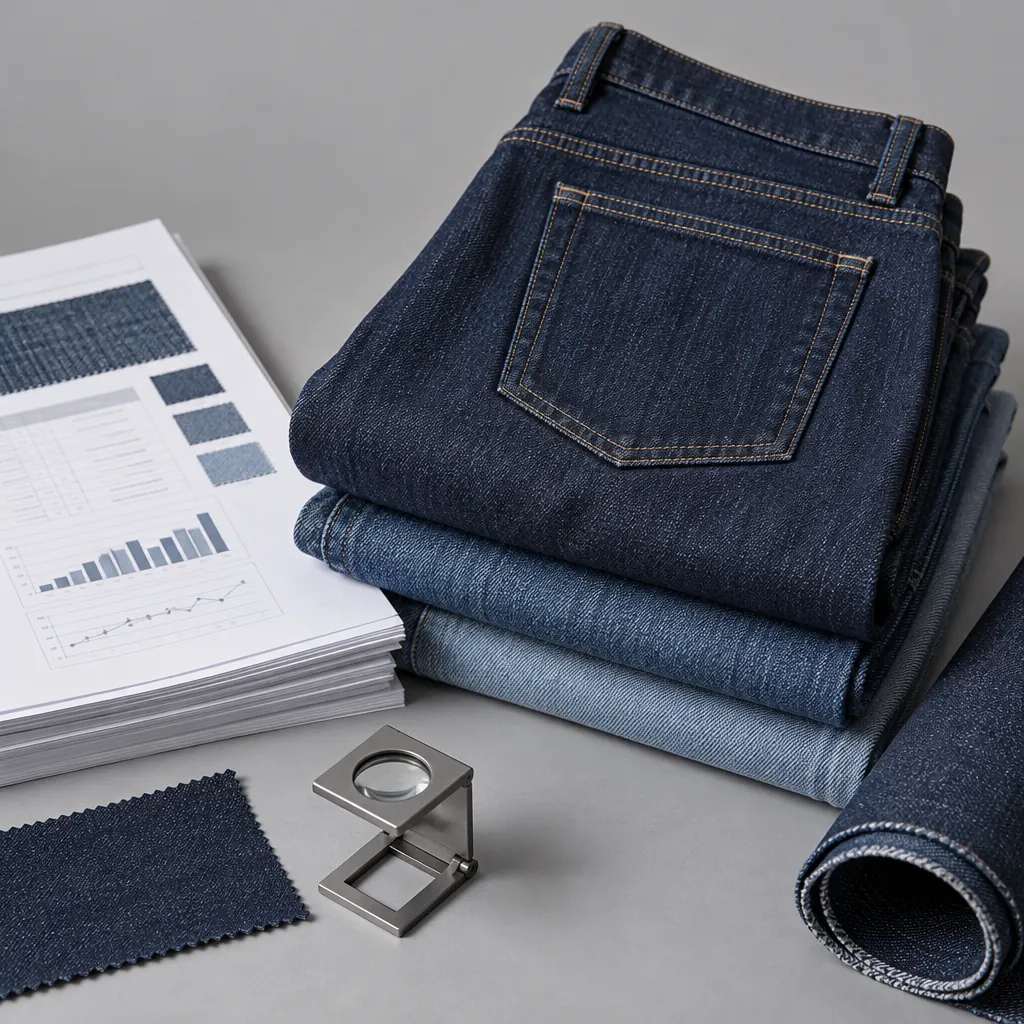
A test report arrives as a PDF, gets skimmed for pass marks, and goes into a folder. That is how most denim programs treat testing documents, and it wastes most of what the report knows. A report is a structured answer to a structured question: which sample, tested how, against what basis, with what result. Read properly, it tells a buyer not only whether the order passed, but whether the question was the right one, whether the sample was the right one, and whether the result will still mean anything after a fabric or wash change. This article explains how to read the common lines of a fabric test report for denim, in general terms, and which gaps justify sending it back.
The lines that matter most
Every report opens with identification, and this is the part buyers skip too quickly. The sample description should match the fabric or component the order actually uses: the article name, the color or wash, and the lot it came from. A report on a development fabric answers questions about the development fabric, not about the bulk. The date tells you where the report sits in the program timeline; a report older than the fabric change it is supposed to cover describes a garment you are not shipping. The testing body and the report number establish that the document can be traced if a customer or an inspector asks.
Each result line then follows a rhythm: the property tested, the method used, the result, and often a requirement the result is judged against. The property tells you what was asked. The method tells you how it was asked, and methods matter, because the same property measured by different procedures does not produce comparable numbers. The result is the measurement. The requirement is the basis the laboratory was given. If the requirement column is filled from a general default rather than from the program's specification, the pass mark may not be your pass mark.
Sample identity is where most report problems hide, and it is worth being suspicious in a specific way. Ask who submitted the sample, because a sample submitted by the supplier from its own shelf may not be the lot the order will cut. Ask which stage it came from, because a development fabric and a bulk fabric with the same article name can differ. The report is only as good as the handshake between the sample and the specification, and that handshake is a written item.
A report line by line, as questions
| Report line | What to check | Question to ask if it is unclear |
|---|---|---|
| Sample description | Matches the nominated fabric, wash and lot | Which sample was submitted, and who submitted it? |
| Method | A recognized procedure, named and consistent across reports | What does this method measure, and is it the one the program specified? |
| Result | Reported with its unit or grading scale | What does this number mean in wear terms? |
| Requirement | The basis the program nominated, not a general default | Was the requirement taken from our specification? |
| Date and report number | Current against the fabric and wash changes | Does this report still describe the goods being shipped? |
Results that read differently than they look
A few denim results repay a second look. Shrinkage is reported as behavior in specified directions, and the number only becomes useful when the pattern allowance is decided against it; the connection between the report and the pattern is worked through in the guide to denim shrinkage. Color fastness results are graded on scales, and a result one step below the program's requirement is a pass only in the sense that nobody rejected it; on light tops and pale interior seam allowances, that single step is visible to customers. Hardware and coating results belong to the component they name, and a clean fabric file says nothing about a substituted button finish.
Chemical lines are the ones most often misread, because a long list of not-detected results looks like a certificate of virtue. Each not-detected result is relative to the method's detection capability and the scope the laboratory was given. The companion article on chemical testing for denim explains how scopes are built, which is what makes those lists meaningful.
When to send a report back
Most reports deserve acceptance; a few deserve a question. Send a report back when the sample description does not match the order, when the method is unnamed or inconsistent with the previous round, when the requirement column shows a default the program never agreed, or when the report predates a change it is supposed to cover. None of these questions is hostile. Laboratories and suppliers resolve them routinely, and the answer usually arrives as an amended report within days. The reports worth contesting are rare; the reports worth reading carefully are most of them.
This site does not issue certifications or publish test reports; documents are obtained from suppliers on request and confirmed in writing. The standing requirements for this topic are summarized on the page covering fabric testing.
Filing so the reports stay useful
A report is only as valuable as its connection to the goods. File each document against the order, the lot and the version of the specification it belongs to, and note on the file what changed since the last round. When a complaint arrives months later, or a repeat order needs a scope review, the file answers in minutes. When the filing is a flat folder of PDFs sorted by date, the same question costs days and ends in arguments about which report covered which lot.
A useful habit is the one-line cover note. When a report is filed, the person filing writes a single line naming what changed since the last round: new fabric, new wash, new hardware, or nothing. The note takes seconds, and it turns the folder from a pile of documents into a history of the program's evidence.
Working with jeans
Quotations, minimum order quantities and lead times for jeans are confirmed in writing for each order, and the practices in this article are planning guidance rather than commitments. To order with a testing plan behind it, request a quote and ask for the supplier's reporting and filing process in writing.