Home / Guides / Fiber content labels for US retail
Fiber content labels for US retail
How fiber content labels work for US denim retail: generic fiber names, company identification, and the supplier documents that back the label text.
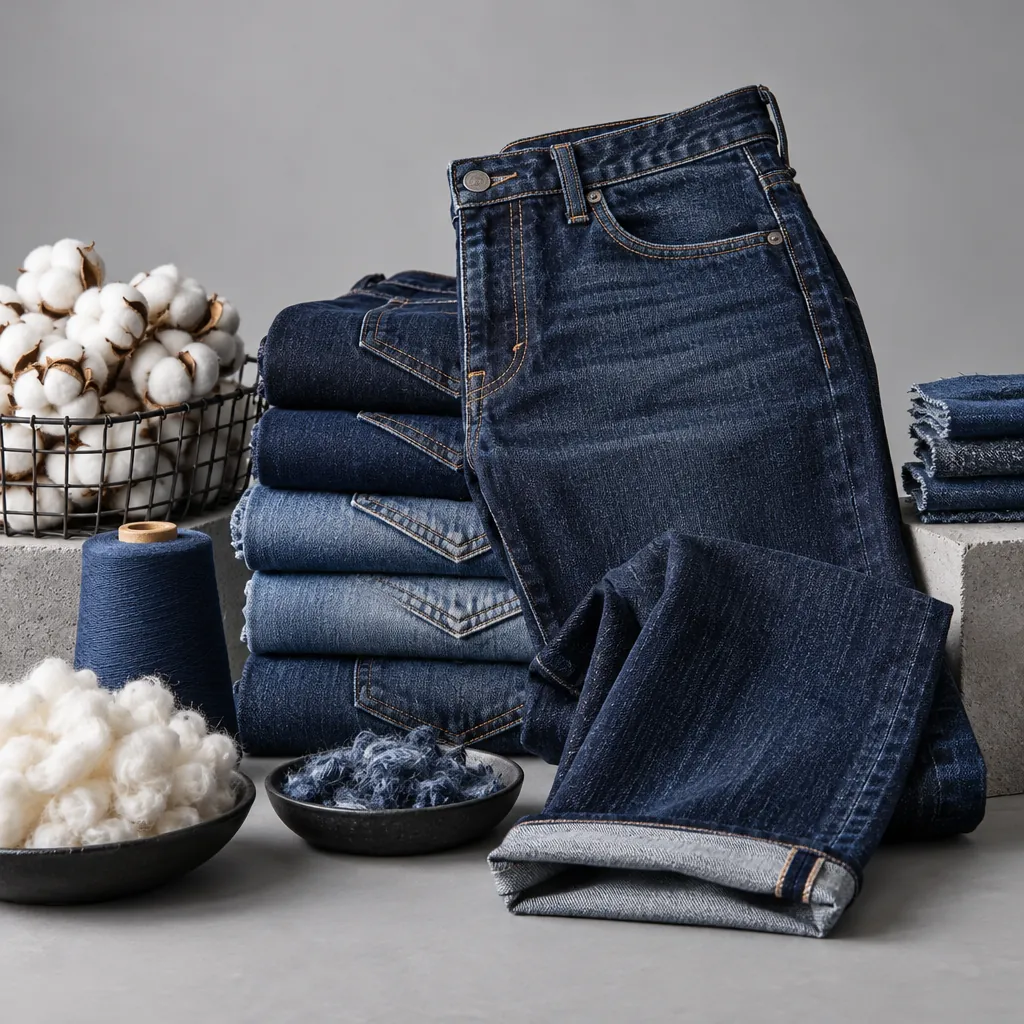
Fiber content is the label element that regulators and customers check first, because it is the factual core of the product description. For a United States retail program, the content label has to name what the garment is made of, in a defined format, and the name has to match the fabric that was actually shipped. On denim the subject looks simple and often is not. Stretch jeans blend cotton with elastic fibers, fabric lots can change between seasons, and finishes sit on top of a composition that was fixed at the mill. This article sets out what the label must communicate, in general terms, and which documents a buyer should request so the label text is backed by something other than memory.
The rule in general terms
The Textile Fiber Products Identification Act is the United States statute most buyers associate with this label. In general terms it requires textile products sold at retail to carry a disclosure of the fibers present, using the generic names of those fibers, and it expects the disclosure to reflect the proportion by weight of each fiber, listed in descending order. The label also carries an identification of the company responsible for the product, which many programs satisfy with a registered identification number, and a statement of country of origin, which is a subject of its own and is covered separately in the guide to country of origin marking.
Three consequences follow for a denim buyer. The label text is factual, so it is verified rather than designed. The naming convention comes from the market, not from the brand, so marketing language does not belong in the fiber line. And the person who answers for the text is the seller of record, which means the buyer cannot simply inherit whatever the factory proposes without checking it.
What denim makes difficult
A rigid all-cotton jean is the easy case. The difficult cases are the ones denim programs increasingly lead with. Stretch fabrics combine cotton with one or more elastic fibers, and the generic name of the elastic fiber must appear even when the proportion is small by weight. Fabric blends change between developments, and a label written for the development fabric can silently outlive the fabric it described. Decorative elements such as embroidery thread, patches and contrast pocketing raise their own questions about what belongs in the disclosure, and the treatment of those elements should be confirmed with a compliance adviser rather than decided on the factory floor.
Finishing chemistry does not change the fiber composition, but washes and coatings do change how customers interpret the product. The content line and the care line must stay consistent with each other; a content label that names an elastic fiber sits oddly next to care instructions written for a rigid garment. The care side of the label is treated in the companion article on care labels, and the two texts should be approved together as one proof set.
Format details that prevent reprints
Reprint orders usually come from small format failures rather than from wrong facts. The recurring ones are a generic name rendered inconsistently across a range, a content line that differs between the hangtag and the permanent label, and artwork that the label printer cannot reproduce at the required size. The prevention is unglamorous: fix one naming convention in the artwork specification, apply it to every style, and have the supplier confirm in writing that the approved proof is printable at production size before the labels are ordered.
| Label element | What it communicates | Where the information usually comes from |
|---|---|---|
| Fiber disclosure | Generic fiber names in descending order by weight | Fabric mill declaration, passed through the garment supplier |
| Company identification | The business responsible for the product | The buyer's own registered identification details |
| Country of origin | Where the garment was made | Production location, confirmed in the order documents |
| Care instructions | How to care for the garment | Wash observations on the approved fabric and wash |
Where the information comes from
The content line is only as good as its source. The normal chain runs from the fabric mill, which knows the composition of the weave, through the garment supplier, who passes the declaration along with the fabric, to the buyer, who checks it against the nominated fabric article and the approved hand feel and stretch behavior. When the fabric changes between the sample and the bulk, or between one season and the next, the declaration and the label change with it. A buyer who keeps the declaration and the label text in the same file as the fabric approval will catch most mismatches before printing.
The documents worth requesting before labels go to print are short:
- A fiber composition declaration for the fabric, issued by the mill or the supplier.
- The nominated composition text for each style, confirmed as printable at production size.
- Label artwork proofs covering size, care, content and origin as one set.
- Written confirmation of what happens to the label text if the fabric lot or article changes.
This site does not issue certifications or publish test reports; documents are obtained from suppliers on request and confirmed in writing. The standing requirements for this topic are summarized on the page covering fiber labeling.
Claims that ride on the content label
Marketing claims draw their credibility from the content line. A claim that the garment is all cotton is only safe if the declaration supports it down to the trims that count. Claims around recycled input, comfort stretch or natural fiber content all lean on the same declaration, and each carries its own substantiation questions. The stretch side of this is explained in the guide to stretch denim content tiers, which shows how the fiber mix changes recovery and hand feel, and therefore why the named fibers matter to customers and not only to regulators.
A buyer should also treat the content line as a boundary for copywriting. Product pages can describe how a jean feels and wears; they should not assert a composition the label does not carry. Where a claim and a label disagree, the label is the version that gets checked.
Working with jeans
Quotations, minimum order quantities and lead times for jeans are confirmed in writing for each order, and the practices in this article are planning guidance rather than commitments. To start a program with the label plan settled early, request a quote and ask for the supplier's label and declaration process in writing.