Home / Guides / Chemical testing for denim: common items
Chemical testing for denim: common items
The chemical test items most often discussed for denim, what each one looks at, and how buyers should request and read the supporting documents.
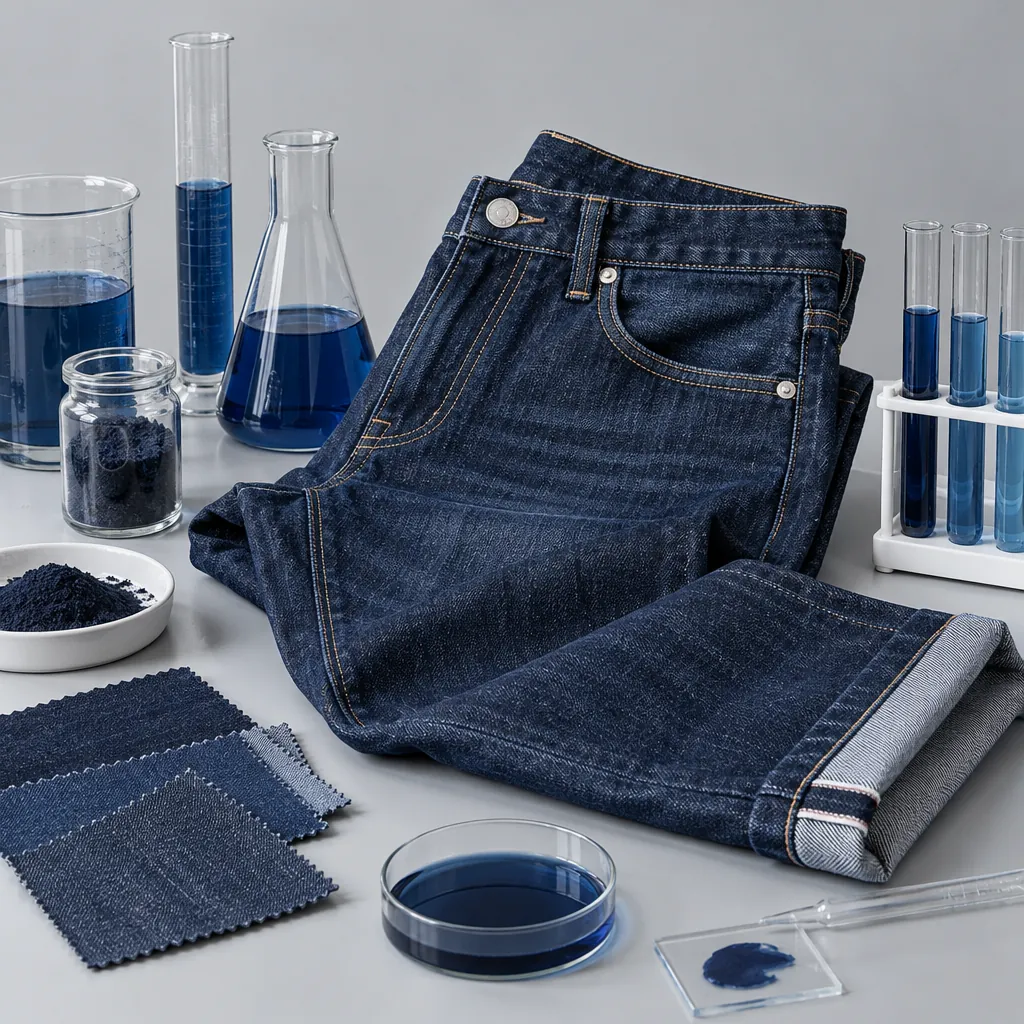
Chemical testing is the part of a denim program that buyers most often leave vague and most often regret leaving vague. The fabric is dyed, the wash changes its surface chemistry, the hardware is coated, and every one of those steps introduces substances that destination markets regulate in some form. A buyer does not need to be a chemist to run this part of the program well; the buyer needs to know which test families exist, why denim meets them, and which documents to attach to which component. This article walks through the common items in general terms, without limits or numbers, because limits belong to the current version of the applicable rules and are confirmed in writing for each program.
Why denim meets more chemical questions than plain fabrics
Denim is a dyed, washed and hardware-fitted garment. Indigo and other dyes sit on the fiber rather than deep inside it, which is why the color behaves the way customers expect, and also why color fastness and dye chemistry draw attention. Wet processing such as stone washing, enzyme treatment or bleaching adds chemistry that remains on the garment in trace form. Metal trims carry coatings. Prints and patches add films and binders. Each of these is a legitimate part of the look, and each is a reason a destination market may ask for evidence. The wash side of this is described in the guide to stone wash, which shows how much chemistry sits behind a familiar look.
The common test families
Most denim programs meet some combination of the following, and the scope is set by the destination market and the buyer's own adviser.
- Color fastness. Resistance of the color to rubbing, washing and, for children's garments, to saliva in the relevant guidance. This is as much a quality question as a compliance question, because crocking onto light tops is a complaint driver.
- Restricted aromatic amines. Certain azo dyes can break down into aromatic amines that several markets restrict. This is the chemistry behind azo-free claims on denim, and a buyer who markets azo-free product should hold the document that supports the claim.
- Formaldehyde. Used historically in finishing and still regulated in several markets. Finishing-heavy programs, especially those with coatings or easy-care treatments, draw the question more often than plain rinses.
- pH value. A measure of acidity or alkalinity on the fabric surface, relevant after wet processing. Washes that are too aggressive can push this out of the expected band, so it doubles as a process-control signal.
- Heavy metals. Watched in dyes, in pigments and in metal hardware coatings. Nickel release from hardware is a related item that several markets treat separately.
- Phthalates. Relevant where flexible plastics appear: printed films, patch backings, packaging films in some programs.
None of these items is exotic, and none of the numbers is quoted here on purpose. The current limits differ by market and change over time, so the only safe figures are the ones confirmed for the program in writing. A buyer building a scope should also read it as a sequence rather than a shopping list. The fabric questions come first, because fabric is nominated earliest. The wash questions follow the wash approval. The hardware and print questions close the file. Sequencing the scope in that order keeps testing ahead of production instead of racing it.
Matching the test to the component
A frequent mistake is to test the fabric and assume the garment follows. The fabric carries the dye and much of the finishing chemistry, but the hardware carries its own coatings, the prints carry their own binders, and the trims can come from a different supplier entirely. A scope that names components separately produces documents that answer real questions. A scope that says only denim fabric produces documents that answer one question and leave the rest open.
Lot variation adds a second layer. A test booked against the development sample answers for the fabric that was tested, not automatically for every lot that follows. Programs handle this in one of two ways: a testing plan that covers each new lot of a nominated fabric, or a lot-approval step that compares incoming fabric against the tested reference before cutting. Which arrangement applies is a written item in the order terms, and the cheaper-looking option usually depends on how many lots the program expects to receive.
The same logic applies to changes. A hardware substitution, a new print film or a switch in the wash recipe reopens the chemical file for the affected component. Programs that route changes through written amendments, as a discipline, keep their documentation current almost for free.
Documents to request and how to file them
- A test report or declaration per component family: fabric, hardware, prints, trims, packaging where relevant.
- The nominated chemistry for the wash and finishing program, as agreed in writing.
- Statements supporting any claim the brand intends to publish, such as azo-free wording.
- Confirmation of what triggers retesting: fabric change, wash change, hardware change, or lot change.
- The lot-approval arrangement, stated so both sides know when testing repeats.
- Filing that ties each document to the lot and the order it belongs to.
This site does not issue certifications or publish test reports; documents are obtained from suppliers on request and confirmed in writing. The standing requirements for this topic are summarized on the page covering chemical compliance.
Chemical questions in the wider program
Chemical documentation does not live alone. It connects to the label plan, because claims on labels and hangtags must be supportable. It connects to the returns process, because a rare skin-irritation complaint is handled with documents in hand rather than with guesses. And it connects to supplier vetting, because a supplier's willingness to name its chemistry, component by component, is one of the more honest signals in the relationship.
For children's styles, the chemical file expands and merges with the safety file. The companion article on kids denim safety covers how the two combine, and which components drive the extra scope.
Working with jeans
Quotations, minimum order quantities and lead times for jeans are confirmed in writing for each order, and the practices in this article are planning guidance rather than commitments. To put a testing scope behind an order, request a quote and ask for the supplier's chemical documentation process in writing.