Home / Guides / Vanity sizing and label accuracy in denim
Vanity sizing and label accuracy in denim
The same labeled size measures differently across suppliers and years. How denim buyers defend label accuracy with measurement charts and tolerances.
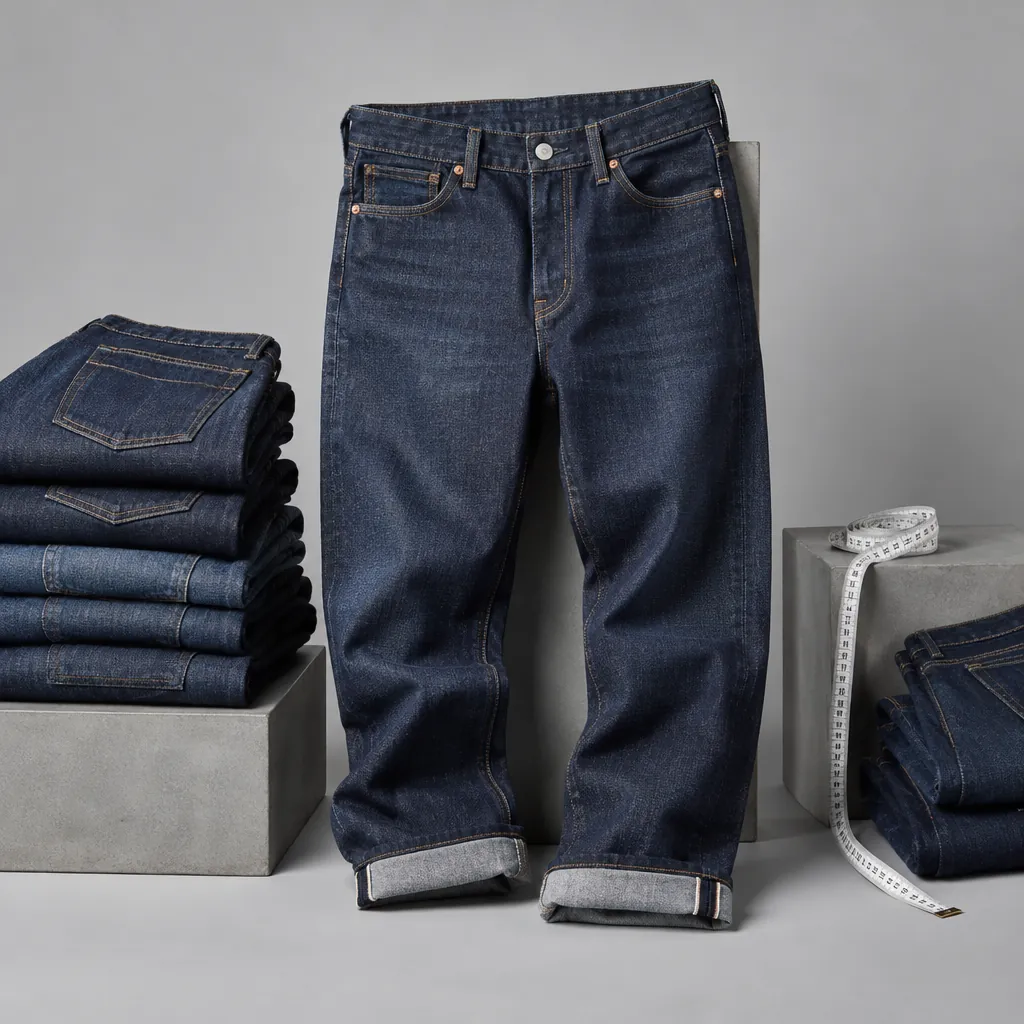
Ask three suppliers for the same labeled size and you may receive three different garments. The label is not a measurement. It is a convention, and conventions drift, supplier by supplier and year by year, for reasons that have little to do with fabric or fit. A retail buyer cannot stop the drift across the market, but a buyer can stop it inside the store, and that is where the value sits: a range where the same label means the same garment returns less, exchanges less and builds the kind of trust that brings the customer back without a search. This article covers why the numbers drift and the controls that keep a denim range honest. The controls are procedural rather than clever: publish measurements, keep one scale, audit at receipt, and read complaints as data.
Why the numbers drift
Adult casualwear sizes are not pinned to one enforced scale in most markets, so a label is only as accurate as the block behind it. The incentives push one way: a garment that measures generously at a smaller label is pleasant to try on, and over the years that preference moves blocks. Grading compounds the effect, because a small change at the base size propagates across the run. None of this requires bad faith. It requires only that each supplier answers to its own history, and the effect shows up when one wall carries several suppliers at once, each with a different idea of the same number. The drift also moves through the trade in less visible ways: blocks are copied between suppliers, a corrected measurement is inherited without its context, and a size that fit a market a generation ago carries forward as a habit. None of it is audited anywhere, which is why the buyer's own audit is the only one that protects the store.
The defense is measurements, not opinions
The buyer's control is to publish garment measurements and keep them truthful. A chart that lists the waist, rise, thigh, knee, leg opening and inseam with the measuring method stated turns the label from a promise into a fact, and the structure for that chart is covered in building a size chart that cuts returns. A customer who has measured a pair that fits can then self-select without guessing, whatever the label says. The alternative, describing sizes only with words like true to size, moves the problem from the page to the returns pile, where it costs margin instead of a paragraph.
Keep one scale across the range
Internal consistency is the second control. Within the assortment, the same label should mean the same measurements across silhouettes and across suppliers, and the way to arrange it is to measure at goods receipt against the chart, with the tolerance agreed in the order terms. Where a supplier's block differs beyond tolerance, the discrepancy is documented and either the listing is adjusted or the order terms are enforced. A customer who needs one label in straight jeans and a different label in the same name's slim fit is being asked to memorize the store's exceptions, and most customers will simply shop where they do not have to. The same discipline applies to the words next to the numbers: fit descriptions should be tied to the measurement points they describe, so a note about the rise refers to the rise the chart lists rather than to a general impression of the style.
Run a receipt audit
The audit is the operational heart of the control. Each season, on receipt of goods, measure a sample of garments from every supplier against the published chart: waist, rise, thigh, knee, leg opening and inseam, with the same method the chart states. Record the findings against the tolerance in the order terms. Where the measurements hold, the chart stands and the audit is done in minutes per style. Where they drift, the finding goes to the supplier in writing with the measured figures, and the response, a corrected block or an adjusted chart, becomes part of the record for the next order. An audit that lives in one season only is a spot check. The practice matters because drift is continuous and the audit is the instrument that sees it early, while the correction is still a conversation rather than a dispute, and while the stock that follows can still be written to a corrected specification.
Where the drift comes from, and the control
| Source of drift | What it does | Control |
|---|---|---|
| Supplier blocks differ | Same label, different garment | Measure at receipt, tolerance in writing |
| Grading changes over time | A size creeps across seasons | Freeze the base size spec, record revisions |
| Several suppliers on one wall | The customer needs several sizes | Map each supplier to the internal scale |
| Marketing language on labels | Expectations measurements contradict | Label by measurements, describe fit separately |
Treat complaints as measurement data
Return and exchange wording is fit research that costs nothing to collect. Runs small, runs long, tight in the thigh are measurements written by customers, and mapped to a chart they point at the measurement point that moved. A cluster on one style flags a specification or grading issue; a cluster across one supplier flags a block difference; a cluster across the whole range flags a labeling habit of the store's own. Each finding feeds the next order and the next version of the chart, and over a season that loop is what separates a store managing high return rates from one absorbing them. The vocabulary side of the same problem, where fit names drift as much as size numbers, is treated in men's jeans fit types for buyers.
Working with jeans
Size specifications, tolerances and label content are confirmed in writing for each order before production. To put measurement-based charts behind your range, request a quote and we will confirm the details.