Home / Guides / Men's jeans fit types explained for buyers
Men's jeans fit types explained for buyers
Men's jeans fit names are not standardized across suppliers. How buyers map slim, straight, relaxed and bootcut to measurements they can stock.
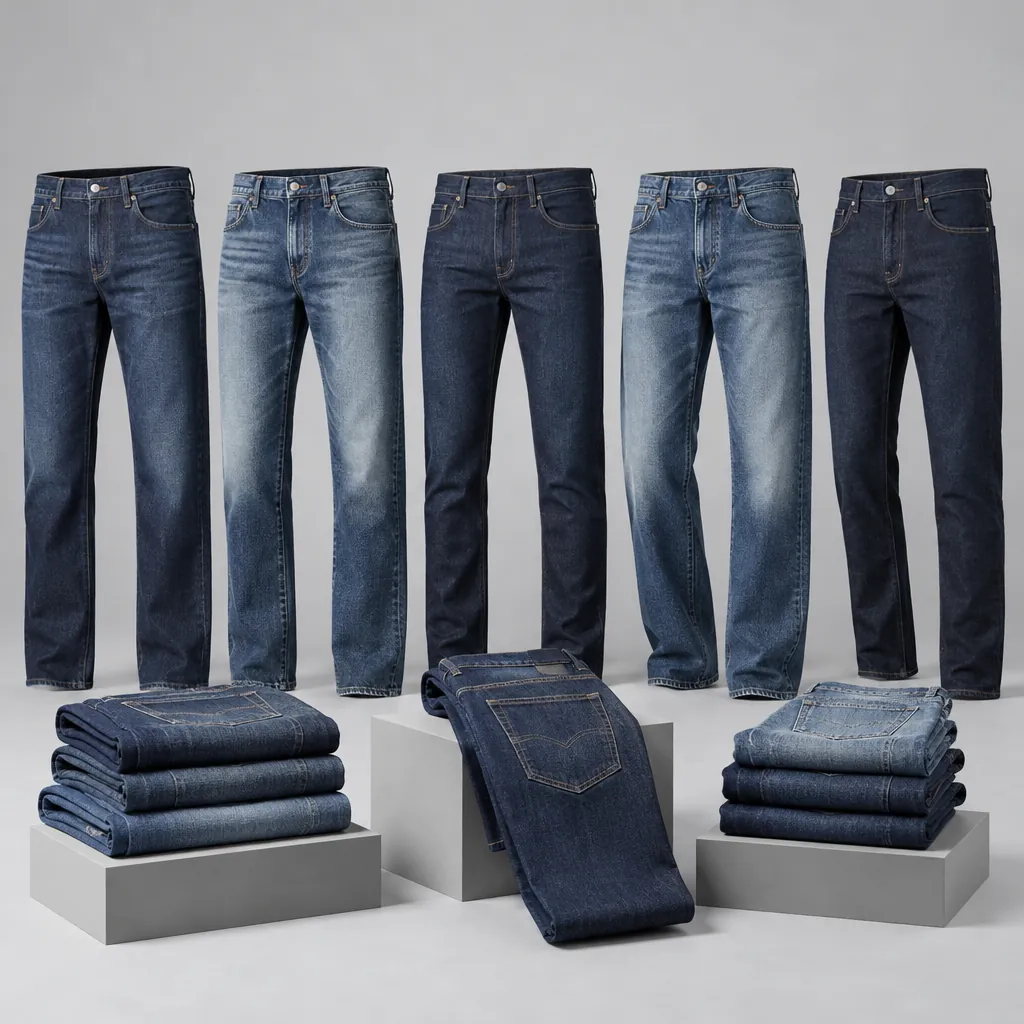
Men's jeans are sold by fit names that no industry body defines. Slim from one supplier, tapered from another and straight from a third can describe three overlapping garments, and a buyer who orders by name alone will find the wall drifting season by season. The working solution is a translation layer: know the fit families and what each implies for the leg, then map every supplier's names to measurements the store controls. This article walks through the common families, the measurements that define them, and how to keep one vocabulary across the wall, the product pages and the purchase orders.
The fit families and what defines each
Most men's ranges are built from a small set of families, described here by how the leg behaves from thigh to hem rather than by any supplier's naming.
- Skinny. Close through the thigh and knee with a narrow leg opening; the fit leaves little room anywhere on the leg.
- Slim. Trimmed through the thigh and seat with a taper toward the hem, but with room enough to move in; the volume family for many men's walls.
- Straight. The leg runs close to parallel from thigh to hem; the classic proportions that reorder steadily.
- Regular. Added ease through the thigh and knee compared with straight, with a stable leg opening.
- Relaxed. Extra room through the seat and thigh, often with a slight taper; the comfort and workwear tier.
- Loose. A full leg with a lower rise placement and a wide opening; the trend-sensitive end of the range.
- Bootcut. Tapers to the knee and opens toward the hem so the leg sits over a boot; regional and work-led demand.
Translate the names into measurements
For every style a supplier offers, request the thigh, knee and leg opening measurements and the front and back rise, for the base size and for the ends of the run. With those numbers in hand, build the store's internal naming and attach it to the specification, so the purchase order, the label and the product page all reference the same garment. Two suppliers using the same name can differ more than two of your own families, which is why the mapping belongs in writing rather than in memory. The measurement points themselves, and how to fix them in a specification, are set out in rise and inseam specs for wholesale jeans.
The families on the wall
| Fit family | Leg description | Role on the wall |
|---|---|---|
| Skinny | Close at thigh and knee, narrow opening | Younger ranges, test depth first |
| Slim | Trim thigh, taper to the hem | The volume tier for many walls |
| Straight | Thigh and hem near parallel | The core the range reorders |
| Regular | Added ease through thigh and knee | Comfort-led, steady demand |
| Relaxed | Extra seat and thigh room, slight taper | Workwear and comfort programs |
| Bootcut | Tapers to the knee, opens at the hem | Regional and work boot demand |
Where a wall carries both straight and slim, the boundary between them is a decision worth making once and writing down, since the two families are close enough that suppliers cross the line freely. The stocking choice between the two is compared in straight vs slim jeans.
Rise and length in the men's range
Men's rises have historically clustered in a narrow band, and the trend cycle moves the front rise slowly, but it moves it: a range bought years apart can hold visibly different rises under the same family name. Rise therefore belongs in the mapping as much as the leg measurements do. Length culture matters as well. Where customers cuff or stack the hem, the leg opening and the length tier carry more weight, and the inseam structure follows the same logic as any length program, covered in stocking short, regular and long inseams. Where the store serves work boot demand, the bootcut tier earns its place for that reason alone, and the opening at the hem is the measurement those customers care about most.
Stretch changes the fit a name describes
The same fit family behaves differently in rigid and stretch fabrics, and the mapping should record which fabric each style uses. A stretch slim relaxes through the day and can feel a family looser by the evening, while a rigid straight holds its shape and feels closer at first wear. Customers learn this without the vocabulary for it, which is why returns wording often says nothing about fabric while being caused by it. Recording the fabric alongside the fit in the internal mapping lets the store set expectations on the page, and it keeps the buyer honest when comparing two slims from different suppliers, because the difference may sit in the fabric rather than in the cut. The mapping file is the right home for that note, next to the measurements it qualifies.
One vocabulary everywhere
The point of the mapping is consistency. A customer who buys slim twice should receive the same fit both times, across seasons and across suppliers, and the only way to arrange that is for the store's own names to point at measurements rather than at whichever supplier catalog is open. Signage, charts and internal specifications should use the same words for the same numbers, with the chart carrying the measurements that define each family. When a supplier changes its block, the mapping is updated in the same release, or the vocabulary silently rots and the customer notices before the buyer does. The audit is simple: measure one garment per family at receipt each season against the chart, and correct the mapping where the numbers move.
Working with jeans
Fit specifications, measurements and length options for men's styles are confirmed in writing for each order. To map a supplier range to your own vocabulary, request a quote with the families you stock.