Home / Guides / Value vs premium denim: split a jeans wall
Value vs premium denim: split a jeans wall
Splitting a jeans wall into value and premium tiers: what genuinely differs, how to present both, and the failure modes that erode the premium tier.
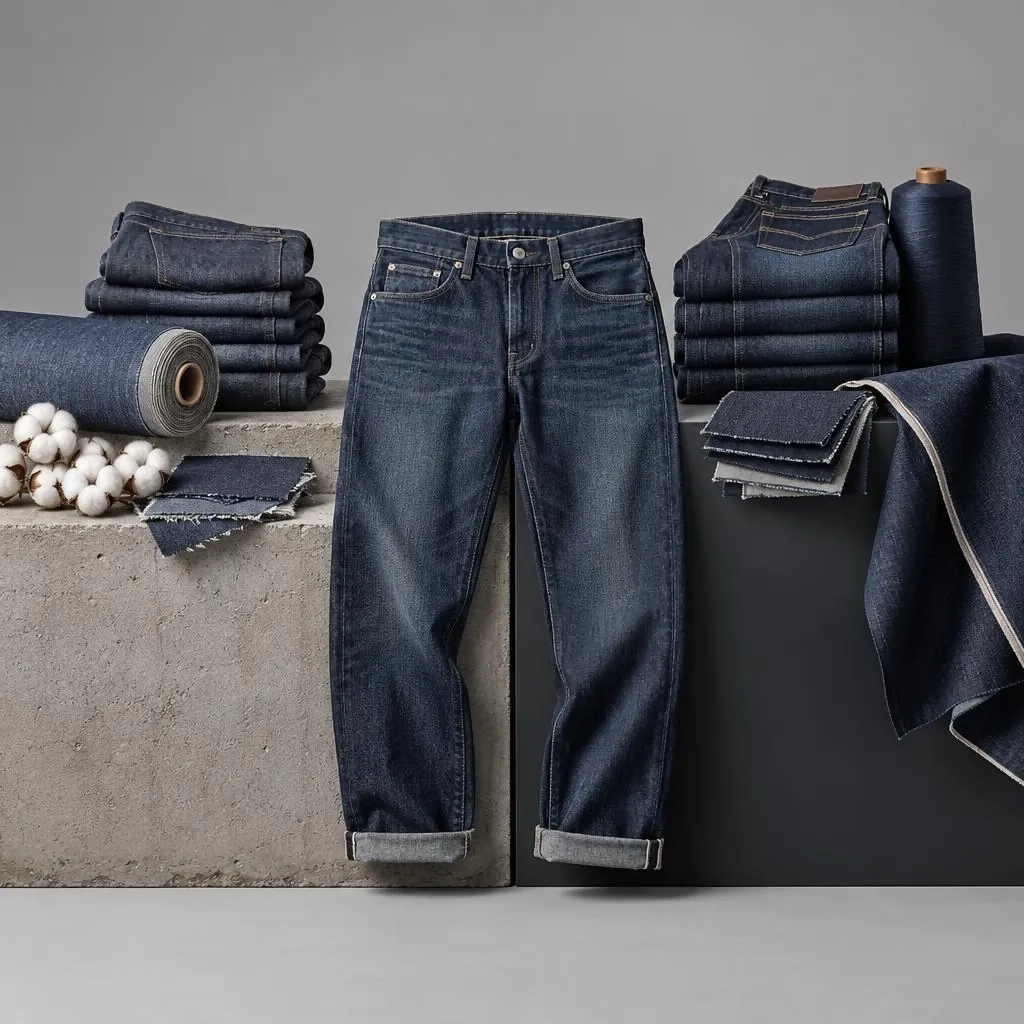
A single jeans wall can carry two price tiers, and done well the tiers reinforce each other: the value tier brings volume and traffic, the premium tier brings margin and a reason for the store to be taken seriously. Done carelessly, the split confuses customers, cannibalizes the premium side and leaves the wall looking either cheap or hollow. The difference between the two outcomes is not the pricing; it is whether the tiers genuinely differ in product terms, and whether the presentation makes the difference legible. This article covers what actually separates the tiers, how to present both, and the failure modes to design against.
What genuinely differs between the tiers
A premium jean should differ from a value jean in ways a customer can verify, not only in ways a price tag asserts. The verifiable differences cluster in a few places: the fabric, where premium constructions use tighter weaves, better dye penetration and cloths that age rather than merely wear; the hardware, where buttons, rivets and zips carry finishes that survive washing; the wash and finishing, where premium programs use more developed processes and more handwork per garment; and the trims and labels, which carry the story the customer reads. The invisible differences, such as tolerance discipline in the bulk and inspection coverage, support the visible ones. If a proposed premium tier differs only in label and margin, the wall will expose that within a season, because customers handle the garments side by side.
Presentation: separate the tiers visually
On the floor, the two tiers need their own blocks, their own visual coding and, where the store uses them, their own signage tone. Interleaving value and premium garments in one stack forces the customer to compare on price alone, and price alone always favors the cheaper garment. Online, the tiers separate through filters, sort order and page copy that states the fabric and finishing story for the premium tier plainly. Staff briefings matter as much as fixtures: a salesperson who presents the premium jean in fabric terms, rather than apologizing for its price, is doing the work the tier depends on. The merchandising principles behind wall organization, including how a companion category and the tier blocks share space, are set out on the retail store program page.
Margin and mix without the numbers
The two tiers do different jobs in the profit structure. The value tier turns: it sells in volume, replenishes steadily, and its margin is thinner but its contribution is reliable. The premium tier earns more per unit, turns more slowly, and depends on story and presentation to convert. The right mix between them depends on traffic and on the customer income profile the store actually serves, which is why the split should be set from the store's own sell-through rather than copied from another retailer. What the split should avoid is a dead middle: if the two tiers sit too close in price, customers trade down and the premium tier dies quietly; if they sit too far apart with nothing between, the wall loses the customer who wants an upgrade but not the flagship. How the cost side of each tier is built up, from fabric to finishing, is broken down on the denim cost factors page.
Value and premium compared on the buying sheet
| Dimension | Value tier | Premium tier | What it means for the buy |
|---|---|---|---|
| Fabric story | Reliable basic constructions | Developed cloths, better dye work | Premium must be verifiably better |
| Wash complexity | Standard processes | Developed finishes, more handwork | Premium wash development takes longer |
| Turn speed | Fast, replenished | Slower, story-led | Measure the tiers on different rhythms |
| Margin role | Volume and traffic | Margin per unit | Do not judge the tiers on one metric |
| Presentation | Clean, dense, size-complete | Spaced, styled, story-supported | Premium needs its own block and script |
| Risk profile | Low, steady | Concentrated in few styles | Start premium narrow, widen on evidence |
Failure modes that erode the premium tier
Three failures recur. The first is premium without a story: garments priced above the tier below with no fabric, finishing or service difference a customer can perceive, which trains customers to ignore the tier. The second is a value tier maintained too thin: if the value block looks sparse or breaks sizes early, customers read the whole wall as expensive, and traffic suffers on both tiers. The third is mixed presentation, where the premium garment sits in a value stack or carries value-tier signage, and the customer never registers that a choice exists. Each failure is prevented at the planning stage: by writing the premium story into the spec sheet, by keeping the value tier size-complete, and by fixing the floor and page presentation before the goods arrive.
There is a fourth failure that shows up only in the numbers: tiers managed to the same calendar. A value tier forced onto a premium markdown schedule gives margin away early, and a premium tier dragged onto a value clearance date destroys the story it was built on. The two tiers should have their own markdown rules from the start, tied to the sell-through behavior each one actually shows rather than to a single seasonal date applied across the wall.
Reorder behavior by tier
The tiers should also be reordered on different logic. The value tier belongs on the replenishment rhythm, with reorder points set from confirmed lead times and reviewed weekly, because its demand is steady and predictable. The premium tier reorders on sell-through evidence: a style that converts at its intended pace earns a repeat, and a style that needs discounting to move has answered the question already. Distress accents and statement washes, which live most often in the premium tier, carry the shortest cycles of all, and their discipline is covered in the article on ripped vs clean denim.
Working with jeans
Quotes, minimum order quantities and lead times for value and premium tiers are confirmed in writing before an order is placed, and each tier is quoted against its own fabric, wash and finishing specification. To request a quote, describe the two tiers you plan to run and the depth you intend for each.