Home / Guides / Ripped vs clean: distress levels in stock
Ripped vs clean: distress levels in stock
Distress in denim runs on a spectrum from clean rinse to destroyed. A stocking guide to customer segments, QC tolerance and markdown behavior.
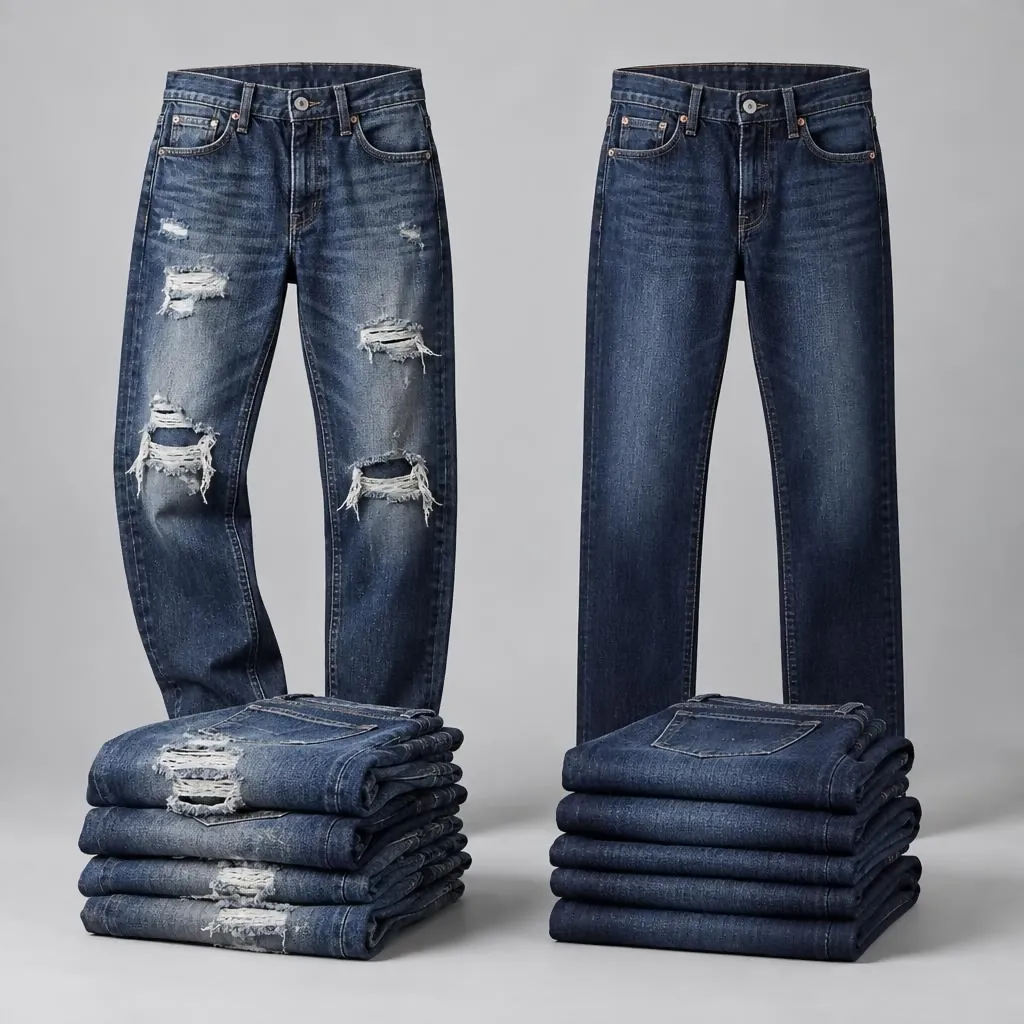
Ripped versus clean is usually presented as a taste question, but for a buyer it is a stocking question. Distress is a spectrum, not a switch: between the clean rinse and the fully destroyed pair sit several gradations of whiskering, sanding and repair, and each step narrows the customer, shortens the fashion life and raises the difficulty of holding quality consistent across a bulk order. Deciding how much distress to carry, at what depth, is therefore a core assortment decision rather than a styling footnote. This article maps the spectrum, the customers on each part of it, and the controls that keep a distressed program sellable.
The distress spectrum from rinse to destroyed
At one end sits the clean jean: an even wash or rinse with no surface treatment, where the fabric story and the fit do all the work. Next come light wash treatments with gentle whiskering at the seat and crease points, which add character without changing the garment's formality. Further along sit sanded and lightly abraded finishes, where the effect is visible from a distance and starts to carry a fashion message. Beyond that are repaired rips, where abrasion breaks the surface but stitching or backing preserves the garment's integrity. At the far end sit destroyed finishes with open holes and heavy abrasion, where the effect is the product. Each step along the spectrum reduces the range of occasions the garment fits and increases the share of the purchase decision that the effect itself controls.
Who buys which level of distress
Clean denim serves the widest customer: work-adjacent dressers, older cores and any customer who needs the jean to disappear into an outfit. Lightly washed and whiskered denim serves the mainstream fashion customer and remains the backbone of most mixed walls. Sanded and repaired levels draw a younger, style-led shopper, with the effect functioning as a statement; these purchases concentrate in weekend and social wear. Fully destroyed denim draws the youngest segment and behaves most like a trend purchase: bought on impulse, worn for a season, and sensitive to whether the effect lands where the customer expects it on the leg. Regional mix matters too, since stores in some areas move clean and lightly washed denim year-round while destroyed styles peak in warm months.
A practical way to read the segment is to watch how the customer shops the effect. A shopper considering clean denim asks about fit and wash first. A shopper considering destroyed denim asks where the distress falls on the leg, and often tries the pair on to check the placement against her own knee. That difference in question order tells the floor team which program a customer belongs to, and it tells the buyer which program needs photo-accurate pages and which needs depth in core washes.
Specifying distress so quality control can hold it
Hand-finished effects vary from piece to piece, which is normal and, within limits, part of the product's character. What separates a manageable program from a dispute is a written specification. It should define the zones where effects may appear, described relative to garment features rather than to measurements alone, the depth category for each effect, from surface abrasion through weft-only breaks to fully open holes, and the variation range the buyer will accept between pieces. The approved sample is sealed and referenced on the spec sheet, and bulk is checked against it under the agreed lighting. A buyer who writes those four things down can hold a distressed program to a standard; a buyer who approves a sample photo and says nothing else cannot. The wash-side controls behind these effects are described in the denim washing section, and the inspection points that apply to finished garments are set out on the quality control page.
Distress levels compared on the buying sheet
| Dimension | Clean denim | Distressed denim | What it changes for the buy |
|---|---|---|---|
| Customer width | Broadest, all ages | Narrows as destruction rises | Depth concentrates at the low-distress end |
| Fashion life | Long, trend-neutral | Shorter, cycle-sensitive | Distress buys are timed, not evergreen |
| QC complexity | Standard checks | Effect placement and depth control | Spec the tolerance in writing |
| Return drivers | Fit and rise issues | Effect placement and expectation | Photo-accurate pages matter most here |
| Markdown shape | Gradual, predictable | Steep once the cycle turns | Plan the markdown date at purchase |
Returns and markdown behavior
The two ends of the spectrum fail differently. Clean denim returns concentrate on fit, which the size chart and the fitting room can address. Distressed denim returns concentrate on the effect: a hole that sits above the knee on one body and below it on another, a whisker pattern that photographs differently than it wears. The mitigation is presentation. Product pages should show the actual effect on the actual garment, at the size photographed, and the copy should state where the effect falls and how much variation is normal. Markdown behaves differently as well. Clean denim clears slowly and can be carried across seasons in core washes, while heavily distressed styles lose their message quickly once the cycle turns, so the markdown date belongs in the original buy plan rather than in a mid-season reaction.
Building the mix
A workable structure leads with clean and lightly washed denim in full depth, because that is where the reliable demand sits, and carries the stronger distress levels as accents with limited depth and a defined end date. Distress accents should be reviewed on sell-through quickly: they either earn a fast, profitable exit or a disciplined markdown, and neither outcome rewards hesitation. Because heavily distressed programs often source from different wash houses than clean programs, buyers adding accents mid-season should confirm capacity in writing before committing dates to the floor. The sourcing trade-offs behind accent programs, from wash house capacity to program depth, are compared in the article on imported vs domestic denim.
Working with jeans
Quotes, minimum order quantities and lead times for distressed or clean programs are confirmed in writing before an order is placed, and the approved effect sample and its tolerance range form part of that written confirmation. To request a quote, describe the distress levels, washes and size runs you plan to carry.