Home / Guides / Skinny jeans: where demand still holds
Skinny jeans: where demand still holds
Where skinny jeans demand still holds, and how to buy the stretch tier: comfort stretch versus recovery, fit retention and a leaner size plan.
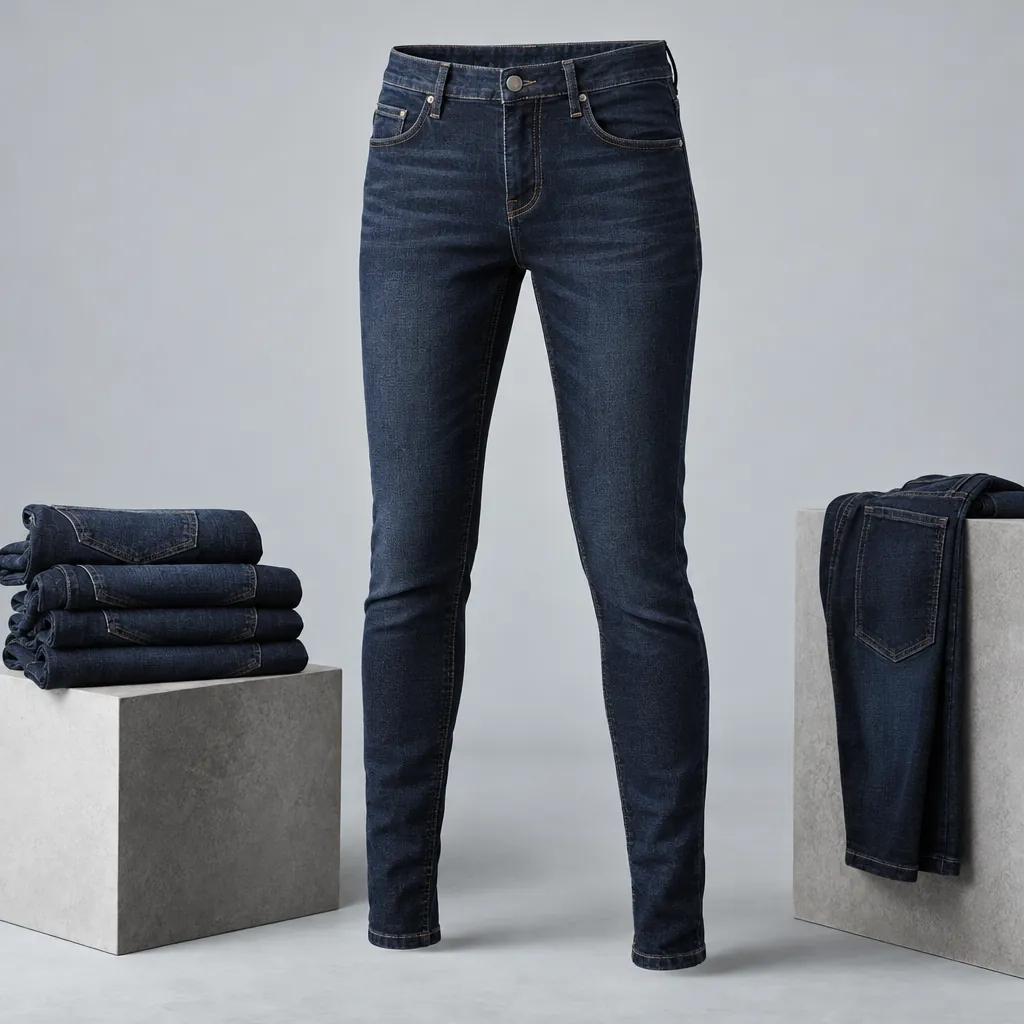
Skinny jeans no longer lead the denim conversation, and the silence around them is misleading. Search interest for skinny jeans remains substantial in the United States, the style keeps a firm base in specific customer groups, and it still outperforms fashion silhouettes on reorder predictability. The buying error sits at the extremes: treating skinny as finished and dropping it entirely, or treating it as unchanged and buying it at the depth of its peak years. This article maps where demand actually holds, how the fit lost the fashion center while keeping its base, and how to choose the stretch tier that decides comfort and fit retention.
How the fit lost the center and kept the base
The shift away from skinny happened in the fashion layer first. Wider silhouettes took the editorial space, the social feeds and the new-season budgets, and the customer who refreshes her wardrobe by silhouette moved with them. What did not move at the same speed is the base: customers who buy by fit rather than by season. That base replaces its jeans when they wear out, not when the trend turns, and it buys the same fit in the same size, sometimes in more than one color at once. For a buyer, the practical consequence is that skinny behaves like a replenishment business inside a fashion category: slower turnover, higher predictability, and a far higher cost to being out of stock in the core sizes than the style's reduced shelf space suggests.
Where the demand still sits
Skinny demand has consolidated rather than disappeared. It holds among customers who wear the style as a base layer under boots and long tops, among those who simply prefer a close fit and have worn nothing else for years, and in value-oriented channels where the style functions as a wardrobe staple rather than a fashion statement. It also holds strongly in length-specialized needs, because a close leg reads intentional at extra and shortened inseams in a way that wider cuts do not. A store that knows which of these groups it serves can size the skinny position honestly, instead of guessing between a token style and a full program.
Choosing the stretch tier
Stretch content is the decision that shapes everything else in a skinny program, and it is best understood as tiers rather than a single dial.
- Comfort stretch. A modest elastane content that eases movement while keeping a denim hand and appearance. The workhorse tier for a core skinny program.
- Power stretch. A higher elastane content that holds the leg closely and suits the most fitted cuts. Demands strong recovery, or the garment bags at the knee within a day of wear.
- Shape-retention constructions. Blends engineered to hold fit through repeated wear and washing, usually at a higher fabric cost, justified where fit retention drives repeat purchase.
The trade-off to test is recovery: fabrics that feel identical in the fitting room can behave entirely differently after a working day and a wash. The stretch versus rigid comparison sets out the broader trade-offs between movement and structure; for skinny specifically, recovery after wear is the test that predicts returns.
What to test before bulk
- Wear the fit sample through a full working day, then measure the knee and seat against the fresh sample.
- Wash and dry according to the intended care label, then repeat the measurement.
- Repeat the cycle again, since recovery loss compounds across cycles rather than appearing in the first one.
- Record the results against the specification, and write the acceptable change into the approval.
Fit points specific to a close leg
A skinny's fit failures are specific and predictable. Ankle openings that run tight turn the hem into a return reason; calves that are cut too close pull the entire leg line out of true; waistbands that roll in front are a comfort complaint that shows up in reviews rather than in the fitting room. Each point belongs on the measurement sheet, and each should be checked across the size range, because grading a close leg is unforgiving: a grade that works in the center sizes can leave the top of the range tight in the calf and loose in the waist at the same time. The style rewards suppliers with strong stretch-grading experience, and it punishes a generic grade faster than any relaxed silhouette.
A leaner program, planned for repeat
The modern skinny program is narrower and deeper. Rather than many washes chasing a fashion cycle, the range holds a dark indigo as the staple, a black as the second pillar, and a mid or fashion wash as a tested extra. Depth goes into the center of the size curve, where the repeat customer lives, with the edges covered rather than maximized. The skinny catalog page lists the rises and washes typically quoted for this silhouette. Where the store also carries a straight leg, the two programs should be planned together rather than in competition; the article on the straight leg core program covers that balance from the anchor side.
Merchandising skinny beside the newer shapes
On the floor, skinny should be presented as the fit specialist rather than the remainder of the range. Grouping it with the wider silhouettes by name lets the customer self-select in seconds, and the signage should describe the fit plainly: close through the leg, the ankle opening, and the rise. Online, the size guidance should state how the style fits relative to the store's other fits, because a returning customer who knows her straight leg size wants to know what that means in a close cut. Stores that tuck skinny into a corner tend to confirm their own pessimistic forecast; stores that present it as one clear choice among several keep the repeat business the style still delivers.
Working with jeans
Quotations, minimum order quantities and lead times for a skinny program are confirmed in writing for each order, and the stretch tier chosen changes both fabric terms and testing expectations. To specify the program, request a quote with your stretch tier, rise plan and size curve, and the response will state the terms that apply.
Specification fields
| Field | Value |
|---|---|
| Fabric composition | Pending |
| Fabric weight | Pending |
| Wash options | Pending |
| Rise and fit | Pending |
| Leg opening | Pending |
| Stitching and finish | Pending |
| Hardware and trims | Pending |
| Labels and packaging | Pending |
Size chart fields
Measurements are taken flat, in centimeters or inches, and confirmed per size run.
| Field | Value |
|---|---|
| Waist | Pending |
| Hip | Pending |
| Rise | Pending |
| Inseam | Pending |
| Leg opening | Pending |
Pricing
| Tier | Quantity per style | Unit price (USD, FOB) | Lead time |
|---|---|---|---|
| Tier 1 | 300-499 pcs | Pending | approx. 30 days* |
| Tier 2 | 500-999 pcs | Pending | approx. 30 days* |
| Tier 3 | 1,000+ pcs | Pending | approx. 30 days* |
*Typical industry reference ranges for custom denim programs. Final MOQ, quantity tiers, unit prices and lead times are confirmed in writing for each program.
Private label options
Private label options for this style, including labels, trims, pocket detail and wash development, are listed on the custom and private label page and confirmed in writing.