Home / Guides / Raw denim programs: selling unwashed denim
Raw denim programs: selling unwashed denim
Raw denim sells on a fade story. Staff talking points, shrinkage communication and merchandising that protects the margin on unwashed jeans.
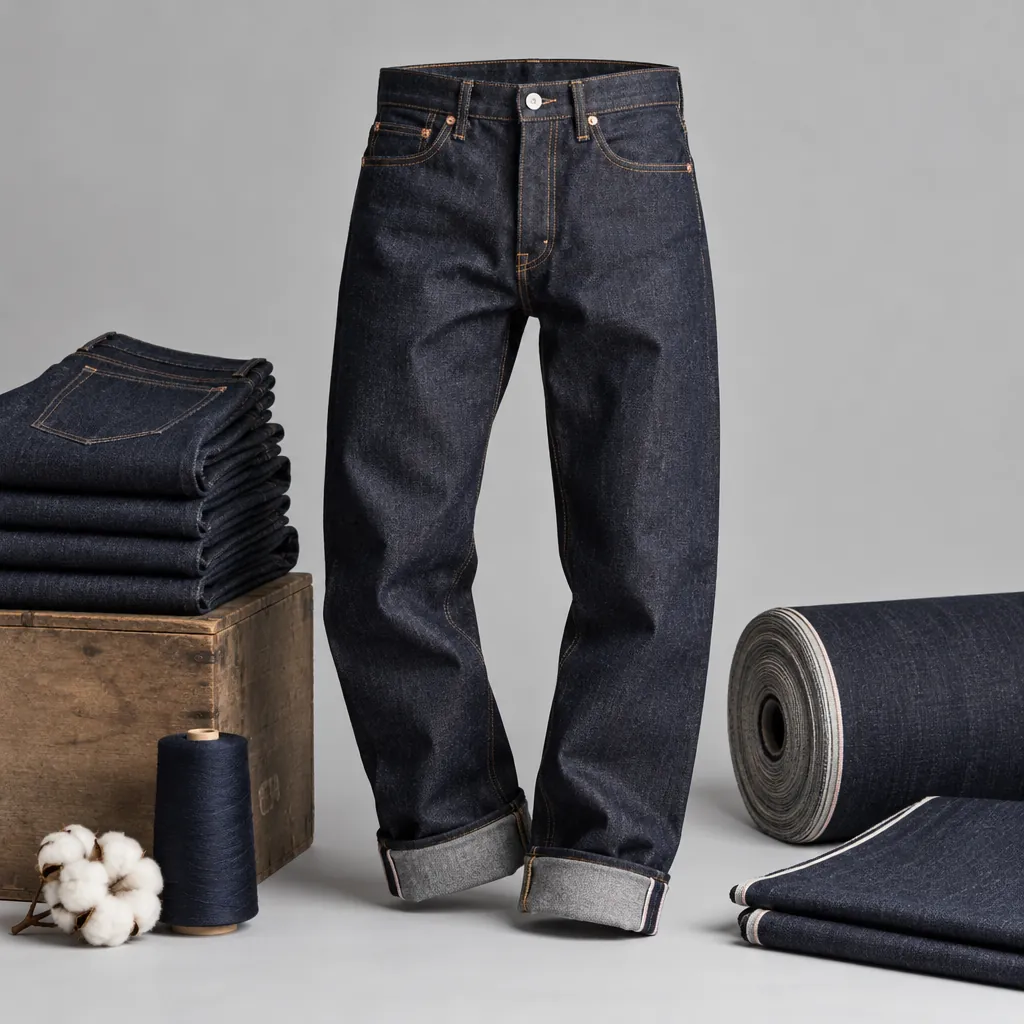
Raw denim occupies a small shelf and a large story. The garment arrives unwashed and unworn, deep indigo, firm in the hand, with creases yet to form. It appeals to a customer who wants the jean to record their own wear, and it rewards the retailer who explains it well. Sold without explanation, raw denim generates returns: stiffness reads as a defect, shrinkage reads as a sizing error, and the first wash becomes a complaint. This article is about selling unwashed denim deliberately, with staff talking points, shrinkage communication, and merchandising that protects the margin.
What raw denim is
Raw, or unwashed, denim is fabric that has been dyed and finished at the mill and then cut and sewn without a wash or mechanical treatment afterward. The color is uniform and dark, the surface carries the faint character of the mill finish, and the fabric behaves the way cloth in that state behaves: firm, slow to shape, and holding dimensional change in reserve for the first wash. Nothing about the garment is broken in. Everything that washed denim does in a laundry, this denim will do on the customer instead, which is precisely the appeal and precisely the risk.
Raw denim is also where the selvedge conversation usually lives. Cloth woven on shuttle looms is narrower and carries the closed edge that gives selvedge denim its name, while projectile-loom cloth is wider and cut without it. Both can be sold raw, and the difference matters to positioning and price rather than to the selling discipline described here. Either way, the retailer is selling an unfinished garment, and the words around it do the work the laundry would otherwise do. The treatment is described for buyers on the raw denim page of this site.
The fade story, told accurately
The reason customers seek raw denim is the fade. Where the wearer's life creases and rubs the fabric, at the knee, the seat, the pocket edges, the hem, indigo lifts gradually and personally, producing wear patterns no laundry can imitate because they are a record of one body's movements. That story is true and it sells. It should be told with its conditions attached: fades arrive with months of regular wear rather than days, they depend on how often the garment is worn and washed, and they reward customers who accept a garment that looks imperfect on purpose. Staff who promise fast, dramatic fades set up the returns that the next sections describe.
Staff talking points that hold up
- What it is: unwashed denim, which will feel firm at first and shape to the wearer over time.
- What the first wash does: the shade will move and the color can transfer onto light surfaces, so the garment is washed separately and the customer should expect change.
- How the fit changes: sizing guidance for raw denim differs from washed denim because of first-wash movement, and the store's guidance should state which convention it follows.
- What the customer gets: a garment whose wear marks develop from their own use rather than from a factory process.
Communicating shrinkage before the sale
Shrinkage is the point where raw denim programs win or lose customer trust. Some raw denim is pre-shrunk mechanically at the mill, which limits movement in the first wash; some is sold in loom state and can move considerably more. The difference is invisible on the rack and decisive in the wash, so it must be communicated. Whether the store's convention is to sell raw denim to fit before washing and let it settle, or to pre-soak before sale, the product page and the hangtag should state the expectation in plain words, including that dimensions after the first wash are expected to change, and that how much they change is a property of the specific fabric, confirmed by the supplier in writing rather than guessed at the counter.
Merchandising and the returns risk
On the floor, raw denim belongs with an explanation attached: a card that names it raw, states the first-wash behavior and offers the store's sizing convention. Fitting should be encouraged rather than discouraged, because the customer who has felt the fabric and heard the story is the customer who keeps the garment. Return policies should anticipate the category's known causes: fit after washing, color transfer onto furniture and footwear, and stiffness misread as defect. Each is preventable with words before the sale and expensive after it.
Online, the category needs more words than most. A product page for raw denim should state that the garment is unwashed, that the first wash will change both color and dimensions, whether the fabric has been pre-shrunk at the mill in plain language, how the store recommends sizing around first-wash movement, and what the care guidance is. Each sentence prevents a specific return reason. Stores that carry raw denim alongside washed product should also make the distinction findable, because a customer who buys raw denim by accident returns it by default. Retailers tracking returns by reason will see the category's profile sharpen within a season or two of honest labeling.
Pairing raw denim in a range
Raw denim sits naturally beside washed product rather than instead of it. A store can carry one or two raw fits as a specialist position while the washed program carries volume, and the raw pieces give the wall a story that lifts the range around them. Where the program grows, fabric choice becomes the differentiator, and the buying considerations behind fabric selection are covered in the site's materials guides. For how raw sits among the wash families, see the reference to denim wash types, and for keeping any claims about the garment's story checkable, the article on sustainable washing claims applies the same discipline to language.
Working with jeans
Raw denim availability, fabric sources and lead times vary by mill and season, and all figures for a specific program are to be confirmed in writing. This article describes selling practice, not an offer. To plan a raw denim program, request a quote and we will respond with fabric options and written terms.