Home / Guides / Sample pricing vs bulk pricing: bridge the gap
Sample pricing vs bulk pricing: bridge the gap
Why sample jeans cost more per piece than bulk, how sample fees are treated in the bulk order, and when a second sample pays for itself.
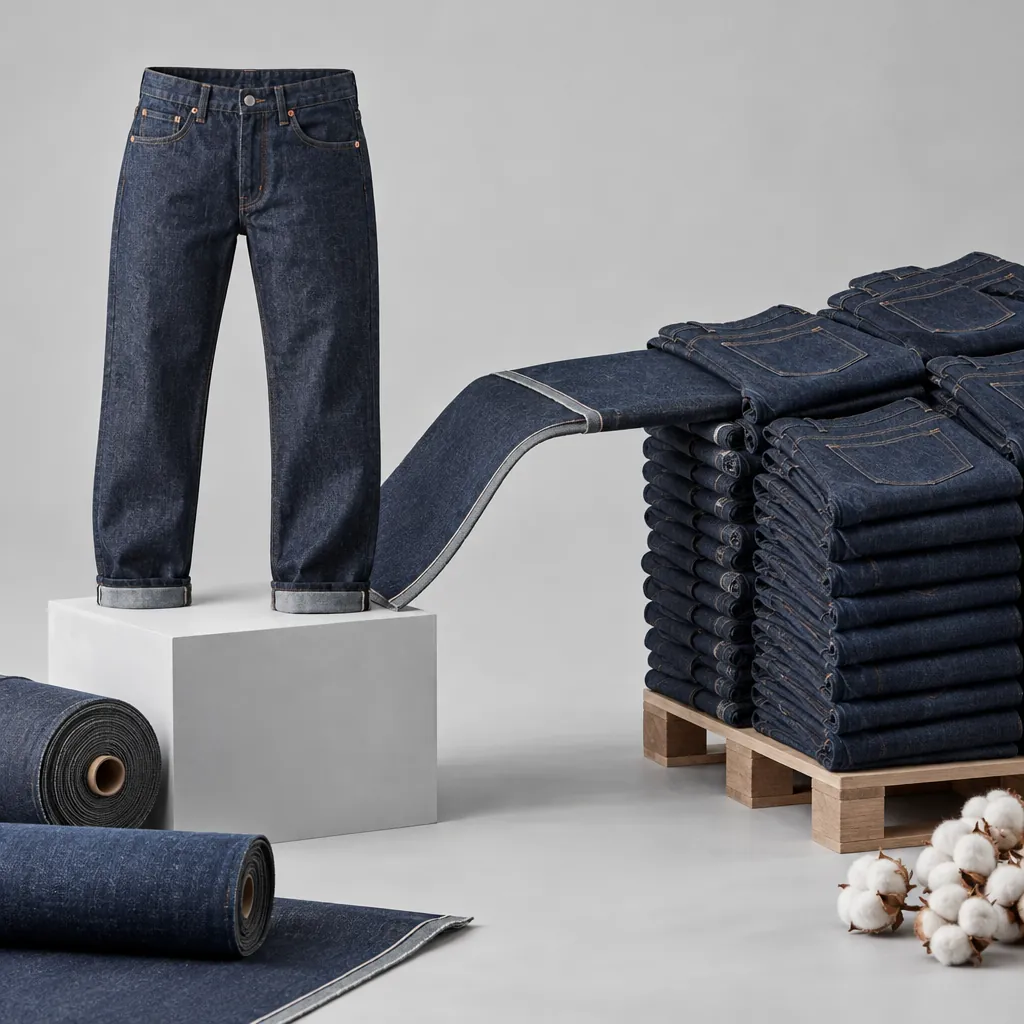
Buyers meeting denim quotations for the first time are often surprised that a single sample jean can carry a per-piece figure several times the quoted bulk cost. The surprise is natural and the arithmetic is real: a sample is a one-off made by interrupting a production system that is designed for repetition. The useful question is not why the sample costs what it costs, but how the sample stage connects to the bulk figure, which fees recur and which do not, and where spending more on sampling saves far more in bulk. This article draws that connection and describes the decisions that belong at each rung of the sampling ladder.
Why the per-piece sample figure runs high
A sample jean cannot ride on any of the economies a bulk order uses. It usually requires a small cut from fabric that may itself have to be sourced in minimum roll lengths, trims ordered in small quantities at unit prices that ignore scale, a single wash batch charged as a setup regardless of its size, and hours of skilled handwork on machines that are not arranged for one garment. Behind the physical garment sits the pattern work, which is genuine engineering labor, and on a first program that work is often amortized into the sample charge because there is no order yet to amortize it across. The sample room also carries its own overhead and its own queue. None of this is padding; it is the fixed cost of a production chain concentrated onto a single piece, and a supplier who quotes sample work honestly is showing the buyer what the chain really costs to move.
The sample ladder and where the money goes
Most programs move through a recognizable ladder rather than a single sample. A prototype establishes the style and the fabric direction and usually absorbs the heaviest per-piece charge. A fit sample, made in the approved fabric, establishes the measurements and how the size curve behaves, and it is the rung where fit decisions are actually made. A pre-production sample, made from bulk fabric on bulk machinery, confirms that what was approved can be repeated at scale. A shipment sample, pulled from the finished order, closes the loop and anchors any claim discussion. The costs are not equal across rungs: early work is expensive per piece because it is exploratory, while later rungs cost less individually but matter more, because they certify the bulk rather than explore it. Buyers should ask a supplier to state the ladder and the fee for each rung before sampling starts, so that the sampling budget is a plan rather than a series of invoices, and so the team knows in advance which rung each decision must be made at.
Sampling time is the part of the ladder buyers forget to budget even when they have budgeted the fees. Each rung carries not only a cost but a cycle: fabric to the sample room, garment made, parcel in transit, review on the fit model, comments written, and the next round booked. On a first program these cycles happen in sequence rather than in parallel, and the calendar consequences are larger than buyers expect. The workable habit is to put the sampling ladder on the buying calendar first and let it dictate the order date, rather than fixing an order date and asking sampling to fit inside it. Programs scheduled the second way compress the very stage where decisions are least expensive. A supplier who quotes the ladder's fees can usually also state its cycle expectations, and the two belong in the same written exchange.
How sample fees connect to the bulk order
Practice varies by supplier, and the treatment of sample fees should be confirmed in writing on the quotation rather than assumed. Common arrangements include crediting a portion of the sampling cost against the first bulk order, charging sampling at cost with no credit, and waiving later rungs for repeat styles that return with an unchanged specification. The buyer's leverage here comes from program clarity: a supplier can treat sampling as an investment when the buyer can describe reorder volume honestly, and as pure cost when the buyer cannot. What should not vary is the rule that approvals are paid for in time as well as money. A compressed schedule that skips a rung to reach production faster usually reappears later as bulk corrections, and corrections in bulk cost more than the skipped rung did, in rework, in delay and in the goodwill spent arguing about whose specification was ambiguous.
When a second sample pays for itself
A second round of sampling is not a failure of the first; it is the normal price of a specification that changed. The cases where the spend is clearly justified include a fabric substitution after the first fit, a wash that moved away from the approved standard, a grading correction discovered on the size run, and any change to trims that affects how the garment is constructed. The cases where it usually is not justified include cosmetic preferences that a revised specification sheet can carry, and changes that belong in next season's development rather than in the current order. The decision rule is simple and worth writing into the buying procedure: if the change is one a factory could misread from notes alone, it needs a sample; if the change is one a factory can read unambiguously, it needs a revised specification sheet and nothing more. Buyers who apply this rule consistently spend their sampling budget where it changes outcomes and stop paying for confirmation of things already agreed.
The per-piece figures discussed here are one layer of the quotation structure set out in cost anatomy, and the adders that labels and packaging bring are covered in private label costs. Fee structures and what they include are also described on the sample cost guide page.
Working with jeans
Sample fees, what each rung includes, and any credit against the bulk order are confirmed in writing before sampling starts. Share your styles and development timeline, and request a quote with the sample ladder stated.