Home / Guides / MOQ negotiation: lowering entry without risk
MOQ negotiation: lowering entry without risk
How buyers approach MOQ negotiation for jeans: why minimums exist, which levers lower the entry point, and what to trade and what to keep.
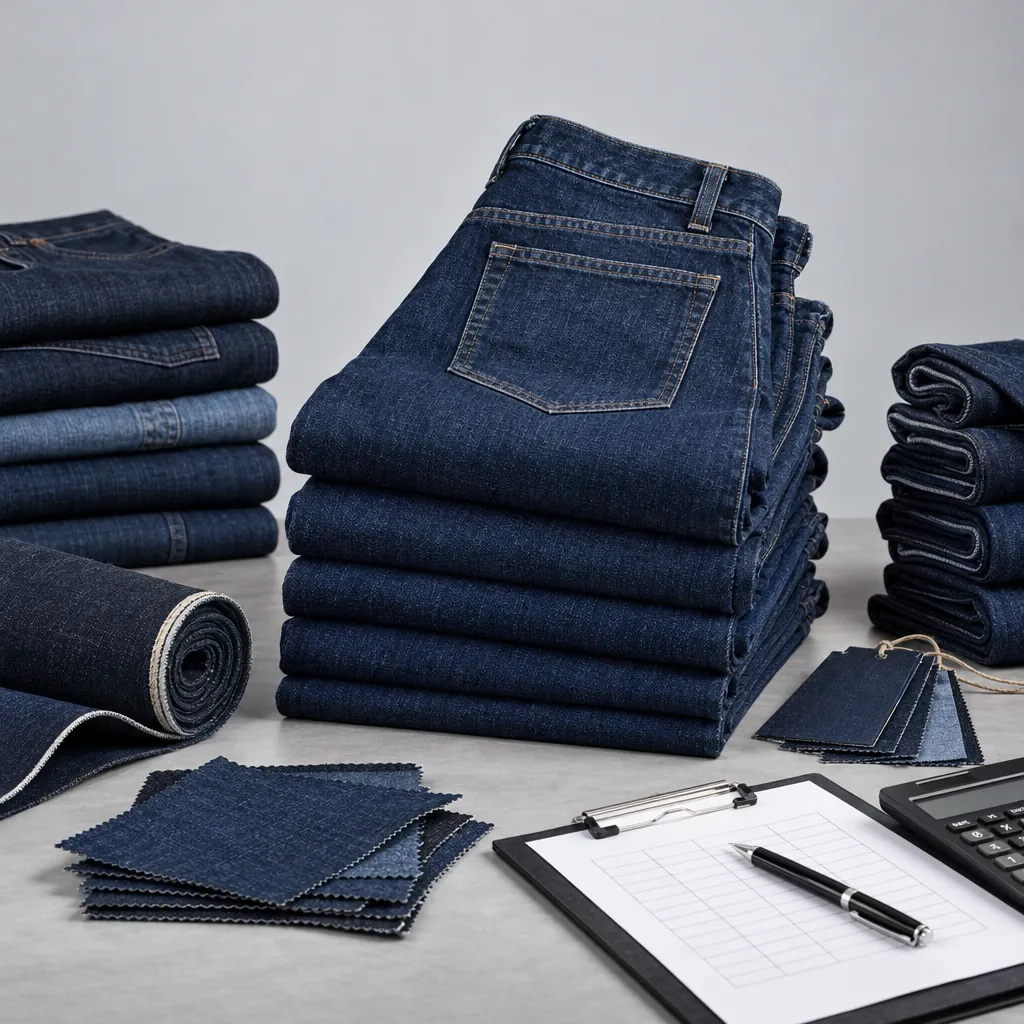
Minimum order quantities exist for a reason that has nothing to do with exclusivity: a factory buys fabric by the roll, thread by the cone and trims by the thousand, and a style that consumes less material than the supply chain can efficiently provide creates waste that someone has to pay for. Buyers who understand this negotiate better, because the conversation stops being a request for a favor and becomes a search for a structure that fits both sides. This article sets out why minimums exist, which levers genuinely lower the entry point without adding risk to the program, and which shortcuts appear to lower the minimum while quietly raising the cost of the season.
Why minimums exist
The floor under any minimum is usually material. Fabric mills sell by the roll or the lot, thread and trim suppliers carry minimums of their own, and the washing plant charges for setting up a recipe whether the batch underneath it is large or small. Above the material floor sit economic floors: pattern making, marker making and line changeover consume the same skilled hours regardless of the quantity produced, so a very small run spreads those hours across too few pieces to be sensible for either party. A supplier who states a minimum is usually passing these floors through honestly, and a buyer should therefore treat the stated figure as information about the supply chain rather than as an opening position in a bargaining game. The useful question is not whether the minimum can be waved away but which floor sets it in this particular case, because that answer decides which lever is worth pulling.
It also helps to ask what kind of minimum is being quoted. A per-order minimum counts everything in the shipment. A per-style minimum applies to each silhouette regardless of the total. A per-fabric or per-wash minimum applies wherever new material enters the chain, which is why two orders of equal size can carry different entry requirements depending on how much they share. Suppliers are not always precise about which one they mean in a first conversation, and the buyer who asks the clarifying question early saves a round of quotation later, because the answer decides which consolidation strategies in the list below are actually available for the program.
The levers that lower an entry point safely
- Consolidate styles before consolidating quantity. Many suppliers set the minimum on the order rather than on the style when the styles share one fabric and one wash base. A buyer who takes a silhouette in several washes instead of several silhouettes in one wash each can reach the same order total while spreading the trial risk across more looks.
- Build on a stocked fabric platform. Fabric the supplier already stocks removes the mill minimum from the chain entirely. The trade-off is a narrower fabric choice, which for a first order is usually a fair exchange and can be revisited on the reorder once the program has sales history.
- Simplify the trim package. Stock buttons, stock rivets and a printed main label shorten setup and remove tooling minimums from the quotation. Custom hardware and woven labels can be introduced at the reorder stage, when the program's volume justifies the setup.
- Phase the delivery instead of shrinking the order. A total quantity delivered in agreed stages keeps the supplier's material economics intact while easing the buyer's cash flow and storage load. The stages, and what happens if a stage is postponed, belong in the written order.
- Concentrate the size curve. A run that spreads across every size multiplies cutting permutations and creates small lots at the edges of the range. A concentrated curve cuts more cleanly and avoids the small-lot penalties that sit inside many minimum discussions.
What to trade, and what to protect
Every concession in a minimum discussion has a price somewhere. Stocked fabric narrows the fabric choice. Stock trims limit brand distinction. Phased delivery adds coordination work. A shared platform ties the buyer's styles to a fabric that must remain available for the reorder. None of these trades is wrong, but each should be made deliberately and recorded in the specification, not discovered afterward in the sample. The items a buyer should protect even in the smallest first order are the fit approval, the wash approval and the written specification itself, because these are the controls that make the second order possible at all. A buyer who trades away documentation to reach a minimum has saved money on the first order and mortgaged the second one, which is where the real economics of the program live.
A sequence that keeps the relationship intact
Negotiation over minimums goes better as a structured conversation than as a series of asks. Start by stating the program honestly: total quantity, style count and a candid growth expectation, because suppliers price their flexibility against the credibility of the plan in front of them. Ask which constraint sets the minimum for this case, whether fabric, trims or setup hours. Propose one or two structures from the list above and ask what each changes on the supplier's side, then accept that a first order may carry a higher unit figure as the fee for small scale, and budget for that openly rather than fighting it line by line. Suppliers remember buyers who were difficult once and reasonable always, and that memory tends to reappear later as flexibility during a fabric shortage or a shipping crunch, which is worth more than the margin won in the first negotiation.
The quantity structures described here interact with the price ladder covered in our price tiers guide and with the planning side of a first program in budgeting a first denim order. The formal definitions of the terms sit on the MOQ explained page.
Working with jeans
Minimum quantities depend on the fabric, the wash and the structure of the order, so they are confirmed in writing for each program rather than published as a single number. Describe your style count and target quantities, and request a quote to receive terms matched to your case.