Home / Guides / Rigid denim: fit risk and how to control it
Rigid denim: fit risk and how to control it
Why rigid denim fit shifts after washing and wear, how to compensate the pattern, and which care wording keeps customer expectations aligned.
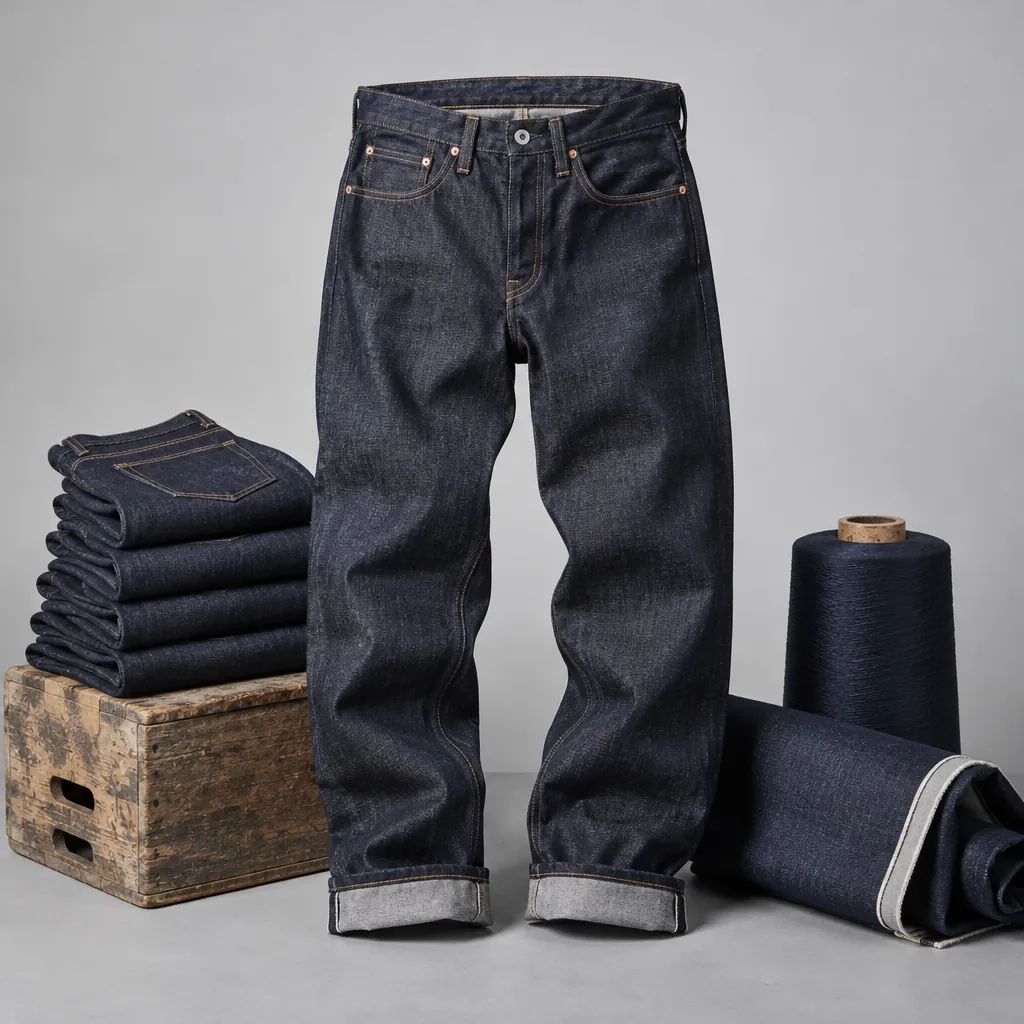
What rigid denim is
Rigid denim is fabric that has not been washed or mechanically softened after weaving and dyeing. It leaves the finishing line with the dense, firm hand it had on the loom, deep indigo on the face and little of the relaxed character customers meet in a washed jean. Rigid is the traditional state of denim, and washed denim is the treatment rather than the other way round. A rigid jean fits the body it is sold to differently from how it will fit after weeks of wear, and that gap between the first fitting and the settled fit is the source of most rigid denim fit risk. The fabric page on rigid denim covers the constructions typically offered to wholesale programs; this article concentrates on the fit risk itself and on the controls a buyer can put around it.
Why the fit moves
Two movements happen in opposite directions. The fabric shrinks, mainly along the length, when the garment is first washed, because the weave relaxes after spinning, weaving and dyeing have held it in a stretched state. The garment also stretches where the body loads it, across the seat, the thigh and the waistband, during the first wears. The result is a jean that can feel tight and stiff at purchase, relaxes into its best fit over the first weeks, and then shortens at the first wash. None of these movements is a defect; they are the properties the customer is buying when he buys rigid denim. The scale of the movements, however, is specific to each fabric and each finishing route, and it has to be measured rather than assumed. Shrinkage values for a specific fabric are established by test and are confirmed in writing before bulk production.
Pattern compensation
Because the fabric moves, the pattern cannot simply be cut to the final measurements the customer should see on the label. The factory cuts the pattern with allowances that anticipate post-wash shrinkage, so the garment passes through a temporary state on its way to the measurements the brand approved. The allowance is specific to the fabric lot and its finishing, and it is decided from a wash test, not from a rule of thumb carried over from the last program. A buyer approving a rigid fit sample should therefore ask which state the sample represents: the cut state, the washed state, or the worn state. Each is a legitimate reference, but the specification must name the one that counts, because the factory will otherwise optimize for whichever state the sample happens to show, and the label measurements will drift as a result.
A fit process that accounts for movement
A rigid program needs its fit process stretched across time. The fit sample should be reviewed on the body in the cut state, then washed using the intended care instructions, then worn for a defined period and reviewed again. The three reviews answer different questions: the first shows the fitting-room experience, the second shows what the first wash does, and the third shows the fit the customer will actually live with. Approving a rigid style on the first review alone is the most common and the most expensive shortcut in this category, because the two later reviews are where the surprises live. The reviews also give the brand honest material for its product page, since the fit language can be written from observed behavior instead of from hope, and a returns team can be briefed on what is normal.
The retail expectation gap
The fit risk in rigid denim is as much a communication problem as a technical one. A customer who tries a rigid jean in store expects the fitting-room fit to persist, and a customer who buys online compares the garment against the product photos within minutes of opening the box. Both judgments happen before the fabric has settled into its long-term fit, which is why rigid programs see fit complaints that washed programs do not. Stores with trained staff can carry a rigid program comfortably, because one sentence at the counter resets the expectation before it hardens into a return. Pure e-commerce needs the same sentence in writing, on the product page, before the size selection, phrased as a feature of the fabric rather than as a disclaimer buried under the size chart.
Care wording that manages expectations
The care label and the product copy are where a rigid program defends its fit. The wording should state plainly that the garment is made from unwashed denim, that the fit settles with wear, and that the first wash changes the measurements in a way the pattern has already allowed for. It should give one clear washing recommendation rather than a menu of options, because inconsistent customer washing turns one fit into several and makes defect analysis impossible. A returns team that knows this language can sort genuine defects from normal settling, which protects both the customer relationship and the quality statistics the brand relies on. Care label wording for the destination market, and the fit claims on the product page, should be reviewed against the wash test results before launch, not after the first complaint arrives.
Who rigid denim suits
Rigid denim rewards channels that can explain it. Workwear programs suit it, because the customer expects a breaking-in period and values the fabric's endurance over softness on day one. Heritage and raw-denim assortments are built on it deliberately, with fade development as part of the product's appeal rather than a side effect. Stores with knowledgeable staff, and online brands with strong product pages and patient return policies, carry it without friction. Channels built on immediate fit gratification, fast turnover and low-touch service will pay for the same fabric in returns, exchanges and reviews. The fabric itself is neutral; the channel decides whether rigid is an asset or a liability, and that decision belongs before the order is placed, not after the first return report lands.
What to confirm before bulk
- The wash test results for the specific fabric lot, measured in both length and width.
- The state the approved fit sample represents, named in the specification sheet.
- The pattern allowances applied for shrinkage, and who owns the calculation.
- The care label wording, checked against the test results and the destination market's requirements.
- The product page fit language, agreed with the same test results as its reference.
Shrinkage values, tolerances and test methods are confirmed in writing with the supplier, and the bulk fabric is checked against the same tests before cutting starts. The article on denim shrinkage covers the test protocol in detail, and the piece on cotton denim blends explains how fiber content changes how much a fabric moves over its life.
Working with jeans
jeans helps buyers plan rigid denim programs where the fit behavior is specified, tested and communicated before the order rather than discovered after it. Shrinkage allowances, minimum order quantities and lead times are confirmed in writing for each fabric and program. To review rigid and washed options against your own fit process, request a quote with your target fits and sales channels.