Home / Guides / Recycled cotton content: labels and claims
Recycled cotton content: labels and claims
Recycled cotton in denim: how content claims and labels work, what documentation supports them, and where marketing language overreaches.
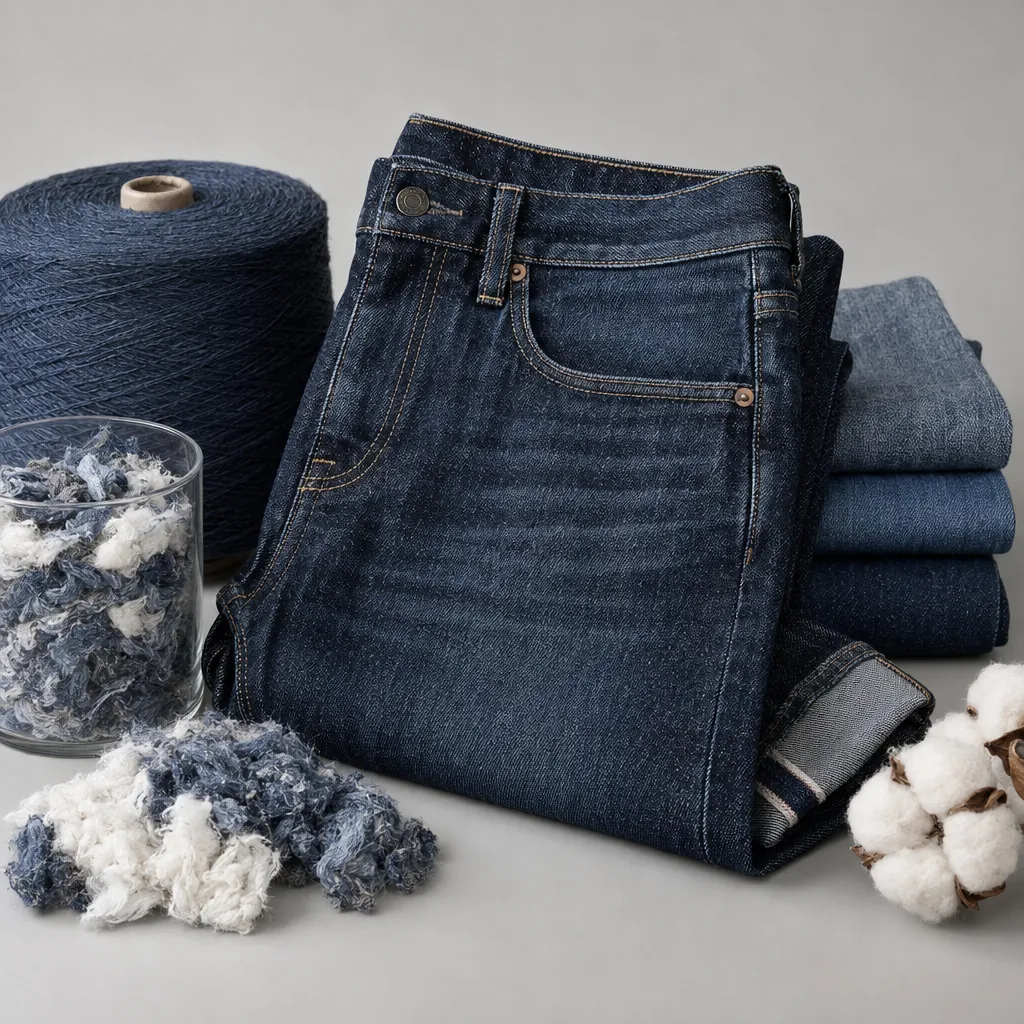
Recycled cotton is one of the most attractive stories in denim and one of the easiest to overstate. The fiber has real limits: recycled cotton is typically shorter than virgin fiber, so it enters a yarn in company with other fibers, and the resulting fabric carries a composition the label must state plainly. Around that plain statement sits a second layer of claims, on hangtags and product pages, where marketing language tends to run ahead of the documentation. This article explains how recycled content reaches a denim label, which documents support which claim, and where a buyer should draw the line between a claim that holds and one that unravels.
How recycled content enters a denim label
The fiber content label states composition by generic fiber name and proportion by weight, in descending order. Recycled content does not change that format; it changes the sourcing behind the numbers. A fabric that contains recycled cotton is still described as cotton on the label, with the recycled share reflected in the proportions, and any additional disclosure about recycled input lives in the surrounding claims rather than in the statutory content line itself. The mechanics of the content line are covered in the guide to fiber content labeling, and the same verification logic applies here: the label is a factual statement, and the facts come from the mill that made the fabric.
The practical chain looks like this. The mill declares the composition of the fabric it wove, including the recycled input it actually used. The garment supplier passes the declaration through with the fabric. The buyer nominates the label text and checks it against the declaration, not against the sales sheet that first attracted attention to the fabric.
Claims, and what supports them
Away from the label, recycled content lives in claims: on hangtags, on packaging, and on product pages. Claims are statements to customers, and each one needs a supportable basis. The distinctions that matter are between what the product contains, what the program does, and what the world gains. A claim that a garment contains recycled cotton is supported by the composition declaration. A claim that the program uses recycled inputs across a range is supported by declarations covering that range, not by one certificate for one fabric. A claim about environmental benefit beyond content moves into territory where substantiation gets harder and counsel belongs in the room.
Independent schemes exist that verify recycled content through the supply chain, and where a supplier nominates one, the buyer should ask which scheme applies, what it covers, and what documentation flows to the brand. This site does not issue certifications or publish test reports; documents are obtained from suppliers on request and confirmed in writing. The standing requirements for this topic are summarized on the page covering fiber labeling.
Where claims overreach
The recurring overreaches follow a pattern worth naming, because buyers will meet all of them.
- The borrowed claim. A fabric carries recycled input; the garment claims to be made of it. Composition of the fabric is not composition of the garment when other fabrics, pocketing and trims enter the build.
- The rounded story. A modest recycled share becomes recycled denim in the copy. Customers and regulators read the stronger claim, and the label quietly disagrees with the hangtag.
- The implied benefit. Content claims drift into statements about water, carbon or waste that no document in the file supports. Those are separate claims with separate burdens.
- The seasonal fossil. A claim written for one season's fabric survives into the next season, when the fabric changed and the declaration did not.
Each of these is a consistency failure, and each is caught by the same discipline: one approved claim set, tied to one declaration set, refreshed when the fabric changes.
Writing the claim set once
A claim set works best when it is written once, approved once and reused everywhere. The exercise takes an hour: list every claim the program intends to make about recycled content, in the exact words, then attach to each line the document that supports it and the place the claim appears. The hangtag line points to the composition declaration. The product page sentence points to the same declaration, phrased no more strongly. The packaging line points to the same file. Claims that cannot be attached to a document are either rewritten or dropped, and the discipline is easier to hold before the season than during it.
The set also needs an owner. In a small program the buyer owns it; in a larger one, marketing and compliance share it, and shared ownership works only when one name signs. When a fabric changes, the owner refreshes the declarations first and the copy second, in that order, so the words never run ahead of the file. Programs that invert the order discover the gap in a review, in a customer question or in a marketplace takedown, in rising order of cost.
Product quality notes buyers should expect
Recycled cotton changes the fabric as well as the story. Shorter fiber lengths generally mean a yarn with less strength and more variation, and the fabric that results can behave differently in weaving, in washing and in wear. None of this disqualifies the material; it means the program should test and approve the fabric as it would any other, and should not let the story shortcut the fabric work. Slub character, surface variation and color depth all read differently when recycled fiber enters the blend, and a buyer who understands this approves washes and hand feel against the actual fabric rather than against the previous season's reference.
Claims also reach the selling channel. Product pages carry the strongest claims a brand makes, and the page that says more than the label does creates the gap a complaint or a reviewer will find. The channel-side discipline is treated in the guide to sourcing for online jeans stores, where the match between page claims and product facts is a conversion issue as much as a compliance one.
Working with jeans
Quotations, minimum order quantities and lead times for jeans are confirmed in writing for each order, and the practices in this article are planning guidance rather than commitments. To open a recycled-content program on a documented footing, request a quote and ask for the supplier's fabric declaration process in writing.