Home / Guides / Private label vs stock jeans: a decision guide
Private label vs stock jeans: a decision guide
Open stock gets jeans on the floor fast; private label builds a brand. A decision guide covering lead time, minimums, margin and the hybrid path.
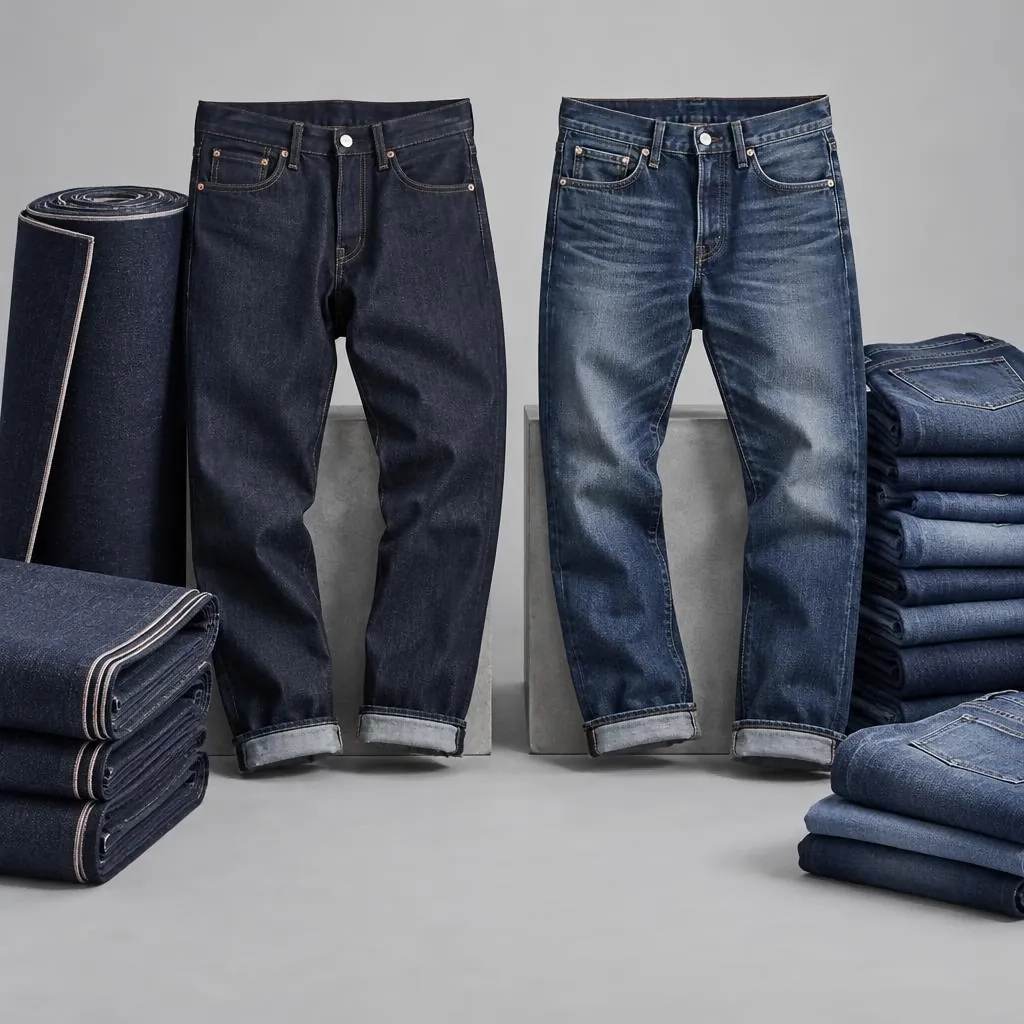
A jeans program can be filled two ways: buy open stock, finished goods under the supplier's identity and reorder them as they sell, or build a private label range produced to the store's own specification and carrying the store's own name. Most buyers eventually face the choice, and most advice about it is binary when the real answer is sequencing. Each path solves a different problem, carries a different risk, and accrues value to a different party. This guide sets out what each path actually buys, what each demands, and how stores usually move from one to the other without losing a season.
What each path actually is
Open stock means finished garments that exist as a product before the buyer arrives. Sizes, washes and fits are fixed; the buyer selects from what is available, orders at the supplier's minimum, and can reorder the same article again while it stays in the line. The brand on the label belongs to the supplier. Private label means the garment is made to the buyer's specification: the fit, fabric, wash, trims and labels are chosen or approved by the buyer, and the brand on the label belongs to the store. The distinction behind the two is control. Open stock rents a finished product; private label owns the decisions that produce it, and owns the consequences of those decisions too.
The timing of the decision matters as much as the decision itself. A store in its first season of denim usually lacks the sell-through history that a private label brief needs, so open stock is not merely the faster option; it is the option that generates the evidence. A store with two or more seasons of data by fit and wash holds exactly the material a specification is written from. The mistake is not choosing the wrong path but choosing either path at the wrong time.
What private label buys you
Private label converts a store's sales into brand equity the store keeps. Repeat customers ask for the store's name rather than the supplier's, the fit becomes something the store is known for, and no competitor can order the identical article. Control over specification also means control over cost structure: the buyer decides where quality is visible and where it is not, which typically improves the margin position on comparable goods. The price is paid in process. Private label requires a brand brief, specification sheets, label artwork, fit approvals and compliance planning before the first bulk order, longer development lead times, and larger minimum commitments than open stock. The two paths are compared in detail on the private label vs open stock page, and the minimum-order mechanics behind the private label path are explained on the MOQ explained page.
What stock buys you
Open stock buys speed and reversibility. Goods can be on the floor within the shipping lead time, styles can be tested in shallow depth without development cost, and a style that fails costs the buyer the stock, not a development program. It also buys breadth cheaply: a store can cover many fits and washes by selecting from a line that already exists. The costs are structural. The margin ceiling is set by the supplier's price list, the assortment is available to every competing store that carries the line, and the customer's loyalty accrues to the supplier's brand rather than the store's. Open stock is not a lesser choice; it is the correct choice exactly as long as the store is still learning which fits and washes its customer actually buys.
Compared on the decision sheet
| Dimension | Open stock | Private label | What it means for the decision |
|---|---|---|---|
| Time to shelf | Shipping lead time only | Development plus production | Open stock serves the current season |
| Commitment | Supplier minimums per style | Program minimums across the range | Private label needs a forecast before it starts |
| Brand equity | Accrues to the supplier | Accrues to the store | Private label compounds; stock does not |
| Control of fit | Fixed by the supplier's block | Owned through fit approval | Fitting room data feeds private label specs |
| Margin structure | Ceiling set by list price | Structured by the specification | Private label rewards spec discipline |
| Risk profile | Shallow, per order | Deep, per program | Match risk to how proven the demand is |
The hybrid path most stores actually take
In practice the two paths form a sequence rather than a choice. A store buys open stock, watches sell-through by fit and wash, and learns which articles its customer returns to. The proven articles then become the first private label specifications: the fit the customer already buys, translated into a garment the store owns, often starting with one or two styles in core washes. The transition works because fitting room data and return reasons supply exactly the information a private label brief needs, so the specification is written from evidence rather than from taste. The companion question of how a store extends the range once the core is owned, for example by adding adjacent categories, is treated in the article on denim jackets as a jeans-wall companion.
What to have ready before requesting private label quotes
A private label quote is only as accurate as the brief behind it. Before requesting pricing, a buyer should hold a short brand brief naming the customer and price position, the chosen silhouettes with their size runs, the fabric and wash direction, final label text and artwork, and a forecast of the first season's order mix and repeat schedule. Suppliers quote against specifications; a vague brief returns a vague price and an expensive discovery process later. The preparation items are worth listing in order before the first quote request, and the same discipline applies whether the first private label program covers one silhouette or a small range.
Working with jeans
Quotes, minimum order quantities and lead times for either open stock or private label programs are confirmed in writing before any commitment, and each program is quoted against its own specification and forecast. To request a quote, describe whether you are testing open stock styles or preparing a private label brief.