Home / Guides / Denim jackets as a jeans-wall companion
Denim jackets as a jeans-wall companion
Denim jackets raise basket size next to a jeans wall. How to plan the companion category: sizing, wash coordination, season shape and floor layout.
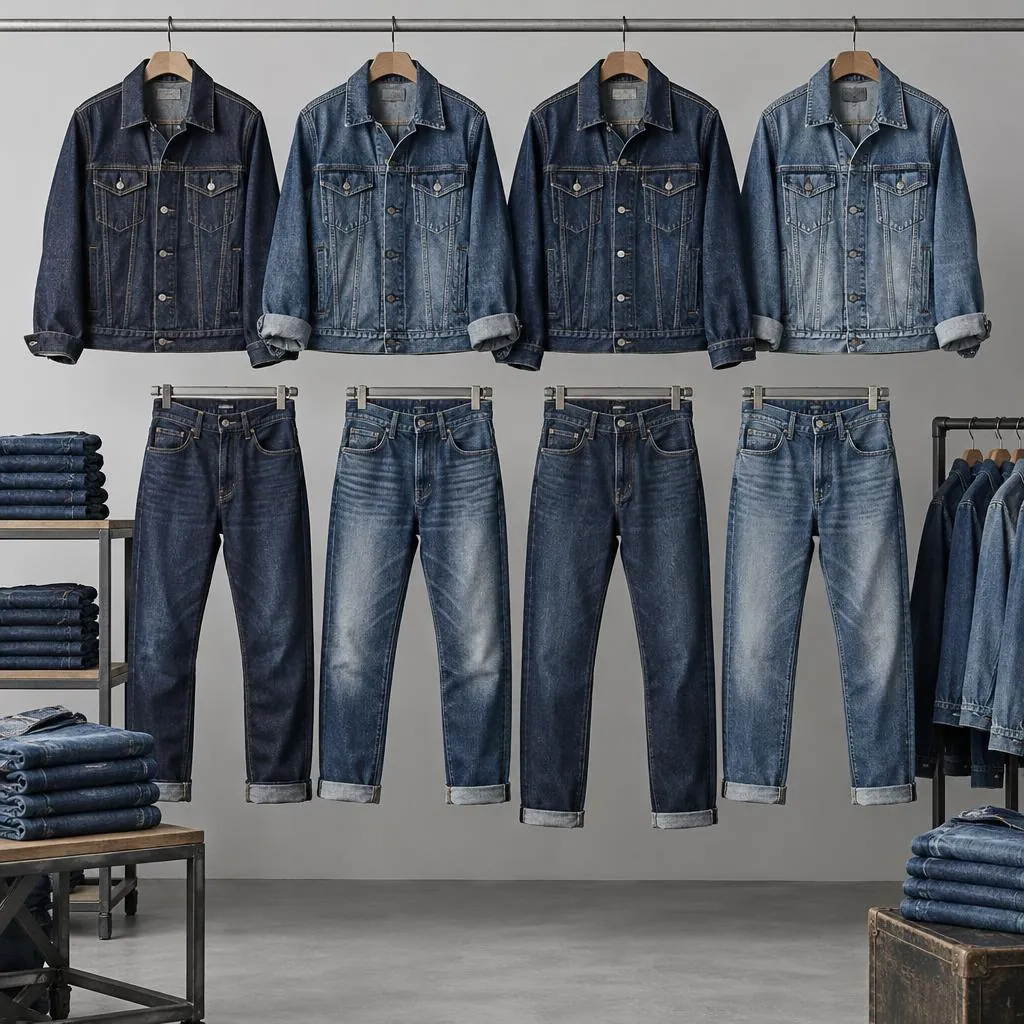
A jeans wall does its best work when a companion category sits beside it, and the denim jacket is the companion most stores reach for first. The pairing is natural: the jacket completes the denim look, carries a higher unit price than any single pair of jeans, and shares the fabric and wash language of the wall it stands next to. But jackets are not jeans, and treating them as simply one more jean with sleeves produces the usual disappointments: a size curve planned wrong, a season shape missed, a jacket program that ties up open-to-buy without attaching to anything. This article covers how to plan the companion category deliberately.
Why jackets earn wall space next to jeans
The commercial argument is attachment. A customer who came for jeans buys an outfit when the jacket is there, styled with the jeans she was already considering, and the basket value of that outfit is a multiple of the jean alone. The jacket also does merchandising work: it gives the wall a hero product, shows the wash at full scale on a mannequin, and answers the styling question the customer would otherwise ask a member of staff. Season peaks reinforce the case. Jacket demand concentrates around back-to-school and into fall, exactly when jeans traffic is strong, so the companion category amplifies the wall at the moments the wall is busiest. Stores selling online see the same effect when jacket and jean appear on the same page as a styled set.
How jackets differ operationally from jeans
The operational differences start with sizing. Jackets are commonly letter-sized or numbered in a simpler curve than jean waist sizes, which means the size plan is shallow and wide rather than deep, and stock-outs show at the ends of the curve rather than the middle. Construction demands differ too: a jacket carries heavier fabric than most jeans, more hardware, and a fit that must allow layering over a shirt or a light knit, so the fit block is judged over clothing rather than on the body. Compliance adds a note for programs including children's sizes: drawcords and small parts on kids' outerwear carry safety attention of their own, which a buyer should confirm with the applicable standards before committing. Where the jacket program extends to kids, the testing overview on the kids denim testing page outlines the areas to check.
Merchandising the pair on the floor
Placement decides whether the jacket attaches or floats. The jacket block belongs beside the jeans wall, not across the store in outerwear, and the mannequin nearest the wall should wear the outfit complete. Wash coordination does part of the selling: a jacket in a wash from the same family as the core jean range lets the customer assemble a coordinated set without staff help, while an intentional contrast wash, offered as a deliberate alternative, serves the customer who wants the two pieces to disagree. Folding standards differ from jeans as well, since jackets hold their shape on a hanger better than on a stack; a hanging or half-folded presentation usually reads better. The floor-layout principles behind these placements are set out on the retail store program page.
Jackets and jeans compared as an assortment decision
| Dimension | Jeans | Denim jackets | What it means for the plan |
|---|---|---|---|
| Purchase motive | Replacement and fit seeking | Outfit completion and statement | Jackets convert on styling, jeans on fit |
| Size curve | Numeric, deep at core sizes | Simpler curve, shallow depth | Plan ends of the jacket curve first |
| Season shape | Steady year-round | Peaks back-to-school and fall | Time the jacket buy to the peaks |
| Fabric demand | Weight matched to silhouette | Heavier, structured cloth | Approve jacket fabric separately |
| Markdown risk | Slow, predictable clearance | Concentrated after the season | Set the jacket exit date at purchase |
| Attachment effect | Baseline basket | Raises basket beside the wall | Measure attach rate, not jacket sales alone |
Wash and fabric coordination across the pair
The joint fabric story is where the companion strategy succeeds or fails. A store that sources jeans and jackets independently often ends up with two wash languages on one wall, and the customer notices that the jacket does not quite match the jean it is styled with. The practical control is to specify both garments against the same wash standard, so the core jean and the core jacket share an approved wash reference, and to state plainly on the page whether a given pair is meant to match or to contrast. Fabric weight decisions should also be made per garment rather than assumed: a jacket cloth that hangs correctly can feel too heavy for a summer jean, and the two specifications can legitimately differ while sharing a color story.
Timing completes the coordination. Because jacket demand peaks earlier than jean demand in most regions, the jacket order lands while the jeans wall is still in its core selling weeks, and the floor needs a place for the jacket block before it needs the seasonal jean shifts. Planning the two arrivals against one calendar, rather than ordering each category on its own rhythm, is what makes the pairing look deliberate to the customer.
Working the economics
Jacket economics work on attach rate and turnover rather than on the jacket's own sell-through. The measures worth tracking are the share of jean transactions that include a jacket, the basket value when one does, and how quickly the season's jacket buy clears before the markdown date fixed at purchase. Because the jacket range is few products, each one carries more visual weight than any single jean; that is why a jacket that misses hurts more visibly, and why the range should start narrow, prove attach rate, and widen from evidence. How a wall is organized into tiers, and where a companion category sits within it, is treated further in the article on value vs premium denim.
Working with jeans
Quotes, minimum order quantities and lead times for jackets and jeans are confirmed in writing before any order is placed, and each garment is quoted against its own specification and size curve. To request a quote, describe the jacket styles, washes and size curves you want to place beside your jeans wall.