Home / Guides / What to specify before you request a private label denim quote
What to specify before you request a private label denim quote
What to lock down before requesting a private label denim quote: measurements, fabric, wash, trims, labels, packaging and compliance scope.
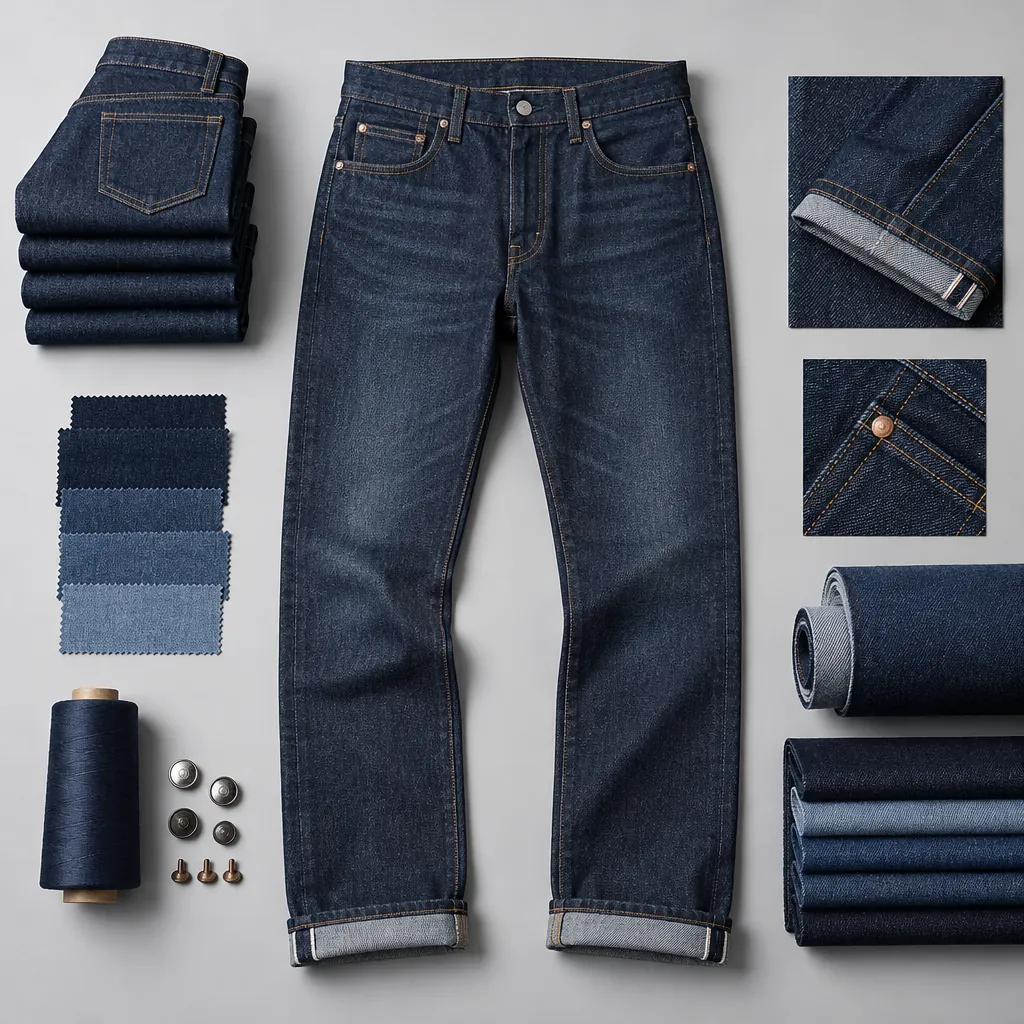
A private label denim quote is only as good as the specification behind it. Ask a supplier to quote a vague request and the answer will be a comfortable number attached to assumptions, and every assumption becomes a change order later. Ask with a specification and the answer can be compared, line by line, against other answers, which is the entire point of requesting quotes. The work of specifying is also the work of deciding: most of what a private label program will argue about in month six is settled in the two weeks before the quote request. This article is a checklist of what to lock down before a private label denim quote is requested, and why each item moves the number.
Silhouette and measurements first
The silhouette choice carries the most downstream weight, because it sets the pattern, the fit approvals and the grading work. Before a quote, the buyer should name the silhouette in words the supplier can act on, and attach measurement points rather than adjectives. High, mid and low are conversations; front rise, back rise, waistband height, thigh, knee and hem, at stated points, are specifications. The measurement set also decides how many fit rounds the program should expect, and a buyer who writes the points down early discovers gaps while they are still free to fix. The points that matter most on jeans, and how they are stated, are set out in the guide to rise and inseam specs.
The size range belongs in the same breath as the measurements, because grading is quoted as work. A run that starts at a different base, or extends past the supplier's usual range, changes pattern cost and sample rounds, and the quote should see both before it is written.
Fabric, wash and trims
Fabric is the largest cost lever and the easiest to leave vague. A specifiable answer names the weight band, the content including any stretch, and whether the fabric is nominated exactly or described as a band the supplier proposes into. Both routes are legitimate; nominated fabric produces a comparable quote, and a fabric band produces options, and the buyer should know which one it is asking for. The weight question in particular deserves its own reading, because weight drives drape, cost and wash behavior together, and it should be settled deliberately rather than defaulted.
The wash should be referenced to something physical: an approved sample, a lab reference or a written description of the effect, held by both sides. Trims and hardware complete this block. Buttons, rivets, zips, pocket bags, thread colors and brand patches are all quotable items, and each one is either nominated by the buyer or proposed by the supplier. Every item left floating in this block becomes a unit-cost surprise later, because the cheap version and the nominated version differ in exactly the way a quote cannot show.
Labels, packaging and compliance scope
A private label order carries the buyer's name, which means the buyer owns the label content question. Before a quote, the label set should be listed: brand label, size label, care label, fiber content, country of origin, hangtag, and any tracking or identification elements the market requires. The supplier does not decide what the label must say, but the quote should include who sources the labels, who prints them and who approves them. Compliance scope is the same story: the destination market decides what testing and documentation the program needs, and the buyer states that scope in the request rather than discovering it after production. The broader preparation that sits around this block, from brand brief to artwork files, is covered in the companion guide to private label preparation.
Commercial items the quote must see
A quote is a response to commercial inputs, and the inputs belong in the request. Order quantity per style, and whether quantities aggregate across styles for pricing purposes. The number of washes per style, because each wash is a development item. Packaging: polybag, folding, carton quantity and marking. Delivery destination, because freight terms change the number. And the commercial structure itself: deposit, balance, and when title passes. None of these numbers needs to be invented for the request; the items need to be named so the supplier quotes against the same shape of order that will actually be placed.
The pre-quote checklist
- Silhouette named, with measurement points and tolerances stated for at least the base size.
- Size range and grading expectations, including any extended sizes.
- Fabric nominated or defined as a band, with weight and content stated.
- Wash referenced to an approved sample or a written effect description.
- Trims and hardware listed, nominated or delegated, item by item.
- Label set listed, with sourcing and approval responsibilities stated.
- Compliance and documentation scope named for the destination market.
- Order quantities, packing plan and freight terms stated.
A request that carries this list gets answers that can be compared. A request that carries three of the eight gets three different imaginary orders back.
Quality expectations belong in the specification
One block is often left out of pre-quote work because it feels premature: what happens when production does not match the sample. The stitching standards, the acceptable variation in wash and color, and the inspection arrangement are not post-order details; they are specification content that suppliers price into the work. A program that states its inspection expectations up front gets a cleaner quote and, more often than not, cleaner production, because the standard was visible before the price was. The inspection side of this, from points to sample rounds, is described on the quality page.
Working with jeans
Quotations, minimum order quantities and lead times for jeans are confirmed in writing for each order, and the practices in this article are planning guidance rather than commitments. To put a specification behind a private label request, request a quote and send the completed checklist with it.