Home / Guides / Mom jeans vs wide leg: two revivals compared
Mom jeans vs wide leg: two revivals compared
Mom jeans and wide leg jeans both came back as revivals, but they win different customers. How to buy the two without doubling your risk.
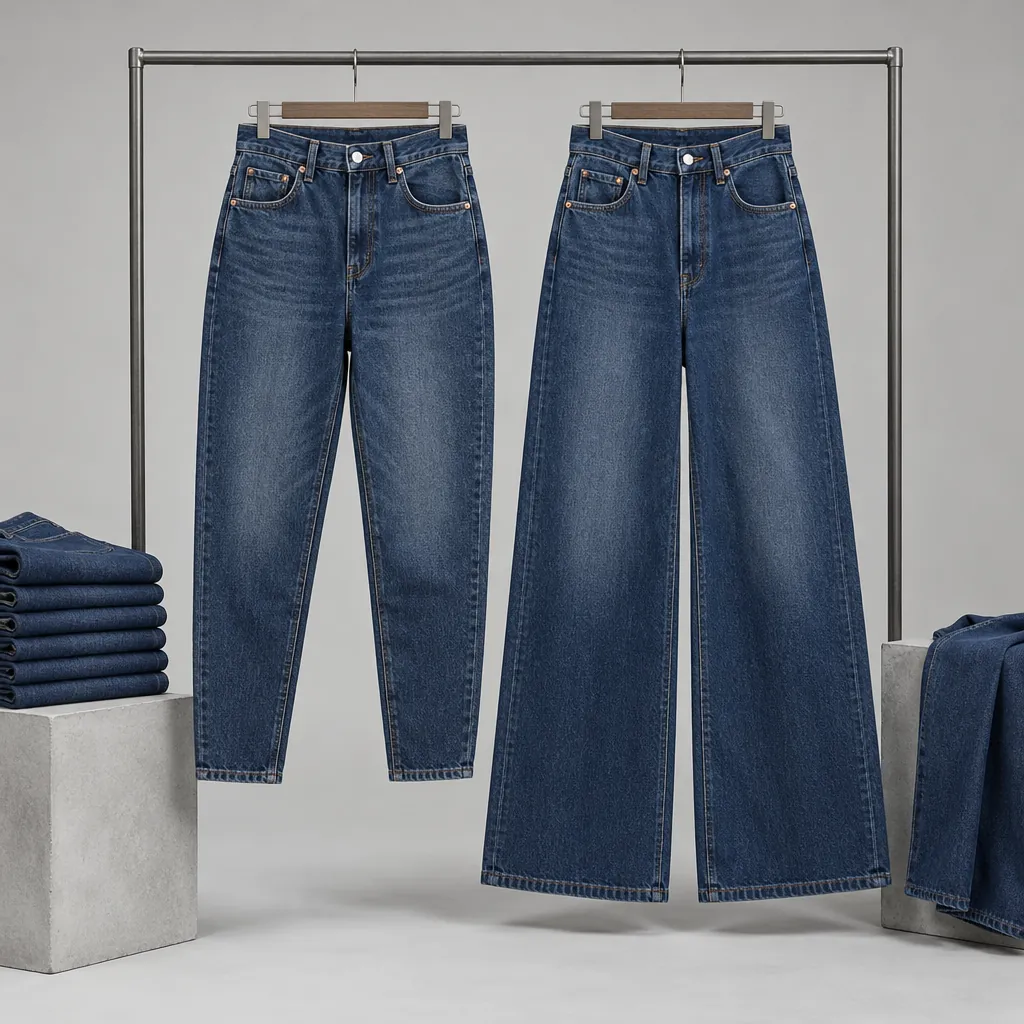
Mom jeans and wide leg jeans are the two silhouettes most often named when retailers describe the denim revival, and they are frequently bought together as if they served the same customer. They do not. Both draw on older shapes, but they differ in rise behavior, leg line, fabric demands and the occasions they fit into, and they fail in different ways when bought carelessly. This article separates the two for buying purposes: who each style serves, what each demands from the pattern and the fabric, and how the two can share a wall without competing for the same sale.
Two revivals with different centers of gravity
The mom jean is defined by a high rise, ease through the seat and hip, and a leg that tapers from early on, often ending at the ankle. It is a short, structured silhouette: the shape happens in the hip and the taper, and the hem usually stops above the shoe. The wide leg is a column. From a high or mid rise, the leg runs down with width and little taper to a long hem that meets the floor. The mom jean reads casual and vintage-derived; the wide leg reads styled and deliberate, closer to tailoring than to workwear. They can share a trend cycle without sharing a customer, which is the first thing a buyer should accept before planning the buy.
Who each style serves
The mom jean draws a younger, style-led customer who wants the vintage reference, and it also serves petite customers well because the ankle-length leg works with a wide range of shoe heights without alteration. Occasions are casual: weekends, campus, social plans. The wide leg draws a broader age range, including customers who want more coverage through the leg and customers dressing for occasions where denim has to look considered rather than casual. Shoe choice is part of the product for wide leg, because the hem is designed around it; a customer who cannot wear the intended shoe height will experience the fit as a length problem, not a styling problem. A buyer should decide which of these customers the store actually has before deciding depth for either style.
Fit mechanics that differ
The two silhouettes stress the pattern in different places. A mom jean carries deliberate ease at the seat and hip, and the risk is that the ease turns into bagging when the fabric lacks recovery, which reads as poor fit rather than vintage character by the end of a day. Its waistband sits high, so waist fit tolerance is tight and grading must hold the rise steady across the size run. A wide leg carries its risk at the hem: the column only works when the fabric has enough body and drape to fall rather than cling, and when the inseam is cut for the intended shoe. Light, floppy cloth can make a wide leg look unstructured; overly stiff cloth makes it look costume-like. Fabric weight and hand feel should be approved on a full-length sample, not a swatch, before either program is committed.
Compared on the buying sheet
| Dimension | Mom jeans | Wide leg jeans | What it means for the buy |
|---|---|---|---|
| Rise | High | High or mid | Check rise consistency across the size run |
| Leg line | Tapered, ankle length | Straight and full to the floor | Mom needs taper control; wide leg needs drape |
| Core customer | Younger, style-led, petite-friendly | Broader ages, occasion-driven | Depth follows the customer you actually have |
| Shoe dependency | Low; works with most shoes | High; hem designed around the shoe | Plan inseam options for wide leg |
| Fabric demand | Recovery to prevent bagging | Body and drape to hold the column | Approve on full-length samples |
| Season shape | Year-round with wash rotation | Peaks in spring and fall | Time the wide leg buy to the season |
Size curves and return differences
Returns tell the two programs apart quickly. Mom jean returns usually trace to the waist: a high waistband exposes grading weakness, and a customer between sizes finds out at the waist rather than at the hip. Wide leg returns usually trace to length: hems that are meant to meet a shoe leave no margin for a customer who wears a different height, so alteration requests and length-driven exchanges concentrate there. The rise and inseam points a buyer should specify for either program are laid out in the rise and fit guide. Planning the buy around these return drivers, rather than discovering them mid-season, is what keeps both styles profitable through their fashion cycle.
Inseam policy is where the two programs diverge operationally. A mom jean program usually ships one leg length and relies on the ankle hem to forgive height differences, while a wide leg program often needs a length choice or an in-store hemming path, because a hem that is meant to graze the shoe cannot be folded up without changing the line. Buyers should decide that policy before ordering, since it affects the size run, the alteration workflow and the copy that has to appear on the product page.
Sharing a wall without competing
On the floor, the two should be separated by leg line rather than merged into one retro block, because their customers browse differently: the mom jean shopper reads the silhouette from the hip down, the wide leg shopper reads it from the hem up. Wash stories also differ usefully. Mom jeans carry lighter and mid washes well, where the vintage reference does part of the work; wide leg carries dark indigo, black and undyed shades, where the column does the work. One of the two should lead in depth and the other carry accent depth, decided on sell-through rather than on which style the buying team personally prefers. The wide leg styles in the catalog show the current option set, and the decision of which rise to lead with across the whole wall is treated separately in the article on high waisted vs mid rise.
Working with jeans
Quotes, minimum order quantities and lead times for either silhouette are confirmed in writing before an order is committed, and each style is quoted against its own specification and size run. To request a quote, describe the rises, inseams and washes you plan to carry.