Home / Guides / High waisted vs mid rise: which to lead with
High waisted vs mid rise: which to lead with
Which rise should lead a jeans assortment: high waisted or mid rise? Fit tolerance, returns, depth and how to switch the lead without stranding stock.
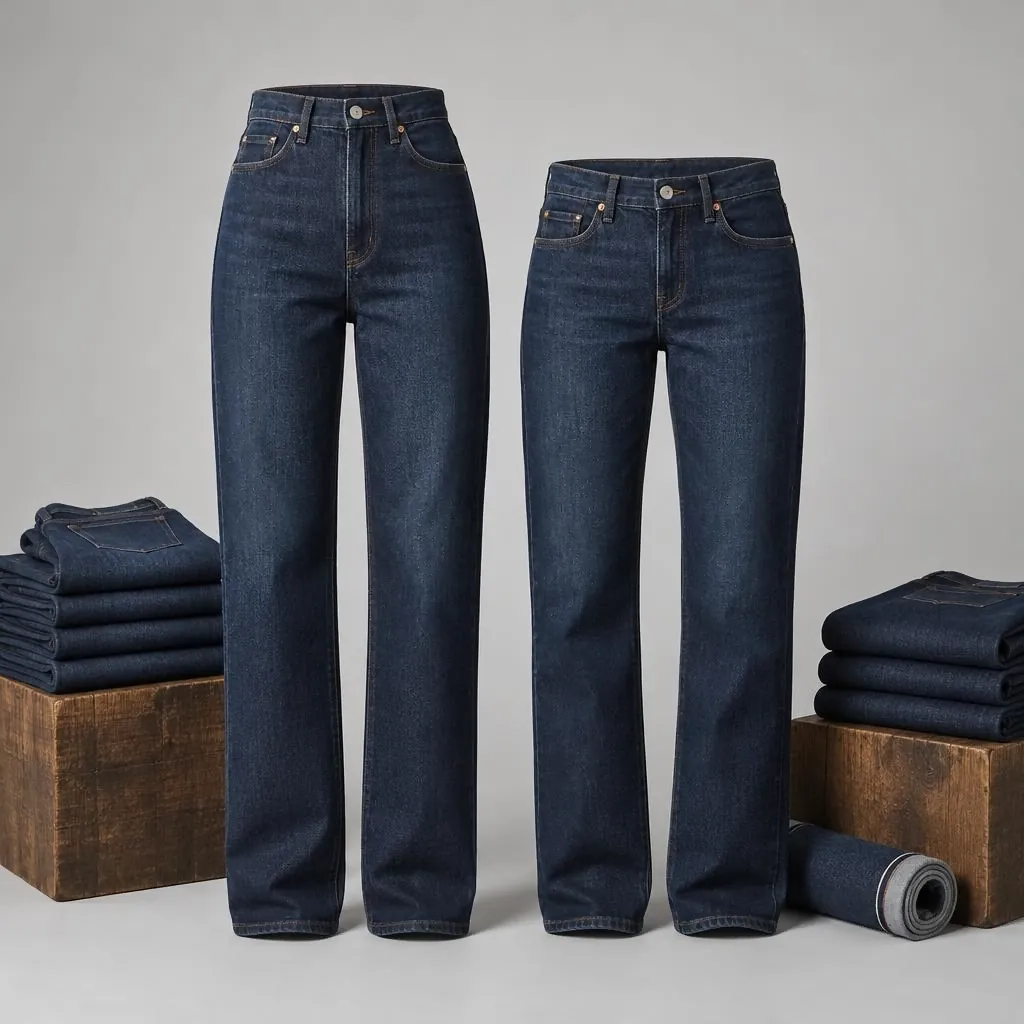
Every denim assortment has a lead rise, whether the buyer chose it or not. The lead rise is the one that gets the full wash range, the complete size run, the best wall position and the product copy written around it. Everything else on the wall is measured against it. Choosing between a high rise and a mid rise as that lead is therefore not a styling preference; it is a decision about fit tolerance, return exposure, grading discipline and how the store wants to be read. This article sets out the case for each, the signals that decide between them, and how to change the lead without stranding stock.
What the rise decision changes
Rise determines where the jean sits on the torso, and with it the proportion of the whole outfit, which tops work, and how the seat reads from behind. Behind the garment, the rise decision reaches further: it changes the pattern, the grading rules, the waistband construction and the tolerance the bulk must hold. A high rise asks more of the pattern because a waistband that sits at the natural waist has nowhere to hide; a grading error that would pass unnoticed at the hip shows at the waist. The rise and inseam points a buyer should specify before approving any block are set out in the rise and fit guide. Leading with a rise means committing depth to all of that, which is why the choice deserves analysis rather than habit.
The case for leading high
High waisted jeans hold strong and durable shopper interest, and the styling argument is real: a high waist lengthens the leg line, works with tucked and cropped tops, and gives the customer a clear, describable reason to buy. It also aligns with the revival silhouettes, so a high-rise lead makes styles such as mom jeans and wide leg feel native to the wall rather than added on. The cost is fit tolerance. Waist fit at the natural waist is unforgiving across a size run, returns trace to the waistband, and the grading rules need fit sessions across the full size range before bulk. A store that leads high must be willing to invest in that discipline, and the assortment rewards it with a current, coherent message.
The case for leading mid
Mid rise is the quieter choice and, for many customer bases, the safer one. It fits more bodies without styling instruction, works for customers who find a natural-waist waistband uncomfortable, spreads demand more evenly across the size run and produces fewer rise-driven returns. Its weakness is signal: a mid-rise lead reads more conservative, and in fashion-forward assortments it can make the wall feel a season behind, which pushes the style-led customer to shop elsewhere. A mid-rise lead earns its place when the store's fitting room data shows a practical customer, when return history punishes waist fit, or when the store's strength is service and basics rather than trend.
High rise and mid rise compared on the buying sheet
| Dimension | High waisted lead | Mid rise lead | What it means for the buy |
|---|---|---|---|
| Fit tolerance | Tight at the waist | More forgiving across bodies | High-rise leads need stronger grading discipline |
| Styling dependency | Works best with tucked styling | Neutral across outfits | High-rise leads need styling support in copy |
| Size-curve behavior | Demand concentrates at the waist | Demand spreads through the run | Review return reasons by rise before grading |
| Return driver | Waistband fit | Conventional fit issues | Fit sessions must cover edge sizes on high rise |
| Fashion signal | Current, revival-aligned | Conservative, service-led | Match the lead to the store's positioning |
| Depth requirement | Full depth in core washes | Full depth in core washes | Only one rise carries full depth at a time |
Reading your own signals before you lead
The store's own records answer the question more reliably than trend coverage. Fitting room requests show which rise staff fetch most; return reasons show whether waist fit is already a cost; online filter usage shows which rise shoppers select when given the choice. Customer age and occasion mix completes the picture, since a store serving office-adjacent customers may hold a mid-rise core even while the fashion market leans high. The revival silhouettes complicate the picture in a useful way: the choice between the two revivals, and which customer each serves, is compared in the article on mom jeans vs wide leg, and a wall that leads high carries them naturally. Where the store's customer is practical and service-led, a high-rise accent inside a mid-rise core captures the trend without betting the depth on it, and the same logic applies to the fitted end of the wall described in straight vs slim.
Switching the lead without stranding stock
When the signals say the lead should change, the change belongs at a season boundary, not mid-season. The incoming lead rise takes the full wash range and the complete size run; the outgoing rise steps back to its core washes at maintained depth until sell-through clears it. Copy, filters and wall position move together, because a lead declared on the floor but not in the online filters reads as confusion on both channels. Markdown decisions for the outgoing rise should be tied to sell-through dates fixed in advance, so the transition is planned rather than reactive. A buyer who manages the switch this way captures the trend shift without writing off the depth that served the previous lead.
Budget follows the same logic. The incoming lead rise absorbs most of the next order's open-to-buy, the outgoing rise is bought only to hold its core sizes, and the difference funds the depth that makes the new lead shoppable from the first week. A buyer who splits the transition across two orders pays for the change twice, once in diluted depth and once in the markdown that clears the remainder.
Working with jeans
Quotes, minimum order quantities and lead times for either rise are confirmed in writing before an order is placed, and the rise measurements the bulk is held to are those stated in the written confirmation. To request a quote, send the rises, washes and size runs you plan to lead with.