Home / Guides / Garment dye denim: color control in bulk
Garment dye denim: color control in bulk
Garment dye colors the finished jean, so color control differs from wash-down denim. How to manage shade approval and lot drift before and during bulk.
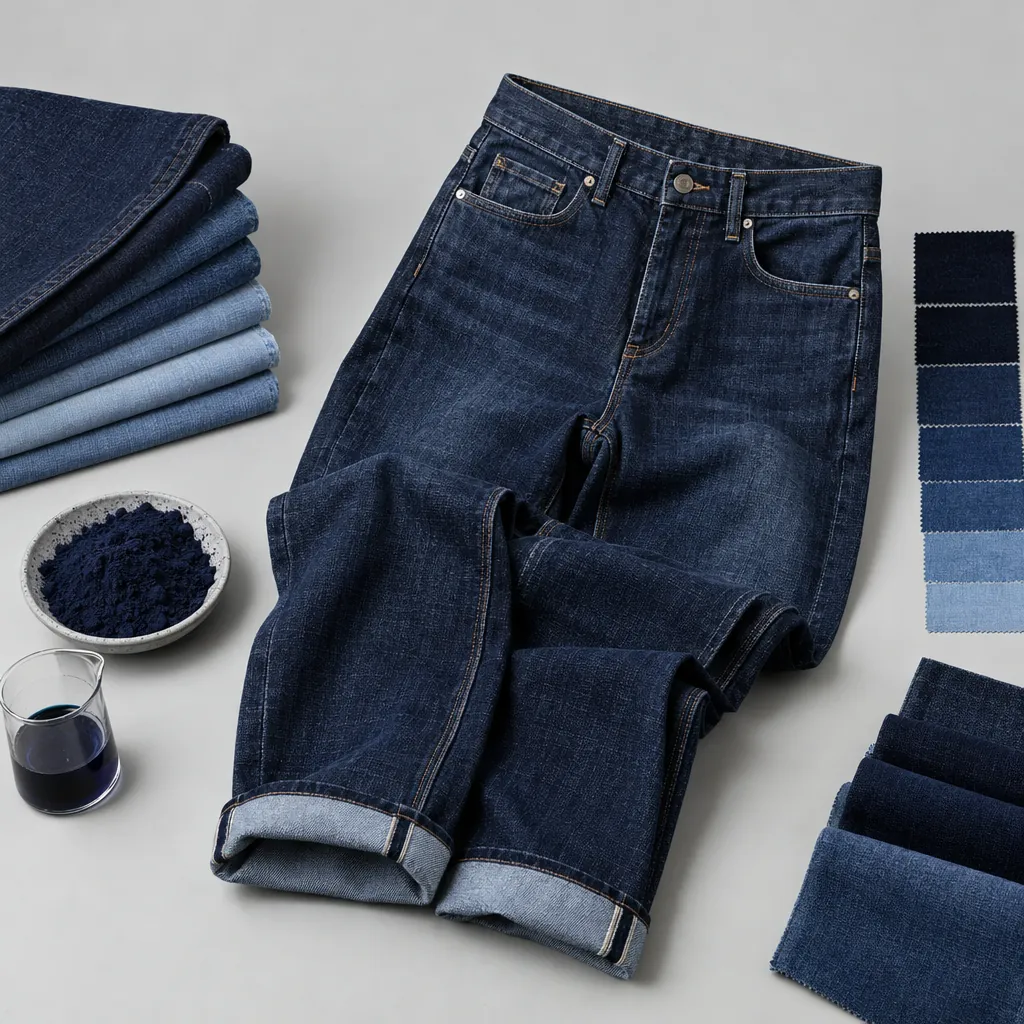
Garment dye inverts the usual order of denim production. Instead of dyeing yarn or fabric and then cutting and sewing, the maker dyes the finished garment. The result is a depth of uniform color that wash-down denim cannot reach, a palette that extends well beyond indigo, and a specific set of control problems: every component in the garment is dyed together, every piece is dyed separately, and every lot is a fresh chance for the shade to move. This article is about holding color steady from lab dip through bulk when the dye bath comes after the sewing machine.
What garment dye changes
Dyeing the garment rather than the fabric changes the product in visible and invisible ways. Seams, pocket bags, thread and labels take the same bath as the shell fabric, so the color reads continuous across construction details that would show as contrasting lines in yarn-dyed denim. The hand softens, because processing includes washing. And the range of achievable colors opens up: garment dye is the route through which denim reaches earth tones, olive, burgundy and the seasonal shades that yarn dyeing reaches only with difficulty or at cost. The treatment is described for buyers on the garment dye finishing page, which pairs with this article when briefing a team.
Why color control is harder
- Every piece dyes individually. Within one lot, pieces can differ slightly depending on their position and movement in the bath.
- Components dye together. Thread, webbing, cord and labels must be selected to take the dye to a matching or intentionally contrasting shade, and some synthetics resist the bath altogether.
- Metal and hardware react. Zippers, rivets and buttons can stain or change finish in the bath unless they are specified for garment dye work.
- The dye step sits at the end. By the time color is checked, the garment is fully made, so a shade miss costs the whole garment rather than a length of fabric.
The shade standard and the lab dip
Color control starts before the garment exists. The buyer supplies a color reference, commonly a physical swatch or a named color standard, and the laundry responds with lab dips: small samples dyed to approach the target. Approving a lab dip commits the buyer to a shade under specific lighting, so the dip should be checked in daylight and under the store's light source before sign-off. Because dye lots migrate, the approved lab dip should be recorded together with the tolerance band around it: how far the bulk may sit from the dip and still ship. Tolerance bands, lighting conditions and the number of dips to be supplied are to be confirmed in writing for each program.
Managing lot drift in bulk
In bulk, the unit of color control is the dye lot. Pieces dyed together are consistent with each other; pieces from different lots may not be. The buyer's tools are procedural rather than chemical: require that each carton contain one lot, require lot marking on cartons and on garment labels where stores will pick and pack by color, and require a shade continuity card that shows how each lot compares with the approved standard. A retailer receiving multi-lot goods can then decide internally whether to allocate lots by store or channel, rather than discovering the difference when two cartons are opened side by side.
Shade banding is the acceptance test. Against the sealed standard, each lot is judged inside the agreed tolerance or outside it. Lots inside ship; lots outside are re-dipped or re-dyed at the supplier's cost if the tolerance was written into the order. When the tolerance is not written, the argument happens after the goods arrive, and by then the buyer's position is weak. Color tolerances belong in the purchase documents next to the price.
Choosing trims for the bath
Trim selection deserves its own line in the specification. Thread that dyes to a matching shade, labels that survive the bath without bleeding or dulling, zippers and rivets specified for garment dye work, and pocket bags that will not show a contrasting edge after dyeing: each is a small decision that is cheap before production and expensive after it. Suppliers who run garment dye programs regularly will have preferred components. The buyer's job is to record them in the specification so the reorder reproduces them, and to treat any component change after approval as a specification change with its own written approval.
Shrinkage and after-dye behavior
Garment dye processing includes washing that can move the garment's dimensions, so the measurements approved on the fit sample and the measurements of the dyed garment can differ. The fit approval should therefore be run on a garment that has been through the full dye and wash cycle, or the specification should state the dimensional allowances agreed between the parties. The same applies to the trims: labels and thread chosen for dye stability should be checked on the dyed garment, because a size label that has taken the dye is a different label from the one that was approved.
Where garment dye fits a program
Garment dye suits retailers building a color-led denim offer: boutiques carrying seasonal shades, brands offering one silhouette in a palette, and uniform or merchandise programs where an exact color matters more than wash character. It carries a longer development path than a wash-down program, because the shade ladder runs ahead of the sample ladder, and the two must meet at the pre-production sample. The sampling sequence for wash programs, which garment dye programs follow in modified form, is set out in the article on wash sampling from lab dip to bulk approval. For how garment dye sits among the other wash families, the buyer's reference to denim wash types gives the overview.
Working with jeans
Garment dye capability, shade minimums and lead times vary by laundry and season, and every figure for a specific program is to be confirmed in writing. This article describes process and controls, not a quotation. To plan a garment dye capsule or a color-led program, request a quote with your target shades.