Home / Guides / Wash sampling: from lab dip to bulk approval
Wash sampling: from lab dip to bulk approval
From lab dip to bulk approval: the wash sampling ladder, what each stage confirms, who signs off, and the failure points that cause re-runs.
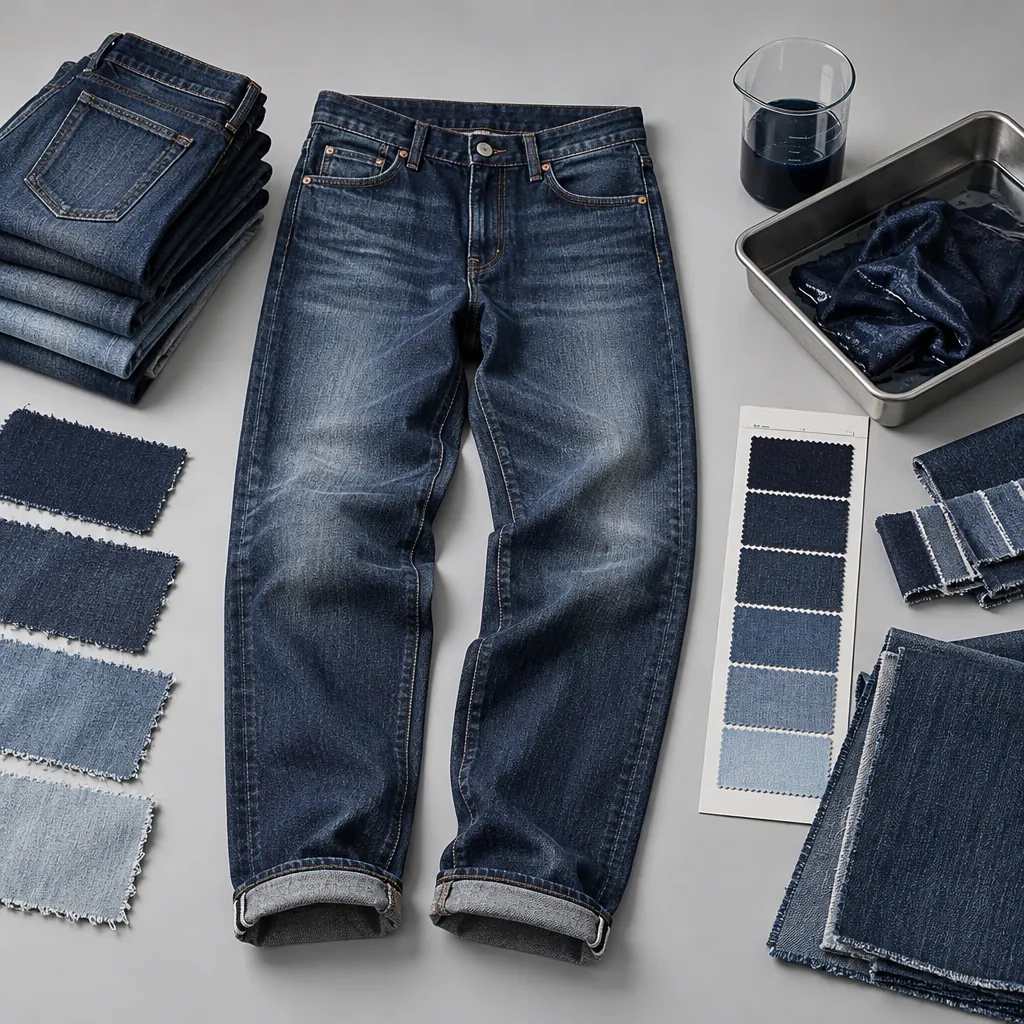
Wash is the part of a denim order most likely to be approved too early. A buyer sees a beautiful sample, approves it from a phone photograph, and discovers in bulk that the lot sits a shade lighter, the hand is coarser, or the effect lands differently on the graded sizes. The sampling ladder exists to prevent exactly that: a sequence of small, inexpensive approvals that each answer one question, ending in a sealed standard that the bulk lot can be judged against. This article walks the ladder from lab dip to bulk approval and marks the points where programs most often go wrong.
The ladder, stage by stage
A wash program typically runs through five artifacts, each cheaper than the failure it prevents.
- Lab dip. Small dyed or washed swatches that establish the shade direction. Approved in daylight and under store lighting, since the two can disagree.
- Proto wash. A first full-garment trial, often on an available fabric, that shows how the intended recipe behaves on a real silhouette: where highlights land, how the hand reads, whether the effect is even.
- Fit sample with wash. The intended fabric, cut to the intended pattern and processed as specified, so fit and wash are approved together rather than in conflict.
- Sealed standard. The approved sample, signed and dated in two copies, which becomes the reference for the bulk lot.
- Pre-production sample. A garment taken from the bulk lot, compared against the sealed standard before shipment.
The ladder is convention, not law. A repeat of a previous program may need only the fit sample and the pre-production check, while a first program in a new wash family may need two protos. What matters is that the plan is stated before development starts, so both sides know which approvals stand between the order and the carton, and that each stage answers only its own question.
What each stage is allowed to answer
A lab dip answers color direction, not garment behavior; a proto answers effect character, not fit; the fit sample answers fit and wash together; nothing answers bulk except bulk, which is why the pre-production check exists. Trouble starts when stages are collapsed. Approving a wash from a swatch alone skips every garment-level question: how highlights land on seams, how the effect reads across graded sizes, how trims take the process. Approving from a photograph skips the light source entirely, and color judgment by photograph is where wash programs most reliably misfire, because screens shift color in ways no calibration habit fully controls.
Who signs, and when
Approvals fail socially before they fail technically. Where several people hold opinions, a sample can be approved by one viewer, revised at the request of another, and shipped on the strength of a conversation. The remedy is procedural: one named approver per stage, sign-off recorded in writing with a date and the sample version it refers to, and changes after sign-off handled as written revisions rather than as remarks. The sealed standard should carry both parties' signatures, and the specification should state that bulk conformity is judged against that standard under the agreed light source.
Common failure points
- Approving shade on a swatch, then judging bulk on full garments, where the color reads differently.
- Comparing bulk against a memory of the sample rather than against the sealed standard, under an unspecified light.
- Skipping the wash test on the approved sample, so the first customer wash becomes the test.
- Ignoring graded sizes, so an effect positioned for the sample size drifts on the extremes of the run.
- Leaving tolerances unwritten, so lot variation inside any reasonable band is still disputed.
Each of these failures has the same shape: a decision made at a lower resolution than the decision it stands in for. The cure is rarely more sampling; it is asking, at each stage, what the artifact in hand can and cannot prove, and deferring the rest to the stage designed for it. A buyer who writes that discipline into the approval form turns it into routine, and routine is what protects an order when the season gets busy and the calendar presses. It also gives the laundry a fair process to work inside, which shows up later as fewer surprises and faster approvals on the next program.
Building the timeline
Each rung of the ladder carries its own turnaround, and the turnarounds add up: dips, protos, samples, courier time, decision time and the pre-production window together occupy a substantial share of the development calendar. The buyer who maps the stages against the season, rather than against optimism, knows when to consolidate stages and when the calendar forces a choice between sampling thoroughly and shipping late. Sample charges, courier arrangements and the lead time of each stage are to be confirmed in writing when the program is quoted, so the calendar rests on confirmed figures rather than on estimates that were never commitments.
The discipline compounds across programs. A store's second wash program reuses the vocabulary, the light source convention and the approval forms of the first, and each later program starts further down the road. For the treatment that depends most on sealed standards because of its natural variance, the article on the stone wash process shows the ladder applied. Garment dye programs, which add a shade ladder ahead of the sample ladder, are treated in the article on color control in bulk, and the finishing guides under washing describe each treatment alongside these steps.
Working with jeans
Sampling stages, charges and lead times are quoted per program and differ between laundries, so all figures are to be confirmed in writing before development starts. This article describes process, not an offer. To run a wash program with a documented approval ladder, request a quote and we will set out the stages in writing.