Home / Guides / Why a fit sample comes before a bulk order
Why a fit sample comes before a bulk order
Why a fit sample comes before any bulk denim order: what each sample round proves, what skipping a round costs, and how to schedule the approvals.
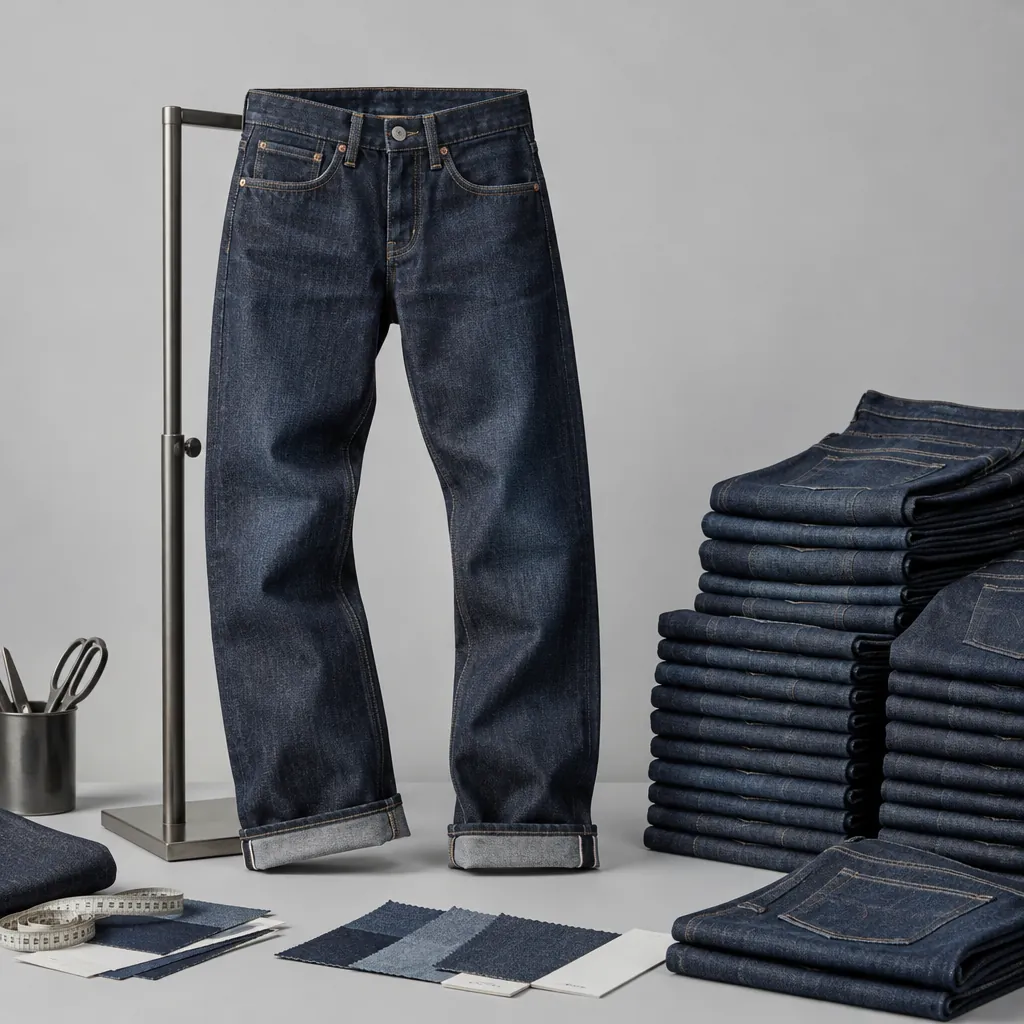
Every experienced denim program runs its orders through a sample ladder, and every program that skips the ladder eventually explains why it should not have. The reason is arithmetic as much as craft. A fit sample is cut once, sewn once and judged on one body. A bulk order is cut by the hundred in a graded run, sewn by a line under time pressure, and worn by customers no one ever measured. The gap between those two situations is exactly what sampling exists to close, and each round of samples closes a different part of it. This article explains what each round proves, what skipping it costs, and how to schedule the approvals so sampling speeds an order up rather than slowing it down.
What a fit sample actually proves
A fit sample answers a narrow question: does the pattern, cut in the nominated fabric, sit on a body the way the buyer intends. That is all it answers, and it is worth being precise about the limits. A fit sample does not prove that the grading rules work across the size run. It does not prove that the wash will look the same in bulk lots. It does not prove that the factory can hold the measurements in production at speed. Each of those is a separate question with its own round of evidence. A buyer who asks one sample to prove everything will approve on incomplete evidence and then be surprised in exactly the place the sample never covered.
The fit round matters most because the pattern is the one element that is genuinely expensive to change later. Fabric can be replaced for a reorder, a wash can be adjusted, a trim can be swapped. A pattern error, once the bulk is cut, is in every garment in the shipment, and the remedy is markdown, rework or refusal. The cost asymmetry is the whole argument for sampling: the pattern is settled for the price of one garment, or it is disputed for the price of a shipment.
The ladder, round by round
Most programs run some version of the following, and the names vary less than the questions do.
- Prototype or first sample. Proves the idea can be made: proportion, styling lines, construction approach. Usually sewn in an available fabric, and judged with that in mind.
- Fit sample. Cut in the nominated fabric and wash, judged on a fit model, measured against the specification. This is the round where the pattern is settled.
- Size-run or graded samples. Proves the grading rules at the extremes of the range, which is where grading errors surface. A middle size can hide a grade that breaks down at both ends.
- Pre-production sample. Cut from bulk fabric and bulk wash, at the factory that will make the order. Proves that what was approved in the sampling room can be repeated in production conditions.
The rounds overlap in a small program, and a disciplined two-round version, fit plus pre-production, covers most of the ground for straightforward styles. What cannot be collapsed is the order of the questions: pattern before grading, grading before production.
What skipping a round costs
The costs arrive with a lag, which is why skipping feels free at the time. A program that approves on a prototype sewn in substitute fabric discovers after bulk that the real fabric hangs differently, and the fit complaint lands in returns. A program that never checks graded extremes ships a run whose smallest and largest sizes fit differently from the middle, and loses exactly the customers at the edges of the range. A program that goes straight from an approved fit sample to bulk, without a pre-production round, has never seen the wash and lot it actually bought, and lot variation becomes the buyer's discovery rather than the supplier's problem. Each of these outcomes is more expensive than the round that would have caught it, and none of them is recoverable by arguing, because the approval record shows what was and was not checked.
The returns link deserves emphasis for online sellers. Fit-driven returns are the largest avoidable cost in internet denim, and they trace back to pattern and grading decisions made months earlier. The sorting method that separates fit returns from page problems works only when the program knows which fit decisions were approved, and on what evidence.
Scheduling sampling so it saves time
Sampling is usually blamed for late deliveries, but the sequence can be run the other way. The rounds that matter are scheduled against the order calendar in advance, with a named approver and a decision date for each. Fabric and wash are nominated before the fit round, so the sample is made in the material the order will use. The fit model and the measuring protocol are fixed, so consecutive rounds are compared on the same basis. And the decision rule is written before the sample arrives: a sample is approved, or it is rejected with a written list of changes. A round without a written outcome is a round that will be repeated.
Sampling also costs money, and the costs deserve a look rather than a shrug. Sample charges, whether they are credited against the bulk, and what each round includes, are all confirmable items, and the breakdown is explained in the guide to sample cost. Knowing what each round costs, before ordering it, keeps the ladder honest: a buyer who pays for rounds deliberately runs fewer of them and reads each one properly.
Who approves, and on what record
An approval is a document, not a feeling. The fit round ends with measurements recorded beside the specification, comments written against the points that moved, and a signed or written approval that names the sample version. That record becomes the reference for the graded rounds and the pre-production round, and eventually the reference in any dispute about what the bulk was supposed to match. The inspection-side mechanics of checking a sample against a specification, point by point, are laid out in the guide to the denim sample inspection checklist, and the same discipline applies at every rung of the ladder.
One decision needs a rule of its own: when a rejected sample deserves another round and when the style should stop. Rounds cost calendar time, and a style that needs round after round is telling the program something about its brief or its supplier. The decision framework for that call, including the cases where a second sample is the wrong answer, is treated in the guide to ordering a second sample.
Working with jeans
Quotations, minimum order quantities and lead times for jeans are confirmed in writing for each order, and the practices in this article are planning guidance rather than commitments. To put a sampling plan behind an order, request a quote and ask for the sample rounds, charges and approval steps in writing.