Home / Guides / Writing an RFQ for jeans that gets answers
Writing an RFQ for jeans that gets answers
A jeans RFQ that returns real numbers starts with the information a factory needs. What to include, what to ask, and how to compare the replies.
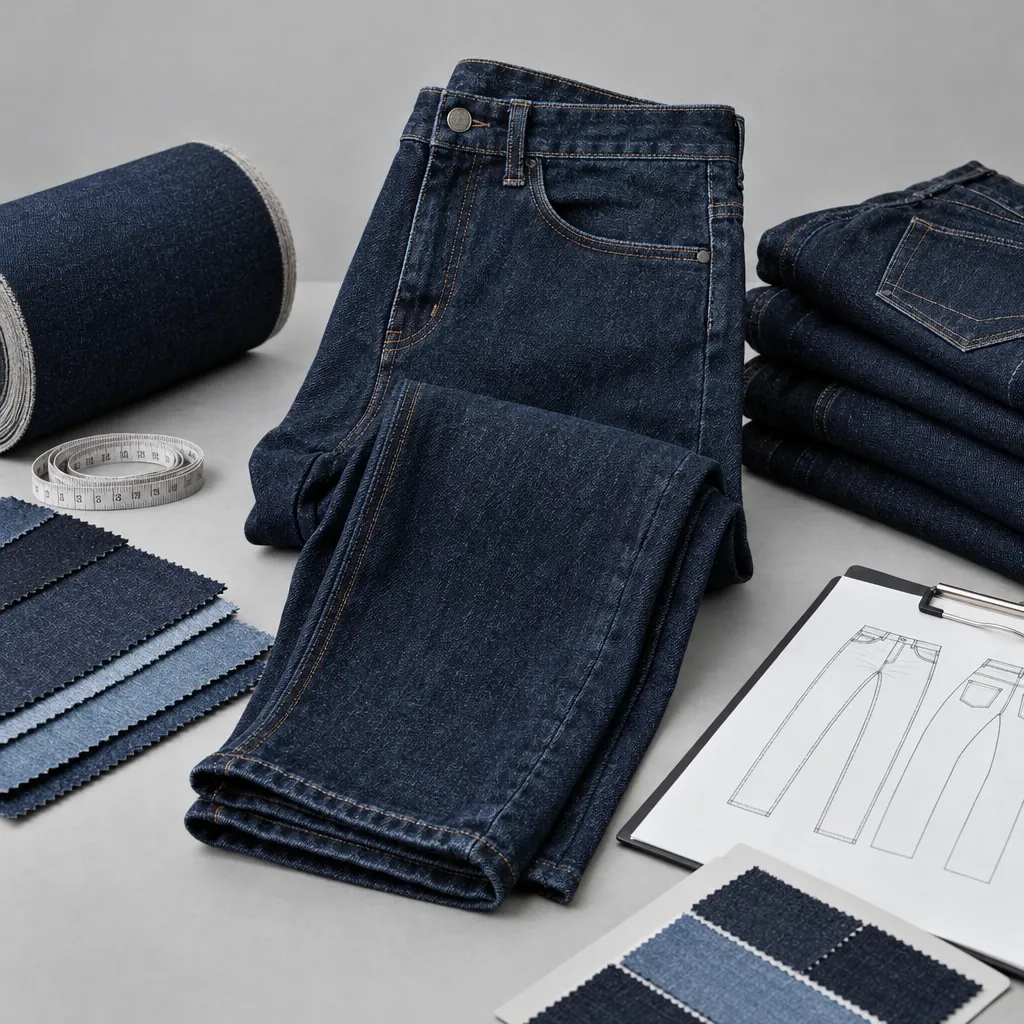
A request for quotation is the buyer's side of vetting, and its quality decides the quality of the replies. A vague enquiry returns a vague number, and the buyer then compares figures that were not built from the same product. A complete RFQ does the opposite: it gives every candidate the same specification, asks for the same list of answers, and makes the differences between suppliers visible as differences in capability rather than as differences in interpretation. This article sets out what a jeans RFQ should contain, what to ask suppliers to state in return, and how to compare the replies when they arrive.
What goes in the request
The information a factory needs to quote a jean is compact:
- Styles, with a measurement table for each, plus the size curve and the size ratio.
- Fabric direction: weight, composition and stretch expectation described in words, with a reference sample if one exists.
- Wash and finishing direction for each colorway, with the approval method stated.
- Trims, labeling, packaging and any compliance documents the destination market requires.
- Target quantities per style and colorway, including whether quantities may shift between styles.
- The destination market, the expected delivery terms and the target order window.
Items that are not yet fixed should be marked as open, with the range of acceptability described. Marking what is open is as useful as stating what is fixed, because it tells the supplier where a proposal can reduce cost without leaving the brief. Where quantities are small, the request can also invite structural alternatives, such as a shared base fabric or a phased run, that meet the brief at a workable minimum; the article on small orders around high MOQs describes those structures.
What to ask for in the reply
A unit price is only half the answer. The reply should state the price for each quantity tier, the minimum order quantity per style and per colorway, the sample charge and what it covers, any setup or tooling charges, the lead time from order confirmation to ex-factory, the payment terms and the validity period of the quotation. Asking for these as a fixed list is what makes replies comparable; a buyer who accepts a price alone will spend weeks extracting the rest one message at a time. A table keeps the request unambiguous:
| RFQ element | What the reply should state |
|---|---|
| Price | Unit price by quantity tier, with the currency and the validity period. |
| Minimum order | Minimum per style and per colorway, and the total order minimum. |
| Samples | Sample charge, what it covers, and whether it is credited against the order. |
| Schedule | Milestone dates from fabric booking to ex-factory, with approval points marked. |
| Terms | Payment terms, the delivery terms quoted against, and how lead time is defined. |
Every figure in the reply is an offer to be confirmed in writing later, not a commitment by itself, and the buyer should treat the reply as the opening of a definition rather than the end of one.
Milestones and schedule in the request
A supplier's willingness to commit to dated milestones is one of the most informative answers an RFQ produces. The request should ask for a draft schedule against the buyer's target window, with fabric booking, sampling rounds, pre-production approval and ex-factory shown as separate events. A supplier that returns a schedule with named stages is describing a process it runs; a supplier that returns only a number is quoting a hope. The milestone structure belongs in the request, not only in the contract, and the shape of the schedule each candidate proposes is itself a vetting signal. Suppliers differ in how they build a schedule, and the differences are readable: one candidate books fabric before quoting, another quotes first and books later, and the gap between those habits shows up later as a gap in delivery performance.
How to compare the replies
Comparison only works when the inputs were identical, which is why the specification travels unchanged to every candidate. Beyond the numbers, the replies should be read for process: does the reply reference the measurement table, or price a generic jean; does it flag the open items and propose options, or stay silent on them; does the schedule include the approvals the buyer must give, with dates attached. Questions that a reply leaves unanswered should be sent back as a single consolidated list, so that the second round is also comparable. A reply that ignores half the list is an early answer about how the order would run, and the vetting article on supplier red flags treats exactly this behavior as data.
Common mistakes worth avoiding
- Quoting a style from a photograph alone, with no measurements, and then comparing the results.
- Asking one supplier for a price and treating that number as a market benchmark.
- Leaving quantities as a total with no split by style and colorway, which hides the lot arithmetic.
- Requesting compliance documents the program does not yet need, which slows the reply without adding decision value.
- Letting a quotation expire while sampling continues, and losing the tier structure that made the order work.
Each of these costs a round of messages, and rounds are where small programs lose their season.
From replies to an order
The chosen reply becomes the skeleton of the order: its price tiers, minimums, schedule and terms move into the order confirmation, and anything provisional at the RFQ stage is replaced by a written value. Where the structure involves a shared fabric or a phased run, the alternatives invited at enquiry stage often shape the final deal. The stages from first contact to a confirmed order are laid out on the wholesale process page.
Working with jeans
Every figure in an RFQ reply, including prices, minimums, sample charges and lead times, is to be confirmed in writing in the order documents before production. FULVERA prepares and circulates jeans RFQs, normalizes the replies and coordinates the confirmations with the producing partner. To send a brief, request a quote.