Home / Guides / Returns and Quality Clauses in a Denim Supply Contract
Returns and Quality Clauses in a Denim Supply Contract
Key contract points for denim supply: quality standards, inspection, defect handling, returns, responsibility and dispute resolution, for retail buyers.
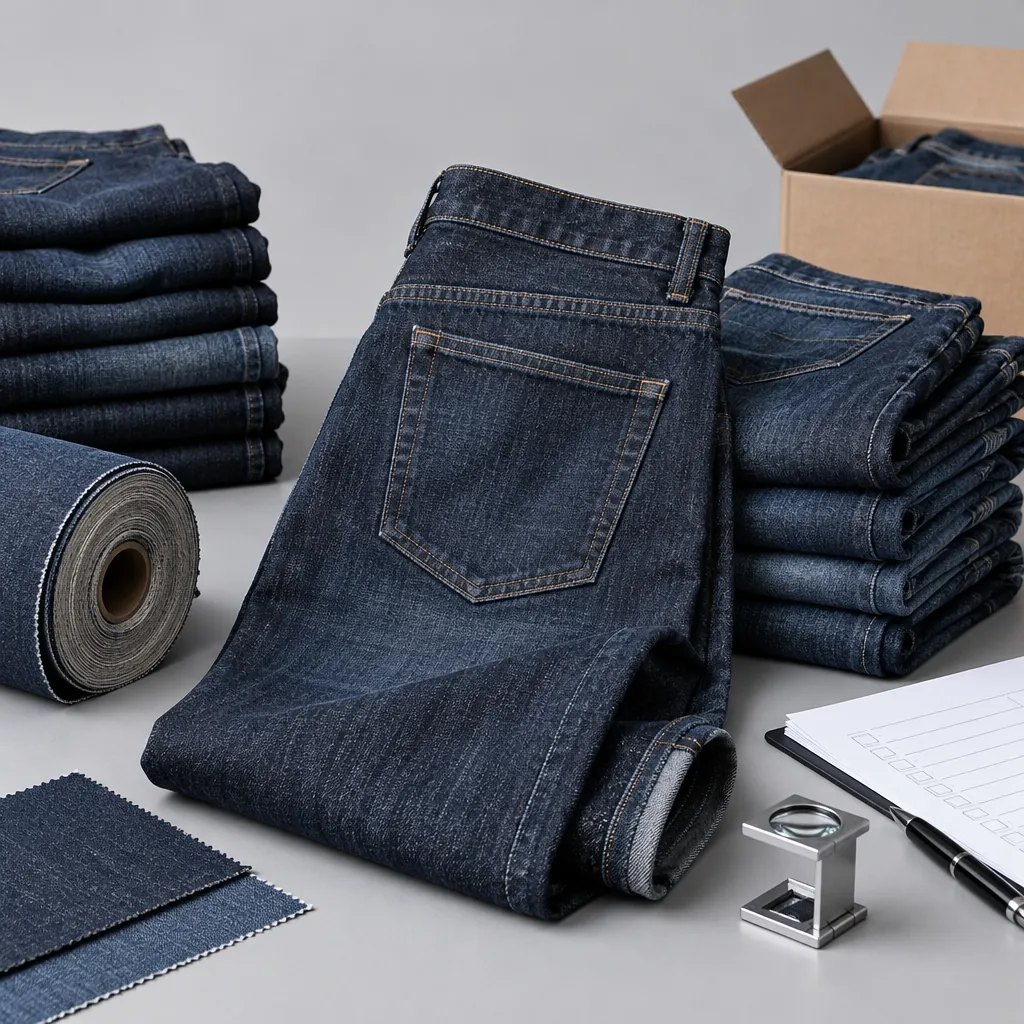
A supply contract for denim is not only a document about price. It sets out what the supplier must deliver, how quality is measured, what happens when goods do not meet the specification, and how the parties resolve a disagreement. Many retail buyers sign an order confirmation without reading these terms closely, and discover the gaps only when a batch of jeans arrives with a fit problem or a fading problem. This article describes the clauses a retail buyer should review in a denim supply agreement, focusing on quality, returns and defects. It is a planning guide for the buyer and its own adviser, not legal advice, and the final wording should be reviewed by a qualified professional.
Start with the specification
The quality standard in a contract is only as clear as the specification it refers to. The contract should name the approved specification sheet, the approved fit sample, the approved wash sample and the version of each. Without these references, a dispute about quality becomes a dispute about memory. The contract should also state which document prevails if two documents conflict, for example if the specification sheet and the purchase order give different measurements.
Define the quality tolerances
Denim is a natural and dyed product, and some variation is normal. A contract should set out the tolerances that apply to measurements, color, stitch density and finish. Tolerances that are not written down will be argued after delivery. The contract should also state the method for checking each tolerance, including the measuring tool, the lighting for color checks and the number of pieces to be checked in each lot. These methods are to be confirmed in writing for each order.
Inspection and acceptance
The contract should say who inspects the goods, when, and to what standard. A pre-shipment inspection by an agreed party gives the buyer evidence before the goods leave the factory. A post-arrival inspection gives the buyer the right to check the goods on receipt. The contract should set a time limit for reporting visible defects after arrival, and a separate time limit for hidden defects that appear later, such as seam failure or fading after washing. The acceptance procedure, including what happens to a lot that is partly rejected, should be written out in full.
Defect categories and remedies
Not every defect deserves the same response. A contract should separate defects into categories. A minor defect, such as a small loose thread, may be repaired at the supplier's cost. A major defect, such as a fit error across a size range, may require a replacement or a credit. A critical defect, such as a failed safety requirement for children's wear, should result in the rejection of the lot. For each category, the contract should state the remedy, who bears the cost of the remedy and the time within which the remedy must be delivered.
Returns from the retailer's customers
Returns are a separate question from defects. A customer may return a pair of jeans because the fit is not what she expected, not because the garment is faulty. The buyer needs to know whether it can return unsold stock to the supplier, and under what conditions. Many retail relationships do not allow stock returns, because the cost of handling is high and the goods are often marked down. Where a return right is agreed, the contract should define the reason codes, the return window, the condition the goods must be in and the credit or replacement that applies. Return rights are to be confirmed in writing, and the buyer should not assume that a general return policy applies to a specific order.
Fit and sizing responsibility
Fit disputes are among the most frequent in denim. The contract should state whether the supplier is responsible for conformity to the approved fit, and whether the buyer is responsible for approving that fit. If the buyer approves a fit sample and then places an order that matches the sample, the supplier is usually not responsible for a fit that the buyer considers unattractive. Where the buyer requests a change after approval, the cost and the lead time of the change should be agreed in writing, and the contract should say whether the change affects the approved specification.
Colour and wash variation
Colour variation from lot to lot is normal in denim, and a contract should say how much variation is acceptable. The buyer should specify the tolerance against the approved wash sample, the light conditions used for comparison and the method for checking. A lot that falls outside the tolerance should be treated as a defect, with a remedy written into the contract.
Responsibility for labels and compliance
The contract should state who is responsible for the content of labels, care instructions, fiber content and any compliance text. Where the buyer provides artwork or text, the supplier's responsibility is usually limited to printing or attaching the label as supplied. Where the supplier provides compliance documents, the contract should state which documents are provided, when they are provided and what happens if they are not valid for the destination market. The compliance requirements for each market are to be confirmed by the buyer with its own adviser.
Liability and limits
A contract usually sets a limit on the supplier's liability, often tied to the value of the order. The buyer should check whether the limit covers the cost of recalls, markdowns, lost sales and third-party claims, or only the value of the defective goods. The limit should be negotiated before the order, not after a problem appears.
Dispute resolution
The contract should state the governing law, the place of dispute resolution and the method for resolving a disagreement. Some buyers prefer negotiation followed by mediation, with arbitration as the final step. Others prefer a court route. The choice affects cost and speed, and it should be made by the buyer with its own adviser, because the outcome depends on the jurisdiction and the nature of the goods.
A checklist for the buyer
- The specification, fit sample and wash sample are named by version in the contract.
- Measurement, color and stitch tolerances are written, with the method for checking each one.
- The inspection points and the acceptance procedure are defined, with time limits for visible and hidden defects.
- Defect categories and remedies are set, with the party that bears the cost.
- Stock return rights are either agreed in writing or explicitly excluded.
- Responsibility for labels, compliance and fit is written, with changes handled as written amendments.
- The liability limit and the governing law are reviewed by the buyer's adviser.
Summary for the buyer
A denim supply contract protects the buyer only where its clauses are specific. Name the approved documents, define tolerances and inspection methods, set remedies for each defect category, and agree return rights in writing. The commercial values in the contract, including unit prices, minimum quantities, deposit, payment dates and lead times, are to be confirmed in writing for each order and reviewed against the final specification before signature.