Home / Guides / Denim Inventory and Seasonal Planning for Retail Stores
Denim Inventory and Seasonal Planning for Retail Stores
How retail buyers plan denim inventory across seasons: open-to-buy, seasonal colour such as white jeans, replenishment, and markdown control.
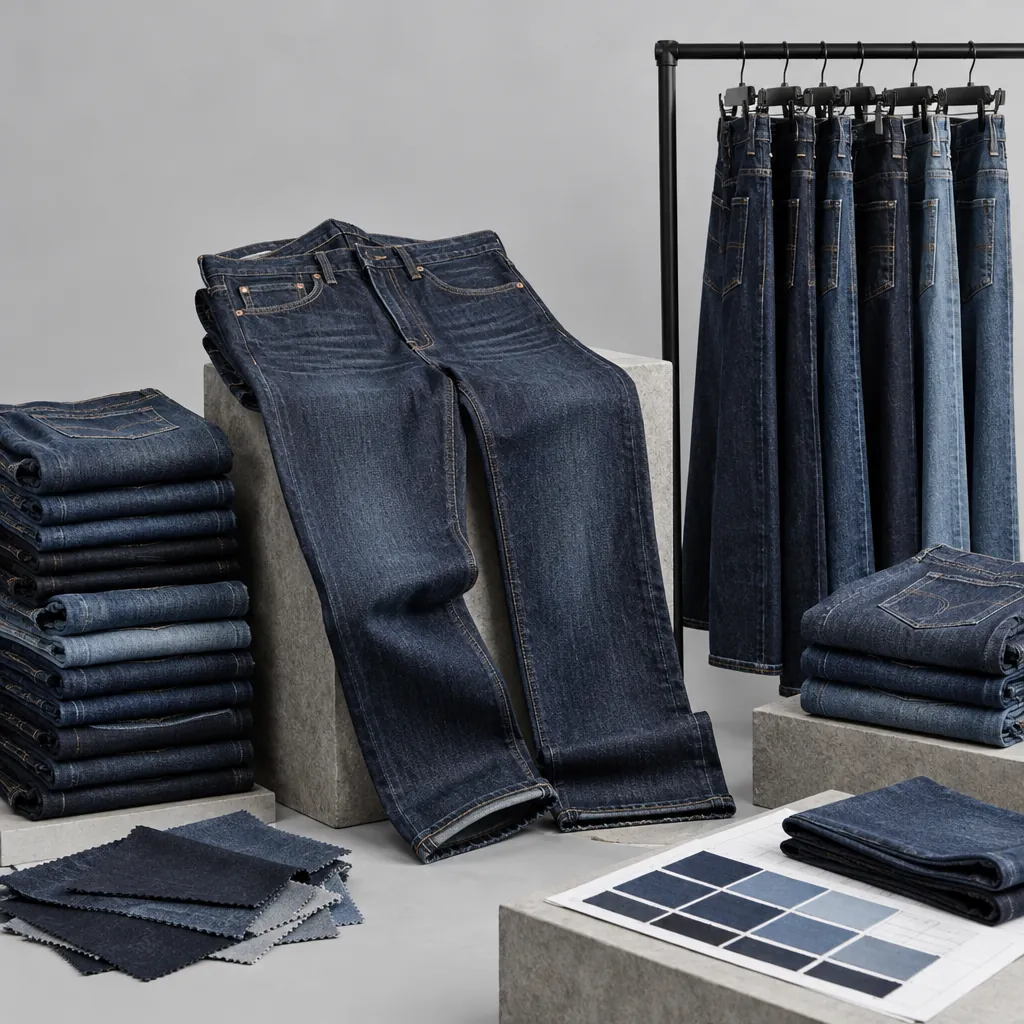
Denim is a category that sells steadily through the year, but it does not sell evenly. Core washes and silhouettes carry the business from one month to the next. Seasonal colors, fashion finishes and the weather move demand in waves. A buyer who plans inventory with a single annual budget often ends the season with too much of one wash and not enough of another. This article describes how a retail buyer can plan denim inventory by season, how to use seasonal color such as white and light washes without taking on excess stock, and how to protect margin through replenishment and markdown control.
Separate the core from the seasonal
The first step is to split the range into two parts. The core is the set of silhouettes and washes that sell in every month. The seasonal is the set of colors and finishes that sell in a limited window. The core should carry the largest share of open-to-buy, because it is predictable and it can be reordered. The seasonal should carry a smaller share, with a clear sell-in and sell-out plan for each capsule.
White and light denim are a good example of seasonal product. Search interest for white jeans for women is strongest in the warmer part of the year, and the color carries a fashion message that fades after the season. A store that carries white denim should plan a short window for it, with a fixed date for the markdown, and should avoid buying it in the same depth as the core dark wash.
Build the open-to-buy plan by month
Open-to-buy is the amount of stock a buyer can still purchase in a period without exceeding the planned inventory level. A monthly plan is more accurate than a seasonal one, because sales do not follow the calendar of the buying office. For each month, the buyer should estimate the sales in each category, the stock needed to support those sales, and the stock already on order. The difference is the amount to buy.
- Core dark and mid washes: steady monthly sales, planned as replenishment.
- Seasonal light washes and white: concentrated sales, planned as a single buy with a fixed end date.
- Trend silhouettes: planned as a small first buy, with a second buy decided on sell-through.
- Plus size and extended sizes: planned on their own sales history, not as a share of the standard range.
Use reorders to reduce risk
A reorder plan protects the buyer from overbuying. A core style that sells well should be replenished before the stock runs out, which requires a reorder point and a lead time. The reorder point is the stock level at which the buyer places a new order, calculated from the average weekly sales and the supplier's lead time. Lead time is to be confirmed in writing with each supplier, and the reorder point should be reviewed when the lead time changes.
A trend style should not be reordered until the first buy has sold through at a rate the buyer considers acceptable. This discipline is harder to keep when the style is selling well, because the temptation is to buy deeper at once. A safer method is to plan a second buy in advance, with a decision date and a sell-through threshold.
Size depth and size balance
Inventory planning includes sizes, not only styles. A style that sells well in the centre of the size run will leave the edge sizes behind, and the edge sizes will need deeper markdowns. A buyer should review the size sales by style each month, and should adjust the size mix on the next order. Where the store sells online, the size mix should also reflect the size distribution seen in returns, since returns can distort the sales picture.
Control markdown from the start
Markdown is the cost of planning that did not work. The buyer should set the markdown plan at the start of the season, not at the end. A simple plan sets a date for the first markdown, a second date for the deeper markdown, and a final date for clearance. Each date is tied to a sell-through level. Where sell-through is below the level, the markdown is taken earlier, which protects margin on the rest of the stock.
Markdown planning also depends on the store's promotion calendar. A promotion that runs in the same week as a seasonal markdown can double the discount on the same stock. The buyer and the marketing team should review the calendar together.
Plan the seasonal color with care
Seasonal colors carry more risk than core washes. The color may not match the customer's taste, the weather may change early or late, and the trend may move before the stock is sold. To reduce the risk, a buyer can limit the seasonal range to one or two washes, buy it in a shallow first run, and keep a reorder option that depends on early sales. The fabric and wash lead time should also be planned in advance, since color development can take longer than the buyer expects. Development time and lead time are to be confirmed in writing for each wash.
Track the measures that matter
- Sell-through rate by style, wash and size, reviewed weekly during the season.
- Weeks of cover for each core style, compared with the reorder point.
- Markdown rate by category, compared with the plan.
- Return rate by style and size, since returns affect net sales.
- Stock age by style, to identify slow-moving product early.
Summary for the buyer
Denim inventory works best when the core is planned for steady replenishment and the seasonal is planned as a short, controlled capsule. Use a monthly open-to-buy plan, set reorder points from confirmed lead times, decide on second buys from sell-through, and plan markdowns before the season starts. Order quantities, lead times and development times are to be confirmed in writing with each supplier before the buy is placed.